.jpeg)
Etrasimod for Ulcerative Colitis: 2mg Once Daily, Onset Timeline, and Safety Monitoring
1.Position and Eligible Patients
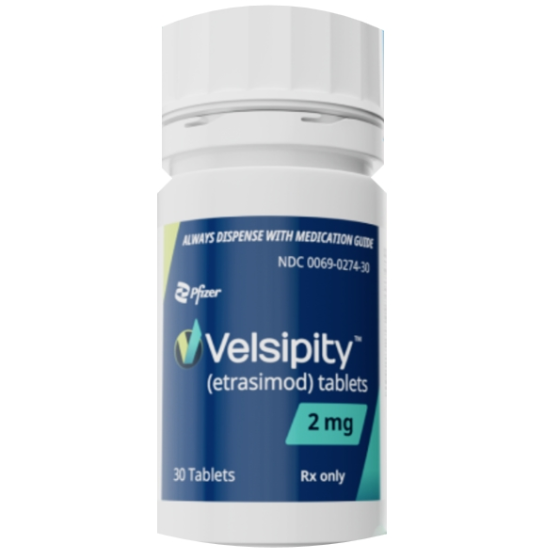
Etrasimod(Velsipity)is an oral selective sphingosine-1-phosphate receptor modulator acting mainly on S1P1,S1P4,and S1P5.It reduces trafficking of certain lymphocytes into intestinal inflammation and is used in adults with moderately to severely active ulcerative colitis,including cases with inadequate response,loss of response,or intolerance to conventional therapy,biologics,or JAK inhibitors.
Selection depends on disease extent,prior 5-ASA,steroids,immunosuppressants,biologics and JAK exposure,infection risk,cardiac and ocular history rather than symptoms alone.
2.Onset and Response Timeline
Early symptoms:some patients notice fewer stools and less rectal bleeding by about 2 weeks,but this is not equivalent to endoscopic remission.
4—8 weeks:initial review of stool frequency,rectal bleeding,abdominal pain,and overall status;fecal calprotectin may support trend.
12 weeks:key efficacy point.In ELEVATE UC,2mg once daily produced clinical remission in about 26%—27%and higher clinical response,with endoscopic improvement and mucosal healing as secondary goals.If Mayo/partial Mayo,endoscopy,and biomarkers show no improvement,reassess adherence,alternative diagnoses,infection,and prior therapy.
Deeper response:some patients need up to about 16 weeks for optimal benefit;after remission,continue maintenance rather than stopping for transient symptom relief.
Maintenance:monitor symptoms,calprotectin,CBC/LFTs,and scheduled endoscopy;steroid dependence,recurrent activity,or persistently elevated biomarkers should trigger specialist review.
3.Dosing and Administration
Standard:2mg orally once daily;swallow whole with water,do not split,crush,or chew.
Food:with or without food;for the first 3 days,take with food to attenuate transient heart-rate lowering,then keep a fixed daily time.
No routine adjustment by weight or age;mild-moderate hepatic impairment and renal impairment usually need no dose change,but severe hepatic impairment is not recommended.
Missed dose:take the next scheduled dose at the planned time,do not double.After 7 or more consecutive days of interruption,give the first 3 resumed doses with food and reassess heart rate/conduction.
Older adults have limited data;emphasize cardiac,infection,and drug-interaction review.
4.Baseline Work-up
Cardiac:ECG for rate,QT,and AV conduction.Do not start with myocardial infarction,unstable angina,stroke/TIA,decompensated heart failure hospitalization in the prior 6 months,Mobitz II/third-degree AV block,sick sinus/sinoatrial block without pacemaker.
Hematology:CBC with differential/lymphocyte count.
Liver:ALT,AST,total bilirubin;investigate abnormalities before initiation.
Ophthalmology:fundus including macula at baseline for diabetes,uveitis,or retinal disease history;baseline by specialty judgment for others.
Infection/vaccines:verify VZV history or antibodies;vaccinate if nonimmune.Complete needed live attenuated vaccines at least about 4 weeks before start;avoid live vaccines during therapy and for the post-dose period per label.Control active infection,hepatitis,TB,or other active chronic infection first.
Skin:baseline and periodic skin examination for suspicious lesions.
Pregnancy:effective contraception during therapy and about 1 week after the last dose;avoid in pregnancy,plan timing with specialists.
5.Post-initiation Monitoring and Adverse Events
Bradycardia/AV delay:observe after the first dose according to cardiac risk;for marked dizziness,syncope,very slow heart rate,or conduction changes,obtain ECG and cardiology input.Use caution with beta-blockers,non-dihydropyridine calcium blockers,antiarrhythmics,and other rate-slowing drugs.
Liver injury:LFTs at around 1,3,6,and 12 months then periodically;discontinue if significant hepatic injury is confirmed,especially ALT elevation with concurrent bilirubin rise.
Lymphocytes/infection:immunosuppressive effect persists for weeks after stopping;monitor for infection and hold therapy for severe infection.
Macular edema:blurred vision or central scotoma prompts fundus/OCT;confirm and manage discontinuation if macular edema develops.
Blood pressure:monitor and manage per cardiovascular risk.
Other:headache,dizziness,transaminase rises are common;rash,herpes zoster,PRES,pulmonary decline,and skin malignancy require risk-based management.
6.Interactions and Lifestyle
Etrasimod is metabolized via CYP2C8,CYP2C9,and CYP3A4.Strong inhibitors such as certain azole antifungals,fluconazole,or clarithromycin can raise exposure;strong inducers such as rifampin can lower exposure;review beta-blockers,calcium-channel blockers,QT-prolonging drugs,and immunosuppressants.Grapefruit juice may affect metabolism;large amounts are best avoided.Do not add anti-infectives,antiepileptics,antiarrhythmics,or herbal products without review.
[ 免责声明 ] 本页面内容来自公开渠道(如FDA官网、Drugs官网、原研药厂官网等),仅供持有医疗专业资质的人员用于医学药学研究参考,不构成任何治疗建议或药品推荐。所涉药品可能未在中国大陆获批上市,不适用于中国境内销售和使用。如需治疗,请咨询正规医疗机构。本站不提供药品销售或代购服务。