.jpeg)
Resmetirom (Rezdiffra) Safety Guide: Hepatotoxicity, Gallbladder Risks & Statin Interactions Explained
1.Drug Overview and Therapeutic Value
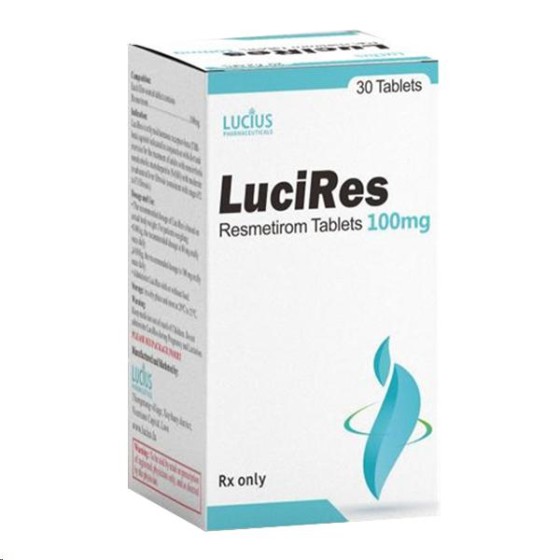
Resmetirom(brand name Rezdiffra)is an oral,selective thyroid hormone receptor beta(THR-β)agonist developed by Madrigal Pharmaceuticals.In March 2024,it received accelerated approval from the U.S.FDA for the treatment of non-cirrhotic adult patients with MASH/NASH accompanied by moderate to advanced liver fibrosis(stages F2–F3),in conjunction with diet and exercise.It represents the first regulatory-approved targeted therapy in this therapeutic area.
The drug works by selectively activating THR-βreceptors in the liver,reducing hepatic fat accumulation,improving fibrosis,and lowering low-density lipoprotein cholesterol(LDL-C)levels.In the pivotal Phase III MAESTRO-NASH trial,resmetirom demonstrated significant MASH resolution without worsening of fibrosis after 52 weeks of treatment,establishing its clinical significance.
However,as with any pharmacotherapy,safety risks must be carefully managed.Three areas warrant particular vigilance during resmetirom treatment.
2.Key Safety Concern#1:Hepatotoxicity Risk and Monitoring Strategy
Hepatotoxicity is a priority safety concern with resmetirom use.Although the drug is designed to improve liver health,clinical studies have identified cases of drug-related liver injury,manifested by elevated liver enzymes(ALT,AST),abnormal alkaline phosphatase and total bilirubin levels,as well as clinical symptoms including jaundice,right upper quadrant pain,nausea,vomiting,and fatigue.
Monitoring Recommendations:Liver function tests—including ALT,AST,alkaline phosphatase(ALP),and total bilirubin—should be performed regularly throughout treatment.More frequent monitoring is advisable during the initial treatment phase to enable early detection of abnormalities.
Management Principles:If significant hepatic enzyme elevation or clinical symptoms suggestive of hepatotoxicity occur,resmetirom should be discontinued immediately with continued monitoring.Once laboratory values return to baseline,the treating physician may evaluate whether to re-initiate therapy,carefully weighing therapeutic benefits against potential risks.If liver function does not recover,further investigation into alternative causes—including drug-induced autoimmune hepatitis—should be pursued to prevent progression to serious liver injury.
3.Key Safety Concern#2:Gallbladder-Related Adverse Events
Gallbladder disease represents another significant safety consideration during resmetirom therapy.Clinical trial data indicate that patients receiving resmetirom had approximately twice the risk of developing cholelithiasis(gallstones)compared to the placebo group(approximately 8%vs.4%),with increased rates of acute cholecystitis and isolated cases of obstructive pancreatitis.
Risk Assessment:Before initiating resmetirom,physicians should conduct a thorough assessment of the patient's gallbladder history,including any prior diagnosis of gallstones or cholecystitis.Caution is warranted when considering treatment for patients with pre-existing gallbladder conditions.
Clinical Management:Should symptoms such as severe right upper quadrant pain,fever,or dyspepsia arise during treatment,prompt imaging evaluation(ultrasound or CT)is recommended to rule out cholelithiasis or cholecystitis.In the event of an acute gallbladder event,resmetirom treatment should generally be interrupted until symptoms resolve and the condition stabilizes,after which the physician may reassess the treatment plan.
4.Key Safety Concern#3:Statin Drug Interactions
Given that MASH/NASH patients frequently present with dyslipidemia,many are concurrently prescribed statin medications.Resmetirom co-administration with certain statins—including atorvastatin,pravastatin,rosuvastatin,and simvastatin—may result in elevated plasma concentrations of these statins.
Increased statin exposure raises the risk of statin-associated adverse effects,including further elevation of liver enzymes,myopathy(muscle pain and weakness),and,in rare but serious cases,rhabdomyolysis.
Dose Adjustment Recommendations:For patients currently on statin therapy,physicians should consider appropriate dose adjustments when initiating resmetirom.Enhanced monitoring of liver function and muscle-related biomarkers(such as creatine kinase,CK)is recommended during combined use.Patients experiencing unexplained muscle pain,tenderness,or weakness should seek immediate medical attention.
5.Comprehensive Management and Safe Use Summary
As the world's first targeted therapy for MASH/NASH,resmetirom offers new hope for patients with fatty liver disease and hepatic fibrosis who have long lacked effective pharmacological options.Nevertheless,the potential risks of hepatotoxicity,gallbladder events,and statin interactions demand careful attention in clinical practice.
The keys to ensuring treatment safety include:establishing structured laboratory monitoring protocols,promptly identifying and managing adverse reactions,tailoring treatment plans to individual patient profiles,and maintaining close communication between patients and healthcare providers.Through evidence-based risk management strategies,resmetirom can deliver maximum therapeutic benefit while effectively safeguarding patient safety and quality of life.
[ 免责声明 ] 本页面内容来自公开渠道(如FDA官网、Drugs官网、原研药厂官网等),仅供持有医疗专业资质的人员用于医学药学研究参考,不构成任何治疗建议或药品推荐。所涉药品可能未在中国大陆获批上市,不适用于中国境内销售和使用。如需治疗,请咨询正规医疗机构。本站不提供药品销售或代购服务。