.jpeg)
Ponatinib: A Third-Generation TKI Targeting BCR::ABL1 to Overcome Leukemia Drug Resistance
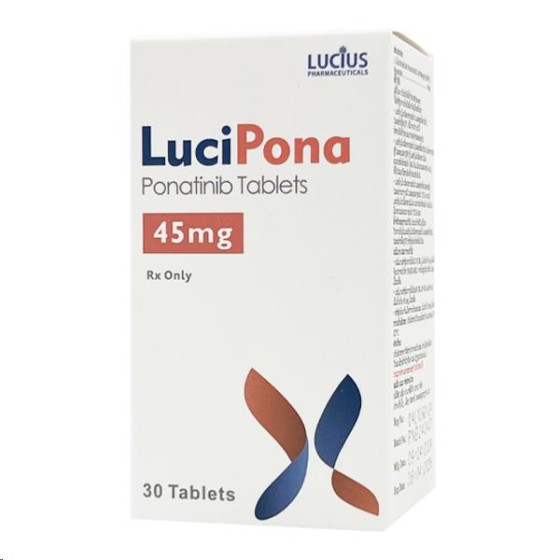
Ponatinib is an oral third-generation tyrosine kinase inhibitor(TKI)engineered to address the critical challenge of drug resistance in chronic myeloid leukemia(CML)and Philadelphia chromosome-positive acute lymphoblastic leukemia(Ph+ALL).Unlike conventional chemotherapy,which indiscriminately targets rapidly dividing cells,ponatinib selectively inhibits the aberrantly activated BCR::ABL1 fusion kinase,disrupting the signaling cascades that drive leukemic cell proliferation and survival.This mechanism epitomizes the principle of molecularly targeted cancer therapy.
The BCR::ABL1 fusion gene,generated by the Philadelphia chromosome translocation,serves as the principal oncogenic driver in CML and a subset of ALL cases.As a pan-BCR::ABL1 inhibitor,ponatinib effectively suppresses not only the wild-type kinase but also virtually all known single-point resistance mutations.Additionally,it exhibits inhibitory activity against VEGFR,FGFR,PDGFR,and SRC family kinases,suggesting a multi-targeted anti-tumor profile.
Clinically,ponatinib is indicated for adult patients in several specific scenarios.These include CML patients in chronic,accelerated,or blast phase who are resistant to or intolerant of prior TKI therapy;patients with Ph+ALL,encompassing relapsed or refractory cases as well as newly diagnosed patients receiving combination regimens with chemotherapy;and individuals carrying the T315I mutation in either CML or Ph+ALL.
The T315I mutation,often termed the"gatekeeper mutation,"has long represented a formidable obstacle in CML-targeted therapy.This mutation alters the spatial conformation of the kinase active site,preventing first-and second-generation TKIs from binding effectively.Ponatinib was structurally optimized to circumvent this steric hindrance,retaining potent inhibitory activity against the T315I variant.Nonetheless,clinical decision-making should incorporate comprehensive mutation profiling and an individualized assessment of the patient's treatment history and overall condition.
Long-term follow-up data from pivotal studies such as PACE have demonstrated durable cytogenetic and molecular responses across CML phases and in Ph+ALL patients with TKI resistance or T315I mutations.The OPTIC trial further validated a dose-optimization strategy that maintains efficacy while mitigating the risk of vascular adverse events.
In summary,ponatinib is not a broad-spectrum anticancer agent but a precision-targeted therapy highly focused on BCR::ABL1-driven signaling.Its core clinical value lies in treating Philadelphia chromosome-positive,BCR::ABL1-driven leukemias—particularly those defined by the T315I mutation—making it an indispensable component of the precision oncology landscape for drug-resistant leukemia.
[ 免责声明 ] 本页面内容来自公开渠道(如FDA官网、Drugs官网、原研药厂官网等),仅供持有医疗专业资质的人员用于医学药学研究参考,不构成任何治疗建议或药品推荐。所涉药品可能未在中国大陆获批上市,不适用于中国境内销售和使用。如需治疗,请咨询正规医疗机构。本站不提供药品销售或代购服务。