.jpeg)
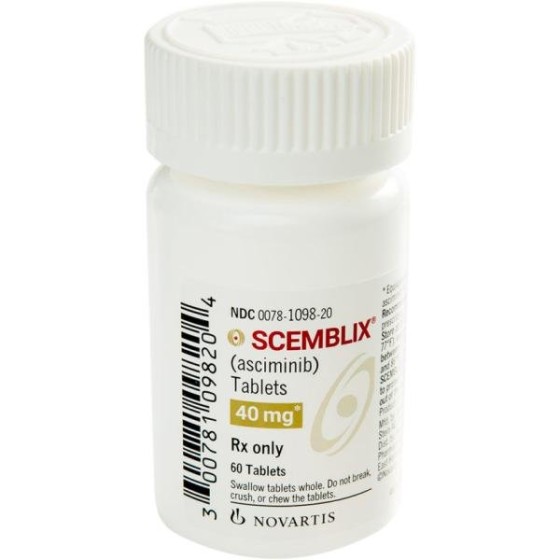
Asciminib (SCEMBLIX): STAMP Inhibitor Dosing Guide and Nomenclature Clarification for CML
Nomenclature Clarification and Drug Identity
In the treatment landscape of chronic myeloid leukemia(CML),It is essential to clarify that both names refer to the identical drug molecule with the international nonproprietary name Asciminib.The drug is marketed under different brand names across regions,such as"SCEMBLIX,"yet its active ingredient,mechanism of action,clinical efficacy,and safety profile remain entirely consistent regardless of branding.Asciminib represents a novel class of STAMP(Specifically Targeting the ABL Myristoyl Pocket)inhibitors that exert allosteric inhibition by binding to the myristoyl pocket of the ABL kinase—a mechanism fundamentally distinct from traditional ATP-competitive tyrosine kinase inhibitors(TKIs).When reviewing literature or obtaining medication,patients should always verify the English generic name Asciminib to ensure accuracy,irrespective of the Chinese translation encountered.
Strict Fasting Administration Requirements
The oral bioavailability of asciminib is significantly affected by food intake,necessitating strict adherence to fasting administration protocols.Specifically,patients must take the medication at least 2 hours before or at least 1 hour after any meal.Clinical studies have demonstrated that high-fat meals can reduce asciminib absorption by approximately 50%to 60%,a substantial decrease in plasma concentration that may directly compromise therapeutic efficacy or increase resistance risk.To maintain stable drug exposure,patients are advised to establish a fixed daily dosing schedule,such as taking the medication 2 hours before breakfast or at bedtime on an empty stomach,and to cultivate this as a consistent routine.Tablets should be swallowed whole with adequate water;splitting,chewing,or crushing tablets is strictly prohibited,as this may alter formulation integrity and release characteristics.
Missed Dose Management Protocol
When a dose is missed,the appropriate action depends on the time interval until the next scheduled dose.If more than 6 hours remain before the next dose,the missed dose should be taken as soon as possible.If less than 6 hours remain,the missed dose should be skipped entirely,and the patient should resume the regular dosing schedule at the next predetermined time.Under no circumstances should a double dose be taken to compensate for a missed one,as this may precipitate unnecessary toxicity.Implementing medication reminders or using pill organizers can help minimize missed-dose events.
Safety Monitoring and Drug Interactions
Asciminib's safety profile differs from that of traditional TKIs,requiring focused attention on hematologic toxicities and specific organ-related adverse events.Common adverse reactions include thrombocytopenia,neutropenia,pancreatitis,and hypertension.Baseline complete blood counts and pancreatic enzyme levels must be obtained prior to treatment initiation.During the first three months of therapy,these parameters should be monitored every two weeks,transitioning to monthly assessments thereafter.Persistent cytopenias or elevated pancreatic enzymes may require dose modification or temporary interruption based on severity grading.Additionally,asciminib is metabolized via CYP3A4;co-administration with strong CYP3A4 inhibitors or inducers may significantly alter drug exposure.A comprehensive review of concomitant medications should be conducted before prescribing,with dose adjustments or alternative therapies considered when necessary.
[ 免责声明 ] 本页面内容来自公开渠道(如FDA官网、Drugs官网、原研药厂官网等),仅供持有医疗专业资质的人员用于医学药学研究参考,不构成任何治疗建议或药品推荐。所涉药品可能未在中国大陆获批上市,不适用于中国境内销售和使用。如需治疗,请咨询正规医疗机构。本站不提供药品销售或代购服务。