.jpeg)
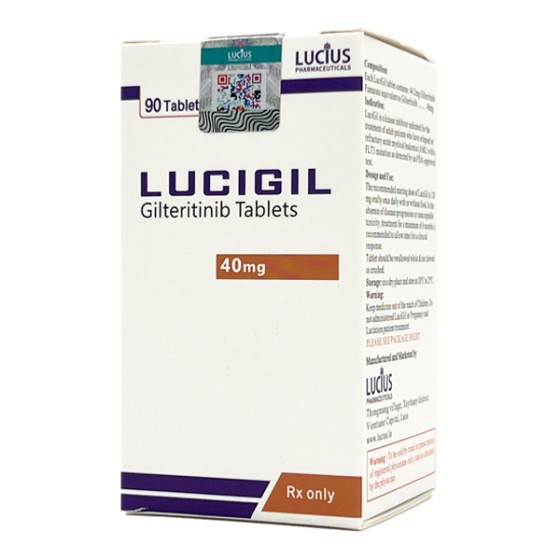
Gilteritinib (XOSPATA): Dosing Cycle, Treatment Duration, and Development Background
1.Development Background and Global Approval History
Gilteritinib(development code ASP2215,brand name XOSPATA)was developed by Astellas Pharma Inc.,a global pharmaceutical company headquartered in Tokyo,Japan,with deep research capabilities in oncology,urology,and immunology.The drug's discovery,preclinical development,and pivotal clinical trial execution were primarily conducted in Japan,with manufacturing processes and quality control systems adhering strictly to Japan's Ministry of Health,Labour and Welfare regulations and International Council for Harmonisation(ICH)guidelines.
Gilteritinib received its first regulatory approval from the U.S.FDA in November 2018,followed by subsequent approvals in Japan,the European Union,and multiple countries across Asia-Pacific and Latin America.It is the first approved oral small-molecule FLT3 inhibitor for FLT3-mutated relapsed or refractory AML and the only FLT3 inhibitor to demonstrate a significant overall survival advantage over standard salvage chemotherapy in a pivotal Phase III trial(ADMIRAL).
2.Mechanism of Action and Target Biology
FLT3(FMS-like tyrosine kinase 3)is a type III receptor tyrosine kinase expressed on hematopoietic stem and progenitor cells.FLT3 mutations—including internal tandem duplications(ITD)and tyrosine kinase domain point mutations(TKD)—occur in approximately 30%of AML cases,making them among the most common driver mutations in the disease.These mutations cause constitutive kinase activation,driving uncontrolled leukemic cell proliferation and blocking normal differentiation.
Gilteritinib potently inhibits both FLT3-ITD and FLT3-TKD mutant forms,with additional activity against AXL and KIT kinases.Its oral,once-daily administration provides a convenient treatment option for relapsed/refractory AML patients without requiring prolonged hospitalization for intravenous therapy.
3.Standard Dosing Cycle:28 Days per Complete Treatment Cycle
Gilteritinib is administered in 28-day treatment cycles.Within each cycle,patients take 120 mg(four 30 mg capsules)orally once daily for 28 consecutive days,followed seamlessly by the next cycle.The medication may be taken with or without food.To maintain steady-state plasma concentrations,patients should take the dose at the same time each day—ideally fixed to morning or bedtime—and use alarms or pill organizers as reminders.
Capsules must be swallowed whole and must not be opened,crushed,or chewed.If a dose is missed and more than 12 hours remain before the next scheduled dose,it should be taken immediately;otherwise,the missed dose should be skipped and the regular schedule resumed.Doubling up is not advised.
4.End-of-Cycle Assessment:Dynamic Monitoring of Bone Marrow and Peripheral Blood
At the end of each 28-day cycle,the treating hematologist performs a systematic efficacy evaluation.This typically includes complete peripheral blood counts with differential;bone marrow aspiration and biopsy to assess blast percentage;FLT3 mutant allele ratio dynamics;and safety parameters including hepatic and renal function,electrolytes,and ECG.
Initial efficacy assessment is generally performed after 1 to 2 cycles.A significant reduction in peripheral blood and bone marrow blasts indicates active anti-leukemic effect,warranting continuation of the current regimen.Complete remission(CR/CRi)is typically achieved after 2 to 4 cycles,though some patients may require longer.If consecutive assessments show no evidence of response,the treating team will evaluate whether to continue,adjust dose,or switch to an alternative strategy.
5.Treatment Duration:Individualized Decisions Guided by Disease Status
Gilteritinib therapy has no predefined fixed duration limit.Treatment should continue until one of the following endpoints is reached:disease progression(rising blast percentage in marrow or blood,new extramedullary involvement);intolerable toxicity(severe adverse events uncontrolled by appropriate interruption and dose reduction);or patient-initiated discontinuation.
For patients who achieve complete remission or complete remission with partial hematologic recovery(CRi),current clinical consensus recommends continuing gilteritinib maintenance to prolong remission duration.In the pivotal ADMIRAL trial,some patients remained on therapy for more than 12 months.If a patient subsequently undergoes allogeneic hematopoietic stem cell transplantation(allo-HSCT),peri-transplant gilteritinib use should be individualized by the transplant team.
6.Interruption and Dose Modification Criteria
Gilteritinib should be interrupted for the following:QTc interval prolongation to≥500 ms;transaminase elevation exceeding 5×the upper limit of normal;severe infection with hemodynamic instability;or any other Grade 3 or higher toxicity deemed to require interruption.During the interruption period,relevant parameters should be monitored closely.Once toxicity resolves to Grade 1 or baseline,therapy resumes at the original 120 mg once-daily dose.
If the same toxicity recurs after resumption,the dose may be reduced to 80 mg once daily.If intolerance persists at 80 mg,further reduction to 40 mg once daily is permitted.Doses below 40 mg lack clinical data support;if toxicity remains unmanageable,permanent discontinuation is generally recommended.All dose-modification decisions must be made under hematologist supervision.
7.Adverse Effect Monitoring and Daily Life Management
The most common adverse effects of gilteritinib include transaminase elevations,myalgia,fatigue,diarrhea,nausea,mucositis,peripheral edema,and pyrexia.Differentiation syndrome(formerly termed FLT3 inhibitor–associated differentiation syndrome),though uncommon,can be life-threatening,presenting with fever,dyspnea,pleural effusion,hypotension,and rapid weight gain.Immediate drug cessation and dexamethasone are required upon suspicion.
For daily management,patients should self-monitor temperature daily and watch for new petechiae,ecchymoses,or signs of infection.Diet should emphasize high-protein,high-calorie,easily digestible foods while avoiding raw or undercooked items.Vigorous exercise should be avoided,though light walking is encouraged.Women of childbearing potential should use highly effective contraception during treatment and for at least 6 months after the last dose.
8.Structured Follow-Up Schedule During Treatment
A systematic follow-up plan is the cornerstone of safe and effective gilteritinib use.During the first cycle,peripheral blood counts should be checked weekly,hepatic function and electrolytes every two weeks,and ECG weekly.From the second cycle onward,if the clinical picture is stable,monitoring frequency may be relaxed to every two weeks or monthly.
Bone marrow assessment is typically performed at the end of cycles 2 through 4,then every 2 to 3 cycles as clinically indicated.Imaging studies(chest CT,etc.)should be performed whenever fever,cough,or dyspnea develops,with routine assessment every 2 to 3 cycles.Patients should maintain a personal treatment file documenting each cycle's blood counts,marrow results,adverse events,and dose modifications for efficient communication at follow-up visits.
[ 免责声明 ] 本页面内容来自公开渠道(如FDA官网、Drugs官网、原研药厂官网等),仅供持有医疗专业资质的人员用于医学药学研究参考,不构成任何治疗建议或药品推荐。所涉药品可能未在中国大陆获批上市,不适用于中国境内销售和使用。如需治疗,请咨询正规医疗机构。本站不提供药品销售或代购服务。