
.jpeg)
Detailed description of contraindications and inapplicable groups of larotrectinib (Vitakai)
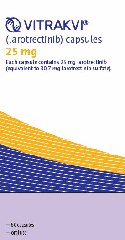
Larotrectinib (trade name Vitrakvi) is a highly selective TRK inhibitor, mainly targeting patients with NTRK gene fusion-positive solid tumors, regardless of tumor location and tissue type. As an important breakthrough in the field of precision medicine in recent years, larotrectinib has demonstrated significant efficacy in a variety of refractory or rare tumors. However, not all patients are suitable for this drug. A correct understanding of its contraindications and inapplicable groups is of great significance to ensure efficacy and reduce risks.
1. Main contraindications of larotrectinib
1.Contraindicated for those allergic to larotrectinib or its excipients
Drug allergy is the most direct contraindication. If the patient has a history of severe allergic reactions to the active ingredient or excipients of larotrectinib (such as capsule excipients), use should be prohibited to avoid serious adverse reactions such as rash, dyspnea, and anaphylactic shock.
2. Use with caution or prohibition in patients with severe liver damage
Larotinib is mainly metabolized by the liver. In patients with severe hepatic insufficiency, the drug clearance ability decreases and the plasma concentration may increase significantly after taking the drug, increasing the risk of toxic and side effects. For patients with significantly abnormal liver function (such as Child-Pugh C grade), its use is generally not recommended; if medication must be used, liver function indicators should be strictly monitored and dosage reduction considered.
3.Contraindicated for pregnant and lactating women
Animal experiments suggest that larotrectinib may have adverse effects on embryonic development and pose risks of teratogenesis and reproductive toxicity. Use by pregnant women may cause serious harm to the fetus, so it is strictly prohibited. Breastfeeding women should also not use this drug because the drug and its metabolites may be excreted in breast milk and cause potential harm to the baby.
2. Specific instructions for inapplicable groups
1.Very young children (especially 2 under the age of
Although larotrectinib has been approved for use in pediatric patients, clinical data in infants 2 years of age are limited. Since the organs are not fully developed and the metabolic pathways and safety of the drug are unknown, its use in very young infants and young children is generally not recommended unless it is clinically necessary and the risk-benefit ratio is clear.
2.Patients with serious underlying diseases of the central nervous system
Larotrectinib can cross the blood-brain barrier and shows certain efficacy in the treatment of patients with brain metastases. However, for patients who already have epilepsy, elevated intracranial pressure, or other severe central nervous system diseases, the drug may aggravate adverse neurological reactions, such as dizziness, disturbance of consciousness, etc., so they should be chosen with caution.
3.Using strongCYP3A4Patients with inhibitors or inducers
Larotinib is mainly metabolized byCYP3A4. If patients use strong inhibitors (such as ketoconazole, itraconazole) at the same time, the blood concentration will increase and increase the risk of toxicity; if strong inducers (such as rifampicin, carbamazepine) are used, the drug efficacy may be significantly reduced. Therefore, these patients should either avoid combined medication or adjust the dosage according to the doctor's recommendations, otherwise they are not suitable for this group.
4.Patients with severe heart disease
Clinical studies suggest that larotrectinib may cause QT interval prolongation or other arrhythmias. For patients with a history of serious heart disease, such as arrhythmia, congestive heart failure, and uncontrolled hypertension, the risks of medication should be carefully evaluated and alternative treatments should be considered if necessary.
3. Risk warning for special groups of people
1.Elderly patients
The elderly are often accompanied by multiple chronic diseases and multiple medications, which lead to a greater risk of drug interactions, and decreased liver and kidney function may affect drug metabolism. Although clinical data suggest that elderly patients may still benefit, additional caution is needed with regard to dose adjustment and monitoring.
2.Patients with renal insufficiency
The main excretion pathway of larotrectinib is hepatic metabolism, which has little effect on patients with mild to moderate renal insufficiency, but data on patients with severe renal insufficiency are limited. For this group of people, they should be used with caution after weighing the pros and cons.
3.People after surgery or major trauma
As an anti-tumor drug, larotrectinib may affect tissue repair and immune response. During the recovery period from surgery or severe trauma, immediate use is not recommended and should be considered after the patient has basically recovered.
4. Conclusions and clinical application suggestions
Larotinib, as a breakthrough targeted drug forNTRK fusion-positive tumors, has brought new hope for survival to many patients with rare and difficult-to-treat tumors. However, any drug has its scope of application, and correctly identifying contraindications and inapplicable groups is extremely important for safe medication use. In general, the following groups should avoid or use with caution:
Those who are allergic to drug ingredients;
Those with severe liver function impairment;
Pregnant and lactating women;
Very young children (especially 2 under the age of 2);
Patients taking strongCYP3A4 inhibitors or inducers;
People with severe heart disease or central nervous system diseases.
Before prescribing larotrectinib, clinicians should have a detailed understanding of the patient's medical history, medication status, and underlying diseases, and conduct electrocardiogram, liver and kidney function, and drug interaction assessments if necessary. The patient himself should also actively cooperate and promptly inform the doctor of his medication history and physical condition. Only under the premise of safety can the efficacy of larotrectinib be maximized and its value in precision tumor treatment truly unleashed.
Reference link:https://www.drugs.com
[ 免责声明 ] 本页面内容来自公开渠道(如FDA官网、Drugs官网、原研药厂官网等),仅供持有医疗专业资质的人员用于医学药学研究参考,不构成任何治疗建议或药品推荐。所涉药品可能未在中国大陆获批上市,不适用于中国境内销售和使用。如需治疗,请咨询正规医疗机构。本站不提供药品销售或代购服务。


