
.jpeg)
Detailed explanation of the mechanism of action and targeting principle of larotrectinib (Vitaika)
Larotrectinib is an oral small molecule targeted drug that is a TRK (tropomyosin receptor kinase) inhibitor. Its core mechanism of action is to target the abnormal TRK protein produced by NTRK gene fusion, through highly selective inhibition of its tyrosine kinase activity, thereby blocking downstream signaling pathways such as MAPK , PI3K-AKT and PLCγ and other pathways inhibit tumor cell proliferation and promote apoptosis. Since NTRK fusion can occur in a variety of solid tumors, larotrectinib is a truly precise targeting drug that has no specific tissue source for tumors.
Based on the principle of molecular targeting, larotrectinib can highly bind to the ATP binding site of the TRK fusion protein, preventing ATP from providing energy for tyrosine kinase activity, thereby inhibiting signal transduction. TRK Fusion proteins usually lead to sustained activation of downstream signals, triggering unlimited proliferation and anti-apoptotic responses of tumor cells. By inhibiting this key node, larotrectinib can effectively control TRK-driven tumor growth while having less interference with TRK proteins in normal tissues, so it has good selectivity and tolerability.
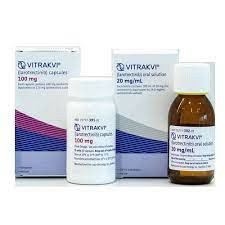
The targeting mechanism of larotrectinib has not only shown inhibitory effects on a variety ofNTRK fusion-positive tumor cells in in vitro experiments, but has also verified its broad-spectrum efficacy in clinical trials. Whether it is lung cancer, thyroid cancer, breast cancer or soft tissue sarcoma, larotrectinib may produce significant tumor shrinkage and response effects as long as NTRK fusion is present. This mechanism makes it a precision tumor treatment drug based on genes rather than tissue types, breaking the limitations of traditional tumor classification.
In addition, larotrectinib also has a certain effect on central nervous system (CNS) tumors. It can cross the blood-brain barrier and play a role in brain metastasis or primary brain tumors. This is closely related to its molecular structure and targeting mechanism, allowing it to provide a more comprehensive treatment option in NTRK fusion-positive patients. In summary, larotrectinib inhibits TRK through highly selectiveFusion proteins and their downstream signaling pathways achieve precise intervention in tumor growth and provide effective targeted treatment strategies for patients with a variety of NTRK fusion-driven solid tumors.
Reference link:https://www.drugs.com
[ 免责声明 ] 本页面内容来自公开渠道(如FDA官网、Drugs官网、原研药厂官网等),仅供持有医疗专业资质的人员用于医学药学研究参考,不构成任何治疗建议或药品推荐。所涉药品可能未在中国大陆获批上市,不适用于中国境内销售和使用。如需治疗,请咨询正规医疗机构。本站不提供药品销售或代购服务。


