
.jpeg)
Momelotinib may benefit patients with myelofibrosis and anemia by improving hemoglobin
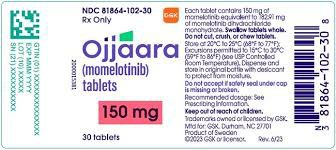
Momelotinib/Ojjaara Achieving hemoglobin levels above 10 g/dL is a positive prognostic factor in patients with myelofibrosis, regardless of baseline anemia severity, and supports the therapeutic goal of early anemia intervention in this population. Results from the Phase 3 SIMPLIFY-1 (NCT01969838) and MOMENTUM (NCT04173494) trials support 2023 U.S. Food and Drug Administration approval of molotinib for the treatment of adult patients with intermediate- to high-risk myelofibrosis (MF) and anemia.
These trials demonstrated the efficacy of molotinib on splenic responses, symptomatic responses, and anemia-related benefits. However, data are lacking on the duration of molotinib's improvement in anemia-related symptoms, and its effect on improving hemoglobin levels in patients with baseline moderate-to-severe anemia has not historically been described. Therefore, a post hoc analysis of SIMPLIFY-1 and MOMENTUM was performed to understand the kinetics and survival effects of molotinib-induced improvements in hemoglobin levels.
In theSIMPLIFY-1 cohort (n=86), 69% of patients with moderate anemia at baseline and 50% of patients with severe anemia at baseline had hemoglobin levels greater than 10 g/dL at week 24. The two rates in the MOMENTUM cohort (n=126) were 47% and 24%, respectively. In both trial populations, patients with baseline moderate anemia reached hemoglobin levels greater than 10 g/dL more quickly than patients with baseline severe anemia. Additionally, hemoglobin levels greater than 10 g/dL by week 24 were associated with improved overall survival (OS) regardless of baseline anemia severity or prior JAK inhibitor experience in both trial populations.
If one wants to optimize the clinical benefit of molotinib, it is important to start treatment as early as possible, either in the first-line setting or when anemia is only moderate rather than severe. SIMPLIFY-1 trial design and results from subgroup analyzes of the trial investigating the clinical relevance of achieving splenic response and transfusion independence.
The design of the MOMENTUM trial is a completely different clinical trial from the SIMPLIFY-1 trial. In the MOMENTUM trial, we only looked at patients with hemoglobin levels below 10, so this [trial] has clear [enrollment criteria] for patients with anemia. The patients were randomly assigned to receive either molotinib or danazol [Danocrine], the standard treatment for patients with anemia. Additionally, in the MOMENTUM trial, the majority of patients progressed on a prior JAK inhibitor, a more complex population who received molotinib primarily in the second-line setting.
This post hoc analysis focused on patients with hemoglobin levels below10 g/dL who were started on molotinib and ruxolitinib. . In the SIMPLIFY-1 trial, it was observed that 69% of patients who started with hemoglobin levels between 8 g/dL and 10 g/dL, so-called moderate anemia, had hemoglobin levels above 10 g/dL at week 24. The proportion of responders dropped to 50% among patients with hemoglobin levels below 8 g/dL, which indicates severe anemia. Additionally, patients with severe anemia took longer to initiate treatment than patients with moderate anemia.
Nearly identical results were observed inthe second-line setting of the MOMENTUM trial. However, a decrease in response rates was observed, with 47% of patients with moderate anemia (initiating treatment while having moderate anemia) having hemoglobin levels greater than 10 g/dL at week 24, and 24% of patients with severe anemia (initiating treatment while having severe anemia) having hemoglobin levels greater than 10 g/dL at week 24. Additionally, in the MOMENTUM trial, a delayed response when initiating [treatment] was observed in patients with severe anemia.
Importantly, achieving a hemoglobin level above 10 g/dL at week 24 is important for patient survival. The clinical study also performed an OS analysis and stratified patients based on whether they were able to achieve a hemoglobin level greater than 10 g/dL on molotinib at week 24. Survival was prolonged for patients with higher hemoglobin levels. This links the ability to reverse anemia to the possibility of improving patient survival.
Reference materials:https://www.onclive.com/view/hemoglobin-improvement-with-momelotinib-confers-os-benefit-in-myelofibrosis-with-anemia
[ 免责声明 ] 本页面内容来自公开渠道(如FDA官网、Drugs官网、原研药厂官网等),仅供持有医疗专业资质的人员用于医学药学研究参考,不构成任何治疗建议或药品推荐。所涉药品可能未在中国大陆获批上市,不适用于中国境内销售和使用。如需治疗,请咨询正规医疗机构。本站不提供药品销售或代购服务。


