
.jpeg)
Analysis of the efficacy, role and clinical treatment advantages of larotinib (Vitaika)
1. Drug introduction and research and development background
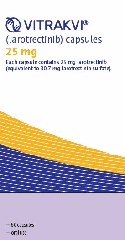
Larotrectinib (trade name Vitrakvi) is a highly selective oral TRK (tropomyosin receptor kinase) inhibitor, developed by Bayer (Bayer) and Loxo Oncologyjointly developed. It received accelerated approval from the U.S. FDA in 2018. It is one of the first targeted drugs to be marketed based on the concept of "tumor pan-indications", that is, it does not use the location of the tumor as the standard, but uses NTRK gene fusion as the basis for administration. This breakthrough marks an important shift in precision medicine from "organ-oriented" to "molecular-oriented" treatment.
The approval of larotrectinib provides a new treatment option for patients with solid tumors carrying NTRK gene fusions. Although the proportion of such mutations in the overall tumor population is not high (about 1%less), the proportion in some rare tumors (such as infantile fibrosarcoma and papillary thyroid cancer) is high.
2. Mechanism of action and pharmacological characteristics
The mechanism of action of larotrectinib is based on highly selective inhibition of TRK family proteins. TRK protein is encoded by NTRK1, NTRK2 and NTRK3 genes , when these genes are fused with other genes, a fusion protein with a continuously activated state will be formed, driving the continuous activation of downstream signaling pathways (such as MAPK, PI3K-AKT), thus promoting the unlimited proliferation and survival of tumor cells.
Larotrectinib competitively binds to the ATP binding site of the TRK fusion protein, inhibits its kinase activity, blocks downstream signaling pathways, and fundamentally cuts off the growth driving force of tumors. Due to its high specificity, larotrectinib has less impact on normal cells while inhibiting tumors, which is one of the reasons why its side effects are relatively mild.
3. Efficacy and clinical trial data
In pivotal clinical trials (such as the LOXO-TRK-14001, SCOUT, and NAVIGATE studies), larotrectinibNTRKDisplayed significant anti-tumor activity in patients with fusion-positive tumors. Comprehensive analysis data shows:
The overall objective response rate (ORR) can reach 75% and above, with a high proportion of partial response and complete response cases.
The median duration of response (DoR) can exceed 20 months, and some patients continue to be in remission for more than 3 years.
The median progression-free survival (PFS) is approximately 25 months, demonstrating durable disease control.
It has good efficacy in patients with different tumor types, age groups (including children) and previous lines of treatment.
These data demonstrate that larotrectinib not only has a high response rate but also has a durable efficacy, especially for patients who require long-term disease control.
4. Analysis of clinical treatment advantages
1.Pan-cancer indications
Different from traditional drugs that are classified according to tumor location, the indications of larotrectinib are entirely based on molecular markers——NTRK gene fusion. This means that larotrectinib can be considered as long as NTRK fusion is detected, whether it is lung cancer, thyroid cancer, sarcoma or rare pediatric tumors. This "biomarker-driven" treatment model greatly broadens the number of people who can benefit from the drug.
2.High remission rate and durable efficacy
In clinical trials, larotrectinib has shown a much higher response rate than traditional chemotherapy and some targeted drugs, and most patients have significantly relieved symptoms and significantly reduced tumor volume after receiving treatment, helping to improve their quality of life. Its durable efficacy is particularly important in the treatment of chronic tumors that require long-term disease control.
3.Good tolerance, mild side effects
Due to its high selectivity, larotrectinib has less impact on non-targets. Common side effects include fatigue, dizziness, nausea, constipation, weight gain, etc., and most of them are mild to moderate (1-2 grade). Serious adverse reactions are relatively rare, which provides safety guarantee for long-term medication.
4.Available for pediatric patients
Larotrectinib has covered pediatric patient groups in clinical trials, especially in rare diseases such as infantile fibrosarcoma, showing a very high response rate and good safety. This provides an important option for precise treatment of pediatric tumors.
5. Future Prospects and Challenges
Although larotrectinib performs well in the treatment of NTRK fusion-positive tumors, the problem of drug resistance is still inevitable. Known resistance mechanisms include secondary mutations in TRK protein and activation of alternative signaling pathways. To address these problems, second-generation TRK inhibitors (such as Selitrectinib, Repotrectinib) are being developed in order to overcome drug resistance and prolong patient benefit time.
In addition, since the proportion of NTRK fusion mutations in common cancer types is low, the key to promoting this drug is to increase the popularity of molecular testing so that more patients can discover targetable mutations through genetic testing, thereby gaining opportunities for precise treatment.
Larotinib, as a highly selective TRK inhibitor, has the advantages of cross-cancer types, high response rate, durable efficacy and good tolerability in the treatment of NTRK fusion-positive tumors, and represents the forefront of precision medicine. In the future, with the popularization of molecular testing and in-depth research on drug resistance mechanisms, the application scope of larotrectinib is expected to be further expanded, improving long-term survival and quality of life for more patients.
Reference materials:https://www.drugs.com/
[ 免责声明 ] 本页面内容来自公开渠道(如FDA官网、Drugs官网、原研药厂官网等),仅供持有医疗专业资质的人员用于医学药学研究参考,不构成任何治疗建议或药品推荐。所涉药品可能未在中国大陆获批上市,不适用于中国境内销售和使用。如需治疗,请咨询正规医疗机构。本站不提供药品销售或代购服务。


