
.jpeg)
FDA does not approve talazoparib/talazopanib combined with enzalutamide for mCRPC with non-HRR gene mutations
The U.S. Food and Drug Administration has declined to approve a label expansion of the combination talazoparib/enzalutamide to include broader treatment of patients with metastatic castration-resistant prostate cancer (mCRPC) harboring non-HRR gene mutations.
As of June 2023, the US Food and Drug Administration has decided that talazoparib combined with enzalutamide has been approved for the treatment of mCRPC patients with HRR gene mutations. The FDA did approve an updated label for the combination's existing indication to include final overall survival (OS) data from the Phase 3 TALAPRO-2 trial (NCT03395197). Men with metastatic castration-resistant prostate cancer often face poor prognosis and limited treatment options. TALSENNA in combination with XTANDI redefines the standard of care for patients with HRR-mutant mCRPC.
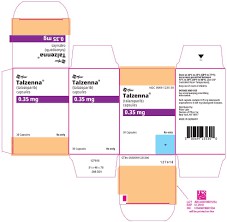
In summary, the TALAPRO-2 trial included 2 cohorts: patients who were not selected for HRR gene mutations (cohort 1; n=805) and patients who were selected for HRR mutations (cohort 2; n=399). In 2023, preliminary approval of talazoparib plus enzalutamide was supported by data from Cohort 2 of the trial, which found that the combination resulted in a statistically significant improvement in radiographic progression-free survival (rPFS) compared with placebo plus enzalutamide in patients with mCRPC with HRR gene mutations. At the time of data reporting, median rPFS had not been reached in the tazoparib/enzalutamide group compared with 13.8 months in the placebo/enzalutamide group (HR, 0.45; 95% CI, 0.33 to 0.61; P<0.0001).
The latest data from the TALAPRO-2 trial have been published. At a median follow-up of 44.2 months, the median OS in the talazoparib plus enzalutamide group was 45.1 months, compared with 31.1 months in the enzalutamide alone group (HR, 0.62; 95% CI, 0.48-0.81; P=.0005). Cohort 1 findings include data with a median follow-up of 52.5 months. Among these patients, the median OS was 45.8 months in the talazoparib/enzalutamide group compared with 37 months in the placebo/enzalutamide group (HR, 0.80; 95% CI, 0.66 to 0.96; P=0.015). At the time of the final analysis, updated rPFS and other secondary efficacy endpoint data showed that the clinical benefit of the combination remained unchanged in both cohorts, consistent with the preliminary analysis.
Safety data for the combination are also consistent with the known safety profile of each therapy. The most common adverse events in the combination group were anemia, neutropenia, and fatigue. The most common grade 3 to 4 adverse events were anemia (49%) and neutropenia (19.3%).
In total, the double-blind, Phase 3 TALAPRO-2 trial enrolled 1,035 patients with mCRPC across clinical trial sites in the United States, Canada, Europe, South America and the Asia-Pacific region. Patients were eligible if they were not receiving new life-extending systemic treatments for mCRPC.
The trial included 2 cohorts: all participants (n=805, 169 of whom had HRR mutations and 636 who did not) and those with HRR gene mutations (n=399, including 169 patients in cohort 1 and 230 patients who were subsequently enrolled). Patients included in the study were randomly assigned to receive talazoparib 0.5 mg daily plus enzalutamide 160 mg daily or enzalutamide 160 mg daily alone.
The primary endpoint of the trial isrPFS. Secondary endpoints include OS, objective response rate, duration of response, and prostate-specific antigen response.
References:https://www.urologytimes.com/view/fda-does-not-approve-talazoparib-plus-enzalutamide-for-non-hrr-gene-mutated-mcrpc
[ 免责声明 ] 本页面内容来自公开渠道(如FDA官网、Drugs官网、原研药厂官网等),仅供持有医疗专业资质的人员用于医学药学研究参考,不构成任何治疗建议或药品推荐。所涉药品可能未在中国大陆获批上市,不适用于中国境内销售和使用。如需治疗,请咨询正规医疗机构。本站不提供药品销售或代购服务。


