
.jpeg)
FLT3-ITD MRD may guide Gilteritinib maintenance therapy after AML HCT
FLT3-ITD (Fms-like tyrosine kinase 3 internal repeat mutation) is one of the common gene mutations in acute myeloid leukemia (AML), and its presence is closely related to the prognosis of patients. Research in recent years has shown that FLT3-ITD mutations not only affect the patient's initial treatment response, but may also become a An important indicator for determining minimal residual disease (MRD) and the risk of relapse. A study on maintenance treatment Gilteritinib showed that the drug had a significant effect in reducing the risk of relapse in patients with FLT3-ITD-positive AML.
In a phase 3 clinical trial MORPHO (ClinicalTrials.gov identifier: NCT02997202), 356 patients with FLT3-ITD mutated AML in first remission after hematopoietic stem cell transplantation (HCT) were randomized to receive giritinib or placebo for up to 2 years. The key objective of this study was to explore the relationship between FLT3-ITD MRD status and risk of relapse. In a post hoc analysis conducted after the trial ended, the researchers collected MRD data from 341 patients and confirmed the impact of FLT3-ITD MRD on patient prognosis by evaluating recurrence rate and recurrence-free survival (RFS).
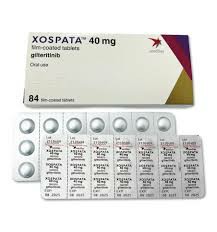
Among these 341 patients, 167 (49.0%) were MRD negative before and after HCT, while 174 (51.0%) were MRD positive. Notably, polyclonal FLT3-ITD mutations were detected in 54 (31.0%) of 174 MRD-positive patients. Ultimately, 66 patients experienced disease relapse, with 20 patients taking giritinib having a relapse rate of 30.3% and 46 patients receiving placebo having a relapse rate of 69.7%. This shows that giritinib significantly reduces the risk of recurrence, with a hazard ratio (HR) of 0.379 (95% CI, 0.226-0.635). Especially in patients with MRD-positive patients before and after HCT, the risk of recurrence is even lowered to a HR of 0.338 (95% CI, 0.185-0.616).
Further analysis of the relapsed samples revealed that 44 of the 66 relapsed patients could be analyzed for FLT3 mutations. Among them, 4 of 12 patients (33.3%) who took giritinib still carried FLT3-ITD mutations when they relapsed, while in the placebo group, this proportion increased to 68.8% (22/32). This result once again demonstrates the effectiveness of giritinib in controlling FLT3-ITD mutation recurrence.
In addition, the study found that Patients who carried two or more FLT3-ITD mutations before and after HCT had a significantly higher recurrence rate than those who carried only one FLT3-ITD mutation or were MRD-negative (HR, 2.075; 95% CI, 1.318-3.266; P=0.0013). Although patients with polyclonal MRD had the shortest RFS, there was no significant difference from patients with monoclonal MRD (P=0.1764). In the placebo group, patients with monoclonal and polyclonal MRD also had a significantly higher risk of recurrence than those with no detectable MRD (P=0.0002). Among patients treated with giritinib, the RFS of patients with monoclonal and polyclonal MRD was also significantly lower than that of patients with undetected MRD, P=0.044 and P=0.0226, respectively.
In summary, this study not only confirmed the prognostic value of FLT3-ITD MRD in AML patients, but also emphasized the important role of giritinib in maintenance therapy. "These prospective results from a prespecified MRD data collection clearly establish the potential of using FLT3-ITD MRD to guide treatment decisions in AML patients," the study authors note. They recommend that if MRD is detected before HCT (regardless of its level), every effort should be made to use giritinib after HCT to minimize the risk of relapse.
Reference materials:https://www.hematologyadvisor.com/news/flt3-itd-mrd-acute-myeloid-leukemia-gilteritinib-maintenance-treatment-risk/
[ 免责声明 ] 本页面内容来自公开渠道(如FDA官网、Drugs官网、原研药厂官网等),仅供持有医疗专业资质的人员用于医学药学研究参考,不构成任何治疗建议或药品推荐。所涉药品可能未在中国大陆获批上市,不适用于中国境内销售和使用。如需治疗,请咨询正规医疗机构。本站不提供药品销售或代购服务。


