
.jpeg)
Analysis of the advantages and disadvantages of trametinib compared with chemotherapy regimens
Trametinib/Megenin (Trametinib) represents the cutting-edge technology of modern targeted therapy, while traditional chemotherapy has been the main force of anti-cancer treatment in the past few decades. There are significant differences between the two in terms of mechanism of action, persistence of efficacy, safety, and patient experience. An in-depth comparison of the advantages and disadvantages of the two is of great significance in guiding individualized treatment strategies.
First of all, from the mechanism of action, trametinib is a highly selective MEK enzyme inhibitor, specifically designed to target the abnormal activation of the MAPK signaling pathway caused by BRAF mutations, and block tumor growth signals by precisely targeting downstream enzyme activity. Chemotherapy drugs such as cisplatin and paclitaxel mainly act on the cell division cycle, interfering with DNA replication or microtubule polymerization processes, and have "non-specific killing" characteristics. This means that chemotherapy not only attacks cancer cells, but also causes damage to normally actively dividing cells such as hair follicles, digestive tract mucosa, bone marrow, etc., resulting in strong side effects.
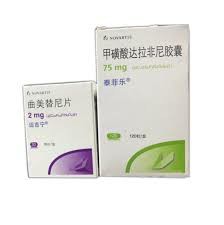
In terms of efficacy, trametinib is particularly suitable for patients with BRAF V600 mutations and can bring more durable tumor control to such patients. In contrast, chemotherapy has unstable response rates, is prone to drug resistance, and lacks molecular selectivity. Therefore, it is usually less effective than targeted therapy in mutation-driven tumors. At the same time, trametinib combined with the BRAF inhibitor dabrafenib can form a double blockade and delay the formation of tumor escape mechanism from the root, which is difficult to achieve in chemotherapy regimens.
From the perspective of safety and patient compliance, trametinib is an oral medication, which is convenient for patients to take and monitor for a long time. Most of the common adverse reactions such as rash, diarrhea, and increased blood pressure are controllable and reversible. Chemotherapy is often accompanied by systemic toxic reactions such as nausea, hair loss, and bone marrow suppression, which not only affects the quality of life, but also often causes patients to interrupt treatment.
Reference materials:https://go.drugbank.com/drugs/DB08911
[ 免责声明 ] 本页面内容来自公开渠道(如FDA官网、Drugs官网、原研药厂官网等),仅供持有医疗专业资质的人员用于医学药学研究参考,不构成任何治疗建议或药品推荐。所涉药品可能未在中国大陆获批上市,不适用于中国境内销售和使用。如需治疗,请咨询正规医疗机构。本站不提供药品销售或代购服务。


