
.jpeg)
Which one is more effective than larotrectinib or entrectinib?
Larotrectinib and entrectinib (Entrectinib) are both targeted drugs currently used clinically to treat NTRK fusion-positive tumors. Both have received breakthrough therapy designation from the U.S. FDA and are widely used in the treatment of a variety of NTRK fusion-driven solid tumors. Although their mechanisms of action are similar and both target NTRK gene fusion, there are some differences in efficacy, safety, scope of indications and clinical manifestations. This article will focus on comparing the efficacy of these two drugs, integrating clinical data and patient feedback, to help readers better understand the advantages and limitations of the two.
1. Introduction to drug mechanism and indications
Larotinib is a highly selectiveNTRK inhibitor targeting NTRK1 and NTRK2 and NTRK3 are designed to be used across tumor types to treat all adult and pediatric patients carrying NTRK fusions. Entrectinib is a multi-target tyrosine kinase inhibitor. In addition to inhibiting NTRK fusion, it also acts on ROS1 and ALK
2. Comparison of efficacy
1.Overall effective rate (ORR)
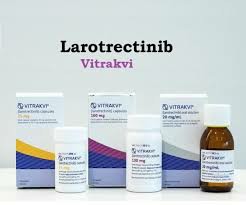
Based on multiple key clinical trial data, the overall response rate (ORR) of larotrectinib in NTRK fusion-positive tumors is approximately 75%-80% , with many patients achieving complete or partial responses. The ORR of entrectinib is also close to the 70%-80% range, and there is not much difference in efficacy between the two. Some direct or indirect comparative analyzes showed that larotrectinib showed higher response rates in some tumor types, especially in pediatric patients.
2.Duration of response (DoR) and progression-free survival (PFS)
The median sustained response time of larotrectinib patients exceeded 28 months, and the progression-free survival also reached 28 months, indicating that its efficacy is durable. The median DoR of entrectinib is about 12-20 months, and the progression-free survival is slightly lower than that of larotrectinib, but it is still clinically superior. The difference in sustained remission time may be related to the selectivity and resistance mechanism of the drug.
3.Effectiveness of patients with brain metastasis
Brain metastasis is a common challenge for patients with NTRK fusion tumors. Entrectinib has good blood-brain barrier penetration ability, shows significant efficacy in patients with brain metastases, and has a high brain remission rate. Larotrectinib also has central nervous system activity, and patients with brain metastases can also benefit. However, there are relatively few relevant data, and the difference in efficacy requires further study.
3. Safety and Tolerability
Both are considered well tolerated, but side effects vary. Common adverse reactions of larotrectinib include fatigue, nausea, headache and myalgia, and serious adverse reactions are less common. Due to its multi-target properties, entrectinib may cause more diverse side effects, such as cardiotoxicity (QT interval prolongation), abnormal taste and hematological abnormalities. Overall, larotrectinib has a relatively narrower side effect spectrum and may have better patient compliance.
4. Scope of indications and convenience of medication
In addition to NTRK fusion tumors, entrectinib has also been approved for ROS1 positive non-small cell lung cancer, with wider indications. Larotrectinib focuses on NTRK fusion tumors, covering a variety of solid tumors in adults and children. In terms of treatment dosage forms, both are oral preparations and are easy to use.
5. Clinical Selection Suggestions
The choice between larotinib and entrectinib needs to be comprehensively considered based on the patient's specific conditions. If the patient only has NTRK fusion, especially if there are no other driver gene mutations, larotrectinib is usually the preferred choice due to its high selectivity and good safety profile. If the patient has ROS1 fusion or brain metastasis, entrectinib has certain advantages. In addition, the patient's previous treatment history, comorbid diseases, and drug tolerance also affect decision-making.
Overall, both larotrectinib and entrectinib demonstrated good efficacy and safety in the treatment of NTRK fusion-positive tumors. Larotinib has a slight advantage in terms of sustained efficacy and safety, and is suitable for most NTRK fusion patients; entrectinib shows unique advantages in specific patient groups due to its multi-target properties and activity against brain metastasis. In the future, with the development of more clinical studies and the accumulation of real-world data, the differences and optimal usage scenarios between the two will become clearer, providing patients with more accurate individualized treatment plans.
Reference materials:https://www.drugs.com/
xa0
[ 免责声明 ] 本页面内容来自公开渠道(如FDA官网、Drugs官网、原研药厂官网等),仅供持有医疗专业资质的人员用于医学药学研究参考,不构成任何治疗建议或药品推荐。所涉药品可能未在中国大陆获批上市,不适用于中国境内销售和使用。如需治疗,请咨询正规医疗机构。本站不提供药品销售或代购服务。


