
.jpeg)
Mechanisms of resistance are critical to guide treatment selection after osimertinib treatment in EGFR+ non-small cell lung cancer
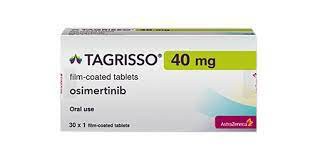
First-line Osimertinib/Tagressa (Osimertinib) or combination therapy is a second-line treatment pathway for patients with EGFR-mutated non-small cell lung cancer (NSCLC) who have developed resistance. These include secondary mutation-targeted therapies; chemotherapy-based treatments, including the phase 3 MARIPOSA-2 trial (NCT04988295) regimen of amivantamab plus chemotherapy, with or without lazertinib; and antibody-drug conjugates (ADCs) such as patitumab deruxtecan (HER3-DXd) and datopotamab deruxteca; Dato DXd; Datroway). As we move away from the one-size-fits-all era of first-line EGFR mutant NSCLC, there are now at least 3 sizes and likely more to come.
AlthoughMET amplification remains a core driver of drug resistance in EGFR-mutant NSCLC, other drug-resistant alterations, including secondary mutations and fusions involving EGFR itself or other oncogenic pathways, are likely to be achieved through targeted therapies. As long as there are safety data to guide selection, detection of secondary resistance mutations such as RET fusions may be helpful in considering combination approaches. However, despite the emergence of new resistance drivers, EGFR mutations persist. Therefore, completely abandoning EGFR targeting strategies, except in the context of chemotherapy, may compromise efficacy.
1. Adding servotinib to osimertinib shows potential in treating osimertinib-resistant diseases
Clinical data supporting inhibition ofMET in the setting of acquired resistance to osimertinib are reviewed. Results from the SAVANNAH Phase 2 (NCT03778229) and SACHI Phase 3 (NCT05015608) trials, both due out in 2025, showed a progression-free survival (PFS) benefit from the combination of savolitinib and osimertinib. At SAVANNAH, median progression-free survival was 8.3 months (95% confidence interval, 5.8-15.1) for patients who received sivotinib plus osimertinib compared with 3.6 months (95% CI, 1.4-5.7) for those who received sivotinib plus placebo (HR, 0.27; 95% confidence interval: 0.13-0.57). The median duration of response (DOR) was 9.9 months. 2
Similarly, inSACHI, the median PFS was 8.2 months (95% CI, 6.9-11.2) with sarvotinib plus osimertinib compared with 4.5 months (95% CI, 3.0-5.4) with chemotherapy (HR, 0.34; 95% CI, 0.23-0.49; P<.0001). 3 Median overall survival was 22.9 months (95% CI, 16.8-not evaluable) with the combination and 17.7 months (1995% CI, 14.9-26.3) with chemotherapy, although these data are still evolving.
CombiningMET inhibitors with osimertinib can lead to MET-related adverse reactions, such as edema. She also highlighted the heterogeneity of MET alterations, which often involve overexpression or amplification rather than point mutations. For MET, one often deals with expression levels, amplification or protein levels, not just mutations. The mutation of MET in the context of drug resistance is not so much a mutation but a higher level of expression.
2. Current status of chemotherapy regimens after osimertinib
Although saivotinib is still in the investigational stage, other MET-targeted drugs with available safety data may also be used off-label in combination with EGFR TKIs.
Evantumumab, a bispecific antibody targeting EGFR and MET, has been approved by the U.S. Food and Drug Administration and is a relevant treatment option in this setting. Data from the MARIPOSA-2 trial to be submitted in 2023 support the addition of evantumumab to chemotherapy after progression on osimertinib. At a median follow-up of 8.7 months, evantumumab plus chemotherapy significantly improved PFS compared with chemotherapy alone (HR, 0.48; 95% CI, 0.36-0.64; P<0.001). This combination also showed a favorable trend for OS (HR, 0.77; 95% CI, 0.49-1.21), although OS data remains immature.
In addition, new data from an analysis of the efficacy of evantuzumab based on osimertinib resistance mechanisms submitted in2025 showed that evantuzumab combined with chemotherapy improved detectable ctDNA at baseline and PFS in patients with TP53 co-mutations (HR, 0.63; 95% CI, 0.44-0.92; P=.014).
The role of platinum-based chemotherapy regimens, such as carboplatin plus pemetrexed, with or without continuation of osimertinib, was a prominent area of debate before the emergence of otherEGFR inhibitors. The decision remains largely dependent on patient-specific factors and underlying resistance mechanisms, she said. Other chemotherapy-based combinations include carboplatin, paclitaxel, bevacizumab, and atezolizumab, and carboplatin, pemetrexed, and ivonescimab.
The first approach is reminiscent of many other drugs that combine VEGF and immunotherapy in EGFR mutant diseases. Every trial looking at chemotherapy plus or minus VEGF and immunotherapy has been positive. Trials of chemotherapy plus VEGF TKI plus or minus immunotherapy have not been positive. .
Reference materials:https://www.onclive.com/view/understanding-underlying-resistance-mechanisms-is-vital-for-guiding-treatment-selection-post-osimertinib-in-egfr-nsclc
[ 免责声明 ] 本页面内容来自公开渠道(如FDA官网、Drugs官网、原研药厂官网等),仅供持有医疗专业资质的人员用于医学药学研究参考,不构成任何治疗建议或药品推荐。所涉药品可能未在中国大陆获批上市,不适用于中国境内销售和使用。如需治疗,请咨询正规医疗机构。本站不提供药品销售或代购服务。


