
.jpeg)
Detailed explanation of the functions, efficacy and clinical application of Trientine
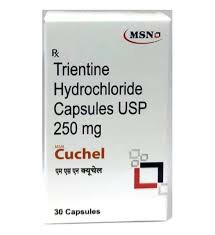
Trientine (Trientine) is an important copper chelator, mainly used to treat Wilson's disease (Wilson’s disease), which is a hereditary disease in which abnormal copper metabolism leads to excessive accumulation of copper in the body. Trientine binds excess copper ions in the body, promotes its excretion, and reduces tissue damage, especially damage to the liver and nervous system. As an important drug choice for patients with Wilson's disease, trientine has demonstrated significant efficacy and good safety in clinical treatment, and has become one of the core drugs in the management of Wilson's disease.
1. Mechanism of action
The main mechanism of action of trientine is to reduce the concentration of free copper in the body by forming a stable complex with free copper ions. This complex is mainly excreted through urine, effectively reducing the accumulation of copper in the body and preventing toxic damage to the liver, brain and other organs caused by copper ions. Compared with penicillamine, another commonly used copper chelator, trientine has a lower risk of allergic reactions and is better tolerated, and is suitable for patients who are intolerant to penicillamine or experience severe side effects.
2. Clinical application
Trientine is mainly used for long-term maintenance treatment of Wilson's disease and initial treatment of some patients. If early-stage patients with Wilson's disease can use trientine for copper excretion treatment in a timely manner, the disease progression can be effectively controlled and liver function abnormalities and neurological symptoms can be improved. Trientine provides a safe and effective alternative for patients who are refractory to or intolerant to penicillamine therapy. In recent years, with the deepening of understanding of Wilson's disease, the scope of application of trientine has gradually expanded, becoming one of the preferred clinical copper chelators.
In addition, trientine is also used to assist in the treatment of other diseases caused by abnormal copper metabolism. Although these applications are still in the research stage, some reports have shown its potential efficacy in certain neurological diseases related to copper metabolism disorders, showing broad development prospects.
3. Efficacy and safety
Multiple clinical studies have shown that trientine can significantly improve liver function indicators, relieve neurological symptoms, and improve quality of life in patients with Wilson's disease. During treatment, urinary copper excretion increased and serum unbound copper levels decreased in most patients, demonstrating the drug's effectiveness in controlling the body's copper load. Compared with penicillamine, trientine has a lower incidence of adverse reactions. Common side effects include gastrointestinal discomfort and mild anemia. Severe allergic reactions are rare and well tolerated by patients.
The safety profile of trientine makes it particularly suitable for patients who are sensitive to or have contraindications to other copper chelators. Clinicians should regularly monitor patients' liver function, blood indicators and copper metabolism-related indicators during medication to ensure the safety and effectiveness of treatment.
4. Medication guidance and precautions
Trientine is generally administered orally, and the dosage and medication regimen need to be adjusted individually based on the patient's specific condition and copper metabolism. Patients should follow medical advice during medication, review regularly, and avoid stopping medication or adjusting dosage at will. Symptoms may fluctuate in the early stages of treatment, so you should observe closely and communicate with your doctor in a timely manner.
At the same time, patients should pay attention to avoid ingesting high-copper foods, such as animal liver, shellfish and nuts, and the effect will be better when combined with drug treatment. The use of trientine in certain special groups such as pregnant women and children must be done with caution and under the guidance of a professional doctor.
In short, trientine, as an important drug in the treatment of Wilson's disease, has significant clinical value by effectively removing excess copper ions from the body, controlling the development of the disease, and improving patient symptoms. With the accumulation of more clinical data and rich treatment experience, trientine will play a greater role in the treatment of Wilson's disease and related disorders of copper metabolism, bringing better prognosis and quality of life to patients.
Reference materials:https://www.drugs.com/
[ 免责声明 ] 本页面内容来自公开渠道(如FDA官网、Drugs官网、原研药厂官网等),仅供持有医疗专业资质的人员用于医学药学研究参考,不构成任何治疗建议或药品推荐。所涉药品可能未在中国大陆获批上市,不适用于中国境内销售和使用。如需治疗,请咨询正规医疗机构。本站不提供药品销售或代购服务。


