
.jpeg)
Dosage changes corresponding to different stages of imatinib
Imatinib/Gleevec (Imatinib) is not “one dose fits all” in clinical treatment. Its dosage is dynamically adjusted according to the patient’s disease stage, degree of response, drug tolerance and comorbid symptoms. In patients with chronic myelogenous leukemia (CML), the standard recommended starting dose is 400 mg orally once daily, which is suitable for most patients in the chronic phase. This dose can effectively control BCR-ABL protein activity and has relatively mild side effects, which is conducive to long-term maintenance treatment.
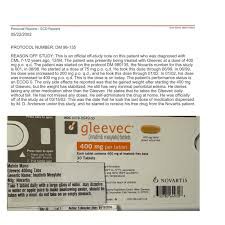
For patients entering the accelerated phase or blast phase, the number of leukemia cells increases sharply and the disease progresses rapidly. Therefore, clinical dosage will be increased to 600mg to 800mg per day to enhance control of the disease. This stage is usually accompanied by increased drug tolerance, so high-dose administration requires close monitoring of liver function, blood cell changes, and adverse reactions. For patients with partial drug resistance or poor treatment response, doctors will use gene mutation analysis to determine whether they are suitable to continue imatinib treatment or need to switch to second-generation TKI drugs.
In gastrointestinal stromal tumors (GIST), the recommended dose is mostly 400 mg per day, but if a specific site mutation in the KIT gene (such as exon 9 mutation) is found, the dose often needs to be increased to 800 mg. Such dose adjustments are often based on molecular testing results to achieve higher target coverage. In addition, some patients with postoperative adjuvant therapy will also receive a longer period of 400 mg maintenance dose to reduce the risk of recurrence.
If serious side effects occur during the medication, such as persistent edema, muscle pain or abnormal liver function, the doctor can reduce the dose to 300mg or even suspend treatment according to the severity of the symptoms, and then gradually resume after the symptoms are relieved. Taken together, the dose management of imatinib is highly individualized. Doctors usually judge the treatment response through regular hematology evaluation and molecular monitoring (such as BCR-ABL transcription levels), so as to formulate a dynamic adjustment plan to balance efficacy and safety.
Reference materials:https://www.gleevec.com/
[ 免责声明 ] 本页面内容来自公开渠道(如FDA官网、Drugs官网、原研药厂官网等),仅供持有医疗专业资质的人员用于医学药学研究参考,不构成任何治疗建议或药品推荐。所涉药品可能未在中国大陆获批上市,不适用于中国境内销售和使用。如需治疗,请咨询正规医疗机构。本站不提供药品销售或代购服务。


