
.jpeg)
Bezotevan Chinese manual full version download guide
1. Common name: Belzutifan, Belzutifan
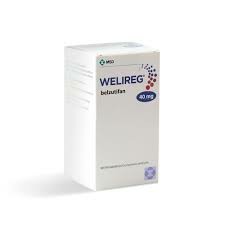
Product name: WELIREG, WELIREG
2. Indications:
Belzutifan is indicated to treat the following conditions:
1. von Hippel-Lindau (VHL) disease: It is suitable for the treatment of adult patients with von Hippel-Lindau (VHL) disease who require treatment of associated renal cell carcinoma (RCC), central nervous system (CNS) hemangioblastoma, or pancreatic neuroendocrine tumors (pNET) and do not require immediate surgery.
2. Advanced renal cell carcinoma (RCC): It is suitable for the treatment of adult patients with advanced renal cell carcinoma (RCC), whose cellular components are clearly visible after programmed death receptor-1 (PD-1) or programmed death ligand 1 (PD-L1) inhibitors and vascular endothelial growth factor tyrosine kinase inhibitors (VEGF-TKI).
3. Pheochromocytoma or paraganglioma (PPGL): It is suitable for the treatment of adults and children aged 12 years and above with locally advanced, unresectable or metastatic pheochromocytoma or paraganglioma (PPGL).
3. Usage and dosage:
1. Recommended dose: The recommended dose of Bezotifan for adult patients is 120 mg, taken orally once a day. Besetifan dosage for pediatric patients 12 years of age and older is based on body weight: patients weighing ≥40 kg: 120 mg orally daily; patients weighing <40 kg: 80 mg orally daily. Continue administration until disease progression or unacceptable toxicity.
2. Medication management: Bestivan should be taken at the same time every day, with or without food. Patients are advised to swallow the tablet whole. Do not chew, crush, or split bestivan before swallowing. If a dose of besetivan is missed, it can be taken as soon as possible that day. Resume your regular daily dosing schedule the next day. Do not take extra tablets to make up for a missed dose. If you experience vomiting at any time after taking besetivan, do not take it again. Take the next dose the next day.
3. Dosage adjustment: Adverse reactions may occur when using Bestifan. The dose of the drug can be adjusted under the guidance of a doctor. The first dose is reduced to 80 mg orally once a day; the second dose is reduced to 40 mg; Patients who cannot tolerate 40 mg should permanently discontinue Bestifan.
4. Adverse reactions:
In clinical studies of besetivan, the most common adverse reactions, including laboratory abnormalities, included decreased hemoglobin, fatigue, increased creatinine, headache, dizziness, increased blood sugar, and nausea.
5. Supply and storage:
Besotivan is available as 40 mg tablets and can be stored at 20°C to 25°C (68°F to 77°F), with excursions allowed between 15°C and 30°C (59°F to 86°F).
6. Mechanism of action:
Bestivan is an inhibitor of hypoxia-inducible factor2α (HIF-2α). HIF-2α is a transcription factor that plays a role in oxygen sensing by regulating genes that promote adaptation to hypoxia. Under normal oxygen levels, HIF-2α is targeted by VHL proteins to the ubiquitin proteasome for degradation. The lack of functional VHL protein leads to the stabilization and accumulation of HIF-2α. After stabilization, HIF-2α translocates into the nucleus, interacts with hypoxia-inducible factor 1β (HIF-1β) to form a transcription complex, and induces the expression of downstream genes, including genes related to cell proliferation, angiogenesis, and tumor growth.
Bezutivan binds toHIF-2α. Under conditions of hypoxia or impaired VHL protein function, bezutivan blocks the HIF-2α-HIF-1β interaction, resulting in reduced transcription and expression of HIF-2α target genes. In vivo, bestivan demonstrated antitumor activity in a mouse xenograft model of renal cell carcinoma.
Reference materials:https://www.welireg.com/
[ 免责声明 ] 本页面内容来自公开渠道(如FDA官网、Drugs官网、原研药厂官网等),仅供持有医疗专业资质的人员用于医学药学研究参考,不构成任何治疗建议或药品推荐。所涉药品可能未在中国大陆获批上市,不适用于中国境内销售和使用。如需治疗,请咨询正规医疗机构。本站不提供药品销售或代购服务。


