
.jpeg)
UPDATE: FDA extends review of ruxolitinib/ruxolitinib cream for AD in children
Recently, the Food and Drug Administration (FDA) announced that it will extend the review period for Incyte's supplemental new drug application (sNDA) for ruxolitinib cream (ruxolitinib) for the treatment of children 2 to 11 years old with mild to moderate atopic dermatitis (AD) . .
According to Incyte's announcement, the FDA extended the PDUFA date to fully review additional chemical, manufacturing and control data for ruxolitinib cream 0.75% formulation in response to the FDA's recent request for information. This move shows that regulatory agencies attach great importance to the quality, safety and effectiveness of drugs and want to ensure that all submitted data can support the reasonableness and necessity of their marketing.
InIncyte's announcement, Atopic dermatitis is a chronic immune-mediated skin disease that is difficult to control, especially for the millions of children affected by AD. , Ruxolitinib cream is expected to become an important nonsteroidal topical treatment option for pediatric patients with AD, and Incyte will continue to work closely with the FDA to ensure that the agency has access to all the information needed to complete its review. This positive attitude not only reflects Incyte's confidence in its products, but also reflects its concern for the health of its pediatric patients.
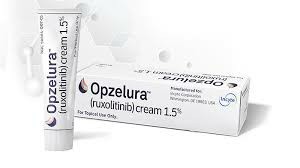
In the context of FDA’s extended review period, the potential approval of ruxolitinib cream has attracted widespread attention in the industry. The drug's NDA submission is based on data from the TRuE-AD3 Phase 3 study (NCT04921969), which evaluated the safety and efficacy of ruxolitinib cream in patients younger than 12 years of age. It is worth noting that ruxolitinib cream is currently approved for mild to moderate AD patients aged 12 years and above. This new expansion will provide treatment options for younger groups and fill an important gap in the market.
The results of the TRuE-AD3 study showed that the study met its expected primary endpoint, with a significantly higher proportion of patients treated with ruxolitinib cream achieving investigator global assessment of treatment success (IGA-TS) compared with patients treated with vehicle cream. In addition, patients' improvement in eczema area and severity index at week 8.1 also exceeded expectations, achieving significant results of at least 75% improvement. These data further strengthen the potential of ruxolitinib cream as a treatment for atopic dermatitis.
In the expandedTRuE-AD3 data, the proportion of patients who received ruxolitinib cream 0.75% and 1.5% achieved IGA-TS was significantly higher than those who received the control cream. More than half (54%) of patients received a 0 or 1 on the scale, indicating complete or near-complete clearance of their eczema. Regarding pruritus, 73% of nearly 3 patients improved their Numerical Pruritus Rating Scale score by at least 4 points at 4.2 weeks, further demonstrating the effectiveness of ruxolitinib cream.
In terms of safety,The safety profile of ruxolitinib cream in the TRuE-AD3 study was consistent with previously reported data in pediatric patients, and no new safety signals were observed. During the 8-week vehicle-controlled period, no major adverse events such as serious infections, major adverse cardiovascular events, malignancies, or thrombosis were reported. Although application site pain was the most common treatment-related adverse event, it was reported in only 2.7% of patients treated with ruxolitinib cream and 0% of patients treated with vehicle cream. These treatment-related events are usually minor and do not affect the duration of treatment or lead to discontinuation.
In summary, the FDA’s extended review of ruxolitinib cream means waiting, but it also provides sufficient time to fully evaluate the safety and effectiveness of this potential therapy. For countless children and their families suffering from atopic dermatitis, we look forward to the early approval of ruxolitinib cream, which will provide a new hope and choice.
Reference: https://www.dermatologytimes.com/view/update-fda-extends-review-of-ruxolitinib-cream-for-pediatric-ad
[ 免责声明 ] 本页面内容来自公开渠道(如FDA官网、Drugs官网、原研药厂官网等),仅供持有医疗专业资质的人员用于医学药学研究参考,不构成任何治疗建议或药品推荐。所涉药品可能未在中国大陆获批上市,不适用于中国境内销售和使用。如需治疗,请咨询正规医疗机构。本站不提供药品销售或代购服务。


