
.jpeg)
Application and research progress of Binimetinib in the treatment of KRAS lung cancer
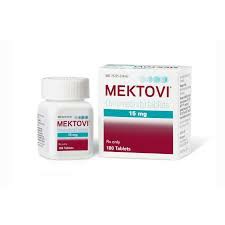
Binimetinib is a selective MEK1/2 inhibitor initially used to treat melanoma harboring BRAF mutations. However, with in-depth research on the driving mechanism of KRAS mutations, especially in non-small cell lung cancer (NSCLC), KRAS Mutation has become an important target for targeted therapy. Bimetinib, as an inhibitor of the key enzyme MEK in the downstream pathway, has gradually been included in the research field of KRAS mutated lung cancer. In KRAS mutant lung cancer, the sustained activation of the Ras-MAPK pathway is an important mechanism for tumor cell proliferation and evasion of immune clearance. MEK inhibitors can exert potential anti-tumor effects by downregulating the activity of this pathway.
At present, the efficacy of bimetinib as a single agent in KRAS mutated lung cancer is relatively limited, and the objective response rate (ORR) is generally not high, but it shows greater potential in combination therapy. Especially with EGFRinhibitors, KRAS When combined with G12Cinhibitors (such asSotorasib) or immunotherapy drugs (such asPD-1inhibitors), studies have shown that the therapeutic effect of KRASmutant tumors can be enhanced. For example, some preclinical studies have shown that bimetinib combined with KRAS G12C inhibitors can achieve synergistic anti-cancer effects by enhancing the apoptosis signaling pathway, and some clinical trials are also ongoing to verify the efficacy and safety of this strategy.
In addition to combining targeted drugs, bimetinib has also attracted attention in combination with immunotherapy. KRAS Mutated lung cancer is often accompanied by suppression of the immune microenvironment. MEK inhibitors can indirectly enhance PD-1/PD-L1 by changing the tumor microenvironment and improving antigen presentation ability.Efficacy of immune checkpoint inhibitors. Some early-stage clinical trials are exploring whether combination therapy with bimetinib and PD-1 antibodies can improve response rates in patients who are ineffective or resistant to immunotherapy. This type of combination regimen may become a new treatment path for KRAS mutated lung cancer, especially immune-cold tumors, in the future.
In summary, the research of bimetinib in KRAS mutated lung cancer is still in the exploratory stage, and the efficacy of single drug is not ideal, but it shows certain promise in combination treatment strategies. Future development directions may focus on precise patient screening, optimization of combination therapies, and research on resistance mechanisms. With the accumulation of more clinical data, bimetinib is expected to occupy a place in the treatment system for KRAS mutated lung cancer, providing more personalized and targeted treatment options for patients with this type of refractory tumors.
Reference materials:https://www.drugs.com/
[ 免责声明 ] 本页面内容来自公开渠道(如FDA官网、Drugs官网、原研药厂官网等),仅供持有医疗专业资质的人员用于医学药学研究参考,不构成任何治疗建议或药品推荐。所涉药品可能未在中国大陆获批上市,不适用于中国境内销售和使用。如需治疗,请咨询正规医疗机构。本站不提供药品销售或代购服务。


