
.jpeg)
Which of the two drugs, Atrasentan or Nafukang, is more effective?
Atrasentan (Atrasentan) and Nafukang (Budesonide Enteric-coated Capsules) are two drugs suitable for different diseases. They have fundamental differences in treatment mechanisms, indications and targets. Comparing the "better therapeutic effect" of these two drugs is not a simple comparison of advantages and disadvantages, but should be comprehensively judged based on various factors such as respective indications, patient disease type, treatment goals, and individual tolerance. This article will compare these two drugs in detail in terms of pharmacological mechanisms, indications, efficacy performance and safety to help patients more clearly understand their clinical application value.
1. Drug introduction and mechanism differences
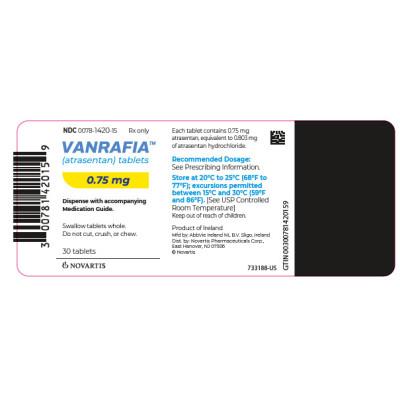
Atrasentan (Atrasentan) is a selective endothelinA receptor antagonist that mainly acts on the endothelium The hormone system, by inhibiting the binding of endothelin-1 and its A type receptor, achieves the effect of dilating blood vessels, reducing intraglomerular pressure and proteinuria. Its main development direction is to control proteinuria and protect renal function in chronic kidney disease (CKD), especially diabetic nephropathy. In some studies, its potential anti-metastatic effect in tumors such as prostate cancer is also explored.
Naifukang, also known as budesonide enteric-coated capsules, is a locally acting glucocorticoid that is widely used to treat inflammatory bowel disease (IBD), such as mild to moderate Crohn's disease, microcolitis, etc. Its advantage is that it is released in the intestine after oral administration and acts locally. It has a strong anti-inflammatory effect and relatively low systemic side effects. It is a commonly used first-line induction and remission treatment drug for patients with IBD.
2. Comparison of indications and efficacy performance
Atrasentan is mainly used to treat patients with chronic kidney disease related to type 2 diabetes. Studies have shown that it can significantly reduce urinary protein excretion and delay the decline of renal function. existIn the SONAR study, atrasentan has a significant effect on reducing proteinuria in patients with diabetic nephropathy based on standard treatment (such as ACEI/ARB). At the same time, under appropriate dosage control, the incidence of side effects such as heart failure is acceptable. Therefore, atrasentan may be an effective adjunctive treatment option in patients with diabetic nephropathy who have persistent proteinuria.
Budesonide enteric-coated capsules are mainly used for digestive system diseases, especially Crohn's disease. In clinical studies, budesonide is effective in inducing remission. Some studies have shown that its remission rate for right-sided ileal Crohn's disease is as high as 60% and its side effects are much lower than systemic glucocorticoids such as prednisone. Therefore, for patients with inflammatory bowel disease, budesonide is one of the first-choice drugs with both safety and efficacy.
3. Comparison of safety and side effects
The side effects of atrasentan are mainly related to its vasodilatory effect and water and sodium retention. It may cause weight gain, peripheral edema, nasal congestion, and in severe cases, heart failure. It should be used with caution especially in patients with basic cardiac dysfunction. This drug requires regular monitoring of blood pressure, electrolytes, kidney function, and heart function. It is a prescription drug that needs to be used under close supervision.
Because budesonide has strong local anti-inflammatory effects and less systemic absorption, systemic side effects are relatively mild. However, long-term use may still cause typical hormonal side effects, such as osteoporosis, skin thinning, increased risk of infection, etc., especially when the recommended dose is exceeded or the course of treatment is too long. In addition, budesonide may cause mild adverse reactions such as gastrointestinal discomfort and appetite changes, which can usually be alleviated by dose adjustment.
Taken together, although atrasentan and budesonide are both prescription drugs, their therapeutic targets and mechanisms of action are completely different. Atrasentan is mainly used for proteinuria management in kidney disease, especially diabetic nephropathy, while budesonide focuses on intestinal inflammation control. There is no direct distinction between the two. Instead, the drug should be selected based on the patient's specific disease type, severity of illness, previous treatment response and tolerance.
If the patient is a patient with chronic proteinuriaType 2 diabetic nephropathy, and the proteinuria is not adequately controlled after basic treatment, atrasentan can be a potential choice; and if the patient has Crohn's disease or other inflammatory bowel disease, budesonide is the standard drug for inducing remission.
In actual clinical use, doctors usually formulate individualized treatment plans based on specific circumstances. It is not recommended that patients compare the efficacy of the drugs themselves and then change treatment drugs. Assessment and adjustment must be made under the guidance of a professional doctor. The correct medication strategy is based on the nature of the disease to ensure efficacy while reducing the risk of adverse reactions. As with any drug, safety and suitability should take precedence over simple comparisons of potency and potency.
Reference materials:https://www.drugs.com/
[ 免责声明 ] 本页面内容来自公开渠道(如FDA官网、Drugs官网、原研药厂官网等),仅供持有医疗专业资质的人员用于医学药学研究参考,不构成任何治疗建议或药品推荐。所涉药品可能未在中国大陆获批上市,不适用于中国境内销售和使用。如需治疗,请咨询正规医疗机构。本站不提供药品销售或代购服务。


