
.jpeg)
Rubicatin/rubitin demonstrates safety and modest efficacy in ES-SCLC
Lurbinectedin demonstrated good safety and modest efficacy as a compassionate-use treatment in patients with extensive-stage small cell lung cancer (ES-SCLC), according to published results of a multicenter international study.
After a median follow-up of 5.53 months (IQR, 4.61-11.71), the objective response rate (ORR) of 238 patients was 23.1% (95%CI, 17.8%-28.4%), The corresponding response rates for patients in the Netherlands (n=204; 85.7%) and Italy (n=34; 14.3%) were 24.5% (95% CI, 18.6%-30.4%) and 14.7% (95% CI, 2.7%-23.9%) respectively. In the total cohort, the Dutch cohort and the Italian cohort, the disease control rate (DCR) was 45.4% (95% CI, 39.1%-51.7%), 48.0% (95% CI, 41.2%-54.9%) and 29.0% (95% CI, 15.1%-47.5%), respectively.
The median duration of response (DOR) in the entire trial population was 2.8 months (95% CI, 2.0-3.5), the median progression-free survival (PFS) was 2.2 months (95% CI, 1.6-2.8), and the median overall survival (OS) was 5.4 months (95% CI, 4.5-6.3). The 6-month progression-free survival rate and overall survival rate were 12.2% (95%CI, 8.3%-17.0%) and 42.4% (95%CI, 36.1%-49.0%) respectively. In the Italian cohort, Dutch patients had a slightly longer median OS, 5.6 months vs. 3.6 months, but a slightly lower median PFS, 1.8 months vs. 2.3 months, and a median DOR, 2.8 months vs. 4.6 months.
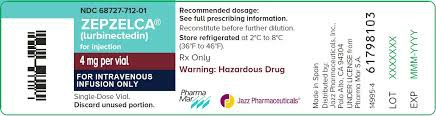
The study provides valuable real-world insights into the efficacy and safety of rubitidine as a compassionate use treatment for ES-SCLC, supporting its use with results consistent with those observed in clinical trials and other real-world studies. However, outcomes in patients with poorer [performance status] at initiation of treatment, chemotherapy-free interval [CFI] less than 90 days, and brain or liver metastases are still suboptimal and should be carefully considered when making treatment decisions.
This prospective study enrolled ES-SCLC patients who received 3.2 mg/m2 intravenously every 3 weeks or thereafter from November 29, 2019, to September 30, 2024 Rubitidine as second-line treatment. The median number of previous lines of therapy was 2 (range 1-7). In broad stage diagnosis, the most common site of metastasis was liver (35.7%), followed by bone (24.4%). Most patients had a CFI less than 90 days (84.4%), received 3 lines of rubitidine therapy (45.0%), and had an ECOG performance score of 0 to 1 (71.0%) at the start of treatment.
The Dutch and Italian cohorts were generally balanced, with major differences including the proportion of patients who were male (45.6% vs. 67.6%), current smokers (26.5% vs. 41.2%), those who had received one prior treatment (29.4% vs. 52.9%), and those who had received prior chemoimmunotherapy (12.3% vs. 64.7%). The study's primary endpoints are real-world efficacy, including ORR, DCR, DOR, PFS and OS, as well as safety. Secondary endpoints included patient clinicopathological characteristics and therapeutic management.
MultivariableCox regression analysis showed that patients with CFI lasting 90 days or longer benefited specifically compared with patients with chemotherapy-resistant disease; median progression-free survival was 3.1 months versus 1.8 months (HR, 0.46; 95%CI
Treatment-related adverse events (TRAEs) occurred in 92% of patients, with 29% experiencing at least a Grade 1, 3 or 4 TRAE. The most common AEs included fatigue (46%), anemia (38%), neutropenia (35%), increased gamma-glutamyl transferase levels (24%), increased aspartate transferase or alanine aminotransferase (22%), thrombocytopenia (21%), nausea (20%), and hypoalbuminemia (19%).
Reference materials:https://www.cancernetwork.com/view/real-world-lurbinectedin-exhibits-safety-and-modest-efficacy-in-es-sclc
[ 免责声明 ] 本页面内容来自公开渠道(如FDA官网、Drugs官网、原研药厂官网等),仅供持有医疗专业资质的人员用于医学药学研究参考,不构成任何治疗建议或药品推荐。所涉药品可能未在中国大陆获批上市,不适用于中国境内销售和使用。如需治疗,请咨询正规医疗机构。本站不提供药品销售或代购服务。


