
.jpeg)
The main functions and clinical application scope of teclistamab
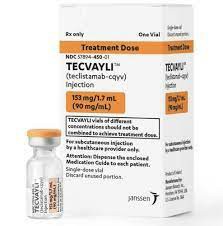
Teritolumab (Teclistamab) is a new bispecific T cell-directed antibody, mainly used to treat relapsed or refractory multiple myeloma (RRMM). Its development represents an important breakthrough in cancer immunotherapy, providing new treatment hope especially in the context of current limited treatment options for multiple myeloma. The following will elaborate on its mechanism of action, clinical efficacy, applicable groups and precautions.
1. Mechanism of action: Bispecific antibodies bridge T cells and tumor cells
Teclistamab is a bispecific antibody targeting BCMA (B cell maturation antigen) and CD3 (part of the T cell receptor complex). BCMA is a characteristic antigen on the surface of multiple myeloma cells, while CD3 is present on all T cells. Teclistamab The unique feature is: one end binds BCMA to lock tumor cells, and the other end binds CD3, recruit and activate T cells, forming an "immune bridge" so that T cells can directly recognize and attack myeloma cells and induce their apoptosis. This mechanism is similar to "cell-to-cell guided killing" and has a fast, precise and efficient anti-tumor effect.
This dual targeting not only improves killing efficiency, but also helps to bypass drug resistance problems that may arise in traditional antibody treatments. At the same time, since BCMA is mainly expressed on myeloma cells and plasma cells and less in normal tissues, Teclistamab has good tumor selectivity and is expected to reduce the damage to normal cells.
2. Clinical efficacy: breakthrough performance in patients with severely relapsed myeloma
The clinical efficacy of Teclistamab has been confirmed in multiple pivotal trials, the most representative of which is the MajesTEC-1 study. The study recruited a group of patients with relapsed/refractory multiple myeloma who had received at least three lines of treatment. Most of these patients had developed resistance to standard therapies such as immunomodulators, proteasome inhibitors and anti-CD38 monoclonal antibodies.
The results showed that in patients treated with Teclistamab, the overall response rate (ORR) exceeded 60%, and some patients even achieved very good partial response (VGPR) or even complete response (CR). This data is of high clinical significance for a group of critically ill patients who have no standard treatment options.
It is worth noting that Teclistamab has a relatively quick onset of action, and some patients can observe significant tumor shrinkage or M protein decline within the first few weeks of treatment. At the same time, during the duration of treatment, some patients can maintain a longer progression-free survival (PFS), showing good sustained efficacy.
3. Scope of application and user groups
Currently, Teclistamab is mainly suitable for the following groups of people:
Patients with relapsed or refractory multiple myeloma, especially those whose disease has not been controlled after multiple lines of treatment including immunomodulators (such as lenalidomide), proteasome inhibitors (such as bortezomib), and monoclonal antibodies (such as daratumumab);
Patients who cannot tolerateCAR-Tcell therapy or are not suitable for autologous stem cell transplantation;
Patients who wish to receive new antibody drugs for immunotherapy, especially in the context of failure of traditional therapies.
Teclistamab must be used in experienced oncology medical institutions. Inpatient observation mode is usually adopted in the early stage of treatment to ensure timely intervention when immune-related side effects occur.
4. Safety and adverse reaction monitoring
AlthoughTeclistamab shows good therapeutic prospects, its immune mechanism may also bring about a series of related adverse reactions, the most common of which include:
1.Cytokine release syndrome (CRS): This is caused by the release of a large number of inflammatory factors after activation of T cells, such as fever, hypotension, dyspnea, etc. Most CRS symptoms are mild to moderate, and can be treated with tocilizumab (Tocilizumab) and other drugs.
2.Neurotoxicity (ICANS): A very small number of patients may experience central nervous system symptoms such as transient language impairment and confusion, which are usually reversible.
3.Increased risk of infection: Continuous activation of T cells may affect immune balance, leading to an increased risk of viral and bacterial infections. Therefore, preventive anti-infective drugs are often used during treatment.
4. Hematological toxicity: such as neutropenia, thrombocytopenia, etc. Blood routine needs to be monitored regularly.
DuringTeclistamab treatment, doctors need to closely monitor the patient's immune status and organ function, and evaluate the risks and benefits of treatment to achieve personalized treatment.
Teclistamab (Teclistamab) is a bispecific antibody targeting BCMA and CD3, providing a new treatment path for patients with relapsed or refractory multiple myeloma. It uses a unique "bridging" immune mechanism to guide T cells to accurately recognize and kill tumor cells, showing a high remission rate and long-lasting efficacy in clinical trials. Although there may be immune-related side effects, its safety is generally controllable under the management of professional doctors. As more research advances and indications expand, Teclistamab is expected to play a more important role in the field of immuno-oncology treatment.
Reference materials:https://www.drugs.com/
[ 免责声明 ] 本页面内容来自公开渠道(如FDA官网、Drugs官网、原研药厂官网等),仅供持有医疗专业资质的人员用于医学药学研究参考,不构成任何治疗建议或药品推荐。所涉药品可能未在中国大陆获批上市,不适用于中国境内销售和使用。如需治疗,请咨询正规医疗机构。本站不提供药品销售或代购服务。


