
.jpeg)
How effective is Guanfacine in treating attention deficit disorder?
Guanfacine has become an important drug in the treatment of attention deficit hyperactivity disorder (ADHD). ADHD is a common neurodevelopmental disorder, mainly characterized by persistent inattention, hyperactivity, impulsivity and other symptoms, which usually affects the learning, social interaction and daily life of children and adolescents. The therapeutic mechanism of guanfacine is relatively unique. It improves signal transmission between neurons by acting on α2 receptors in the prefrontal cortex and basal ganglia of the brain, helping to relieve the core symptoms of ADHD.
Guanfacine's exact mode of action inADHD is not yet fully understood, but scientists generally believe that it modulates and improves neural activity related to attention control and impulse inhibition by enhancing signal transmission in the cerebral cortex and basal ganglia areas. Especially in the prefrontal cortex, this brain area is responsible for higher cognitive functions such as executive control, decision-making, and impulse suppression. Therefore, the effects of guanfacine may help to enhance these functions and thereby effectively improve the symptoms of ADHD patients.
A number of clinical studies have verified the significant effect of guanfacine in improving ADHD symptoms. A study involving 337 children and adolescents aged 6 to 17 years showed that after 10 to 13 weeks of guanfacine treatment, patients experienced significant reductions in ADHD symptoms and an average reduction in ADHD scores (ADHD-RS-IV) of 24 points. Compared with the placebo group, the placebo group's score decreased by only 15 points. This result suggests that guanfacine is better than placebo in relieving ADHD symptoms. In addition, guanfacine was more effective than atomoxetine, another common ADHD drug, which only reduced scores by 19 points.
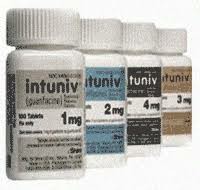
Another study of adolescents aged 13 to 17 years further confirmed the efficacy of guanfacine. In this study, after 13 weeks of treatment, the guanfacine group's ADHD score significantly decreased by 25 points, while the placebo group's score decreased by only 19 points. Similar research results have been verified in several other clinical trials, showing that guanfacine can significantly improve the symptoms of ADHD patients at different doses, especially in controlling impulses, hyperactivity, and improving concentration.
Not only that, but the long-term efficacy of guanfacine has also received research attention. In a long-term maintenance study, 301 children and adolescents aged 6 to 17 years received guanfacine versus placebo. The results showed that 49% of guanfacine patients experienced treatment failure, while the failure rate was as high as 65% in the placebo group. This result further proves that guanfacine is more effective than placebo in maintenance treatment and can effectively delay the worsening of symptoms.
Guanfacine's effect in treatingADHD is not limited to relieving symptoms. It also plays a positive role in improving patients' social functions and academic performance. Many ADHD patients face challenges such as learning difficulties and social problems, and guanfacine can help them better integrate into society, improve learning efficiency, and improve their overall quality of life by improving attention and enhancing self-control.
In addition, the side effects of guanfacine are relatively mild. Common side effects include drowsiness, headache, and gastrointestinal discomfort, which are usually mild and reversible. This makes guanfacine a relatively safe, non-stimulant ADHD treatment, especially for patients who are intolerant to traditional stimulant drugs such as methamphetamines.
Reference materials:https://go.drugbank.com/drugs/DB01018
[ 免责声明 ] 本页面内容来自公开渠道(如FDA官网、Drugs官网、原研药厂官网等),仅供持有医疗专业资质的人员用于医学药学研究参考,不构成任何治疗建议或药品推荐。所涉药品可能未在中国大陆获批上市,不适用于中国境内销售和使用。如需治疗,请咨询正规医疗机构。本站不提供药品销售或代购服务。


