
.jpeg)
Adagrasiib plus pembrolizumab produces response in KRAS G12C+ non-small cell lung cancer
Adagrasib added to pembrolizumab based on data from the KRYSTAL-Phase 7 trial (NCT04613596) submitted in 2025 vs. KRAS Efficacy and survival signals were generated in patients with G12Cmutant non-small cell lung cancer (NSCLC). According to the investigator's assessment, the overall response rate (ORR) for all patients was 44% (95% CI, 36%-53%); 1% of patients had a complete response, 43% of patients had a partial response, 37% of patients had stable disease, 8% of patients had disease progression, and 11% of patients were not evaluable (NE). The disease control rate was 81% (95%CI, 74%-87%).
In the biomarker-evaluable population, Patients with PD-L1 tumor proportion score (TPS) less than 1% had an ORR of 36% (90% CI, 23%-50 %), the ORS in patients with PD-L1-TPS of 1% to 49% was 41% (90% CI 25%-58%), and the ORS in patients with 50% or more was 61% (90% CI-46%-74%). Median progression-free survival (PFS) was 11.0 months (95% CI, 5.8-14.0). At 12 months, the PFS rate was 48% and at 18 months it was 38%. Median overall survival (OS) was 18.3 months (95% CI, 14.3-not evaluable [NE]). The OS rate was 62% at 12 months and 52% at 18 months. The median follow-up time was 22.8 months. Notably, 30% of patients received subsequent anticancer treatment, including chemotherapy (n=21) or checkpoint inhibitor chemotherapy (n=9).
Median PFS was 8.2 months (95% CI, 2.7-13.6) for patients with PD-L1 TPS less than 1%, 13.5 months (95% CI, 2.3-NE) for patients with a TPS of 1% to 49%, and 27.7 months (95% CI, 9.6-NE) for patients with a TPS of 50% or more. At 12 months, progression-free survival rates were 38%, 53%, and 65%, respectively, and at 18 months they were 29%, 37%, and 51%. Median OS was 15.5 months (95% CI, 9.6-NE) u200bu200bfor patients with PD-L1 TPS less than 1%, 14.3 months, 95% CI, 8.3-NE for patients with 1% to 49%, and median OS was not reached for 50% or more patients (95% CI, 19.4-NE). The OS rates at 12 months were 58%, 57%, and 78%, respectively, and at 18 months they were 42%, 48%, and 69%.
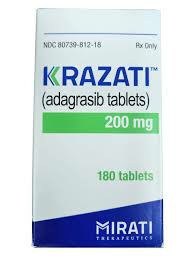
InKRYSTAL-7 Phase 2 study, first-line adagrasib pluspembrolizumab inThe chemotherapy-free regimen has shown good efficacy in patients with KRAS G12C mutant NSCLC. Efficacy was enhanced in patients with a PD-L1 TPS of 50% or higher. Treatment escalation, such as concurrent chemotherapy, may be useful in patients with PD-L1 TPS less than 50% and in certain other high-risk patients.
The trial evaluated 150 patients who received 400 mg of adagrasib orally twice daily and 200 mg of pembrolizumab intravenously every 3 weeks. Patients are eligible for treatment if they have KRAS G12C-mutated advanced, unresectable or metastatic non-small cell lung cancer; have not received prior systemic therapy for advanced or metastatic disease; have a known PD-L1 TPS; and are receiving treatment for neurologically stable brain metastases. The primary endpoint was each investigator's assessment of ORR. Secondary endpoints included duration of response and progression-free survival as assessed by each investigator, as well as OS and safety.
Overall,99% of patients received treatment, 77% discontinued treatment, 28% progressed, 22% experienced adverse reactions, 9% experienced worsening in overall health, 8% died, 7% withdrew from treatment, and less than 1% were lost to follow-up. Of note, patient trends were similar in the overall population and in the biomarker-evaluable population.
With regard to safety based onPD-L1 status, 96% of patients had a TPS less than 50% of patients had any treatment-related adverse effects (TRAEs), with 57% of patients having grade 3, 14% of patients having grade 4, and 3% of patients having grade 5. Adverse reactions leading to dose interruption of adagrasiib occurred in 68% of patients, 53% of patients had their dose of adagrasiib reduced, 5% of patients discontinued the drug, 20% of the patients discontinued the drug, 7% of the patients discontinued the combination, and 24% of the patients experienced any grade of immune-related adverse reactions.
For pts with a PD-L1 TPS of 50% or greater, 93% had any grade TRAE, 59% had grade 3, 6% had grade 4, and 0% had grade 5. Adverse reactions leading to adagrasibdose interruption occurred in 65% of patients, 41% of patients had adagrasibdose reductions,9% of patients discontinued, 11% of patients discontinued pembrolizumab, 6% of patients combined discontinued, and 19% of patients experienced immune-related adverse reactions of any grade.
For all patients,95% had any grade of TRAE, 58% had grade 3, 11% had grade 4, and 2% had grade 5. 67% of patients experienced TRAEs that resulted in adagrasib dose interruption, and 48% of patients had adagrasib dose reductions.Seven percent of patients discontinued the drug, 17% discontinued pembrolizumab, and 7% discontinued the combination. Immune-related adverse events of any grade occurred in 22% of patients.
The most common any grade TRAEs included nausea (56%), diarrhea (47%), increased alanine aminotransferase (ALT; 40%), and increased aspartate aminotransferase (AST; 36%). The most common grade 3 or higher TRAEs included increased AST (14%), increased lipase (13%), and increased ALT (11%). In addition, immune-related adverse events included pneumonia (12%), hypothyroidism (7%), hepatitis (4%), adrenal insufficiency (2%), and hyperthyroidism (1%).
References:https://www.onclive.com/view/adagrasib-plus-pembrolizumab-generates-responses-in-kras-g12c-nsclc
[ 免责声明 ] 本页面内容来自公开渠道(如FDA官网、Drugs官网、原研药厂官网等),仅供持有医疗专业资质的人员用于医学药学研究参考,不构成任何治疗建议或药品推荐。所涉药品可能未在中国大陆获批上市,不适用于中国境内销售和使用。如需治疗,请咨询正规医疗机构。本站不提供药品销售或代购服务。


