
.jpeg)
Is adagrasib effective in patients with brain metastases?
Brain metastasis is one of the common complications of malignant tumors, especially in patients with cancers such as lung cancer. With the advancement of treatment technology, more and more targeted drugs and immunotherapies have entered clinical application, aiming to improve the therapeutic effect of patients with brain metastases. Adagrasib , as a drug targeting KRAS G12C mutation, has gradually attracted attention for its efficacy in this field.
The mechanism of action of adagrasib is to inhibit the signaling pathway of KRAS G12C mutated cancer cells, thereby preventing the proliferation and metastasis of cancer cells. For patients with brain metastases, the penetration ability of tumor cells through the blood-brain barrier (BBB) u200bu200bis a critical issue. The pharmacological properties and molecular structure of adagrasib enable it to partially cross the blood-brain barrier, so its application in patients with brain metastases has begun to attract attention.
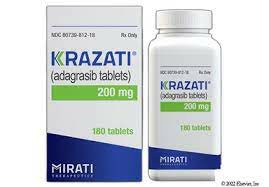
Studies have shown that adagrasib exhibits anti-tumor activity in patients with non-small cell lung cancer (NSCLC) and colorectal cancer (CRC), especially in patients with KRAS G12C mutations. In some clinical studies, adagrasib has also produced positive therapeutic effects in patients with brain metastases. Data show that some patients with brain metastases have significantly reduced their brain metastases after receiving adagrasib treatment, and some patients' disease has been effectively controlled. This provides new hope for treating brain metastases, especially when traditional treatments such as radiotherapy or chemotherapy are ineffective.
However, the efficacy of adagrasib against brain metastasis is still limited, especially when tumor cells have formed larger brain metastases. Although adagrasib has achieved positive results in some patients, it is not a universal option for all patients with brain metastases. Like other targeted therapies, the efficacy of adagrasib may vary based on individual differences, drug tolerance, and the type and size of brain metastases.
Reference materials:https://www.krazati.com/
[ 免责声明 ] 本页面内容来自公开渠道(如FDA官网、Drugs官网、原研药厂官网等),仅供持有医疗专业资质的人员用于医学药学研究参考,不构成任何治疗建议或药品推荐。所涉药品可能未在中国大陆获批上市,不适用于中国境内销售和使用。如需治疗,请咨询正规医疗机构。本站不提供药品销售或代购服务。


