
.jpeg)
Can patients who have taken ixazomib for the past two years stop taking the drug?
For multiple myeloma patients who have been taking ixazomib for nearly two years, careful decision-making must be made as to whether to discontinue the drug. Most of these patients are in the maintenance treatment stage, especially after completing autologous stem cell transplantation or initial treatment for remission, and rely on oral ixazomib to maintain a deep remission state. Although continuous use for two years shows that the patient's condition is under stable control and the drug is well tolerated, whether to discontinue the drug is not determined by time, but should be judged based on multiple clinical indicators.
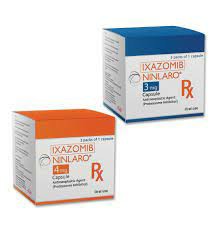
First, it should be evaluated whether the patient has reached complete remission (CR) or minimal residual disease (MRD) negative status. MRD negative often indicates a low risk of recurrence. Such patients may consider reducing the dose or even discontinuing the drug under the guidance of a doctor. Secondly, attention should be paid to whether there are cumulative toxicities, such as neurological damage, liver function fluctuations or bone marrow suppression after long-term use. If adverse reactions are significant, the benefits and risks of continued treatment need to be evaluated. In addition, for high-risk patients, such as those carrying chromosomal abnormalities such as t(4;14) and del(17p), it is recommended to continue taking the medication to prevent early recurrence even if they have been taking the medication for two years.
International guidelines currently do not set a fixed upper limit for ixazomib maintenance treatment, but emphasize "individualized continuation", that is, as long as the disease is stable and toxicity is controllable, long-term treatment can be continued. In the preparation stage for drug withdrawal, it is recommended to formulate a slow withdrawal plan, that is, to gradually reduce the standard dose. During this period, hemogram, M protein, immunoglobulin levels and bone marrow status should be closely monitored. It is worth emphasizing that discontinuation of ixazomib is not equivalent to "cure". Monthly follow-up monitoring is still required after discontinuation to prevent potential hidden relapse.
Therefore, whether to discontinue medication must be made by a hematologist or oncology specialist based on the specific condition assessment. Medication must not be interrupted or reduced without authorization to avoid rapid disease progression and loss of follow-up treatment opportunities.
Reference materials:https://www.ninlaro.com/
[ 免责声明 ] 本页面内容来自公开渠道(如FDA官网、Drugs官网、原研药厂官网等),仅供持有医疗专业资质的人员用于医学药学研究参考,不构成任何治疗建议或药品推荐。所涉药品可能未在中国大陆获批上市,不适用于中国境内销售和使用。如需治疗,请咨询正规医疗机构。本站不提供药品销售或代购服务。


