
.jpeg)
Afatinib maleate is the first generation targeted drug
Afatinib maleate (Afatinib) is a second-generation EGFR tyrosine kinase inhibitor (TKI) specially developed for the treatment of EGFR mutation-positive non-small cell lung cancer (NSCLC). It was originally designed to enhance the inhibitory potency and expand its adaptability to atypical mutations based on the first-generation reversible EGFR-TKIs such as gefitinib and erlotinib. Afatinib forms covalent bonds with receptors such as EGFR, HER2, and ErbB4 to achieve irreversible binding, allowing it to maintain a sustained inhibitory effect when the drug concentration decreases. This is one of its main advantages compared with first-generation drugs.
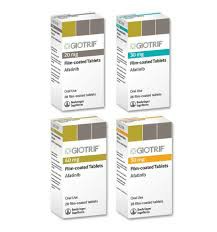
Clinical studies have shown that afatinib has clear efficacy against classicEGFR mutations (such as exon 19 deletion and No. 21 L858R), but more importantly, it has a stronger inhibitory effect than first-generation drugs against certain non-classical mutations such as G719X, S768I, L861Q, etc. This broad spectrum makes it more clinically applicable in patient groups with high mutation heterogeneity. At the same time, due to its comprehensive coverage of the ErbB family, some patients may still respond to afatinib after failure of first-generation TKI treatment.
However, as a second-generation drug, afatinib also faces drug resistance problems, especiallyThe T790M mutation resistance mechanism makes it unable to continue to control tumor progression. In response to this problem, third-generation TKIs such as osimertinib emerged, specifically targeting the T790M mutation and improving central nervous system penetration, becoming a new standard for second-line or even first-line medication for patients with advanced lung cancer. Therefore, in the treatment process of lung cancer, afatinib is more often used as a follow-up option for patients with initial treatment of EGFR mutations or those who are resistant to first-generation TKIs but have not found the T790M mutation.
DrugsThe division of “generations” is not only an evolution from the perspective of target structure design, but also a reflection of personalized precision treatment in clinical treatment pathways. As a second-generation EGFR-TKI, afatinib plays a role in connecting the past and the future: it can not only cover mutation types that the first-generation drugs cannot cover, but also provide more durable disease control in some patients. However, because the side effects are slightly more obvious than those of the first-generation drugs, such as diarrhea, rash, etc., individualized management is required during use.
Reference materials:https://www.giotrif.com/
[ 免责声明 ] 本页面内容来自公开渠道(如FDA官网、Drugs官网、原研药厂官网等),仅供持有医疗专业资质的人员用于医学药学研究参考,不构成任何治疗建议或药品推荐。所涉药品可能未在中国大陆获批上市,不适用于中国境内销售和使用。如需治疗,请咨询正规医疗机构。本站不提供药品销售或代购服务。


