
.jpeg)
Instructions for use and marketing status of Risankizumab
1. Name: Risankizumab,Risankizumab
Product name:Skyrizi, Xikaiyue
2. Indications:
Risankizumab/Risankizumab (Risankizumab) is suitable for the following conditions:
1. Plaque psoriasis: It is suitable for the treatment of moderate to severe plaque psoriasis in adults who receive systemic therapy or phototherapy.
2. Psoriatic arthritis (PA): Suitable for the treatment of active psoriatic arthritis in adults.
3. Crohn's disease (CD): Suitable for the treatment of moderately to severely active Crohn's disease in adults.
4. Ulcerative colitis: It is suitable for the treatment of moderate to severe active ulcerative colitis in adults.
3. Usage and dosage:
1. Before treatment: For the treatment of Crohn's disease and ulcerative colitis, obtain liver enzyme and bilirubin levels before starting treatment with risancizumab; also evaluate the patient's tuberculosis (TB) infection; complete all age-appropriate vaccinations as recommended by current immunization guidelines.
2. Recommended dosage:
(1) Plaque psoriasis: The recommended dose is 150 mg administered subcutaneously at weeks 0, 4, and every 12 weeks thereafter.
(2) Psoriatic arthritis: The recommended dose is 150 mg subcutaneously at weeks 0, 4, and every 12 weeks thereafter; may be administered alone or in combination with nonbiologic disease-modifying antirheumatic drugs (DMARDs).
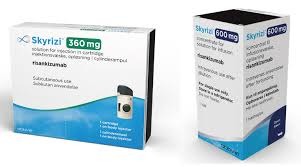
(3) Crohn's disease: For adult patients, the recommended induction dose is 600 mg, administered intravenously over at least 1 hour at weeks 0, 4, and 8; the recommended maintenance dose is 180 mg or 360 mg, administered by subcutaneous injection at week 12, and every 8 weeks thereafter. Use the lowest effective dose needed to maintain therapeutic response. .
(4) Ulcerative colitis: For adult patients, the recommended induction dose is 1200 mg, administered by intravenous infusion over at least 2 hours at weeks 0, 4, and 8. The recommended maintenance dose is 180 mg or 360 mg by subcutaneous injection at week 12 and every 8 weeks thereafter. Use the lowest effective dose needed to maintain therapeutic response.
4. Adverse reactions:
In clinical studies of risancizumab, common adverse reactions include upper respiratory tract infections (nose and throat infections), injection site reactions (such as redness and pain), etc.
5. Supply and storage:
Risenkizumab is available in subcutaneous injection preparations and intravenous infusion preparations. It needs to be stored in the refrigerator at a temperature of 36°F to 46°F (2°C to 8°C). Do not shake it. Please keep it in the original carton to protect it from light. It is not made of natural rubber latex.
6. Taboo:
Risankizumab is contraindicated in patients with a history of severe allergic reactionrisankizumab-rzaa or any excipients.
7. Mechanism of action:
Rishengizumab is a humanizedIgG1 monoclonal antibody that selectively binds to the p19 subunit of the human IL-23 cytokine and inhibits its interaction with the IL-23 receptor. IL-23 is a naturally occurring cytokine involved in inflammation and immune responses. Risenkizumab inhibits the release of proinflammatory cytokines and chemokines.
8. Listing situation:
United States:2022-06, approved for marketing (trade name: Skyrizi)
EU:2019-04, approved for marketing (trade name: Skyrizi)
China:2025-3, approved for listing (trade name: SKYRIZI)
Reference materials:https://go.drugbank.com/drugs/DB14762
[ 免责声明 ] 本页面内容来自公开渠道(如FDA官网、Drugs官网、原研药厂官网等),仅供持有医疗专业资质的人员用于医学药学研究参考,不构成任何治疗建议或药品推荐。所涉药品可能未在中国大陆获批上市,不适用于中国境内销售和使用。如需治疗,请咨询正规医疗机构。本站不提供药品销售或代购服务。


