
.jpeg)
The actual effect of Pegloticase in the treatment field is revealed
In the treatment landscape of rheumatic immune diseases, gout, as a common and complex metabolic disease, has long troubled many patients. Traditional treatment methods are often inadequate when facing some refractory gout cases, and the emergence of Pegloticase (Pegloticase) is like a ray of light, bringing new hope to the treatment of gout and showing remarkable efficacy in the treatment of the disease.
The main cause of gout is an imbalance of uric acid metabolism in the body, which leads to excessive uric acid levels and deposition of urate crystals in joints and surrounding tissues, causing inflammatory reactions and severe pain. The human body originally had urate oxidase, which can decompose uric acid into more soluble allantoin and excrete it from the body. However, during the evolution of humans, the gene for this enzyme was mutated and deleted.
Purikexi is a recombinant urate oxidase produced through genetic engineering technology. After it enters the human body, it can directly simulate the function of natural urate oxidase, accurately act on uric acid molecules, and efficiently catalyze its conversion into allantoin. Since allantoin is extremely soluble in water, it can be quickly excreted from the body through the kidneys, thereby quickly reducing uric acid levels in the blood. This mode of action that directly degrades uric acid fundamentally solves the problem of uric acid accumulation and lays a solid physiological foundation for the treatment of gout. Compared with traditional urate-lowering drugs such as allopurinol (which inhibits the production of uric acid) and benzbromarone (which promotes uric acid excretion), Prekexi's mechanism of action is more direct and efficient, and is especially suitable for patients who have poor response or intolerance to traditional drugs.
Multiple rigorous clinical trials have fully demonstrated the excellent effect of Preikesi in reducing blood uric acid levels. In a large clinical trial for patients with chronic gout, hundreds of patients who could not effectively control their blood uric acid after traditional treatments were selected as research subjects. These patients generally had high blood uric acid levels before treatment with Preikesi and frequently suffered from acute attacks of gout.
After a period of treatment with Prekex (usually several weeks), the patient's blood uric acid levels decreased significantly. Research data shows that more than 80% of patients can quickly drop their blood uric acid levels below the target value after treatment (it is generally believed that blood uric acid levels below 6 mg/dL can effectively prevent gout attacks), and some patients' blood uric acid levels even drop to close to the normal range. As the blood uric acid level rapidly decreases, the urate crystals in the patient's joints begin to gradually dissolve, and acute symptoms such as joint pain and swelling are significantly relieved. Many patients have reported that after using Preikesi, the frequency of gout attacks has been significantly reduced, the pain level has been significantly reduced, and the quality of life has been significantly improved.
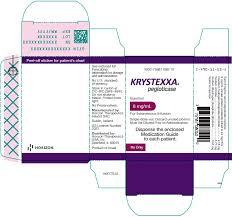
In addition to rapidly lowering uric acid and relieving symptoms in the short term, Preikexi also shows good efficacy and safety in long-term treatment. Long-term follow-up studies have shown that patients who continue to receive Prekesi treatment are not only able to maintain low blood uric acid levels for a long time, but also have significantly improved joint function.
Due to long-term erosion of urate crystals, gout patients will suffer varying degrees of joint damage and deformity, resulting in limited joint movement. After a period of treatment with Purikexi, as the urate crystals are gradually dissolved and cleared, the inflammatory response of the joints is reduced, and the damaged joint tissues begin to repair and rebuild. Many patients were originally unable to walk or perform daily activities due to joint deformity. After treatment, they are able to gradually restore joint function and resume a normal life. For example, a patient who had suffered from chronic gout for many years had severe deformation of the joints in his hands before treatment with Preikesi. He was unable to make fists and had difficulty taking care of himself. After one year of continuous treatment, his joint pain has been significantly reduced and his joint deformities have also improved. He is now able to dress and eat by himself, and his quality of life has been greatly improved.
For some patients with refractory gout, traditional treatment methods often fail to achieve desired results. These patients may have multiple complications, such as renal insufficiency, cardiovascular disease, etc., which limits the use of traditional medicines. The emergence of Prekesi has brought new treatment options to these patients.
In a clinical study on patients with refractory gout, some patients with renal insufficiency were selected for treatment with Preikesi. Since most traditional urate-lowering drugs need to be excreted through the kidneys, the use of these drugs in patients with renal insufficiency can easily increase the burden on the kidneys and even lead to drug accumulation and poisoning. Purikexi is mainly metabolized by the liver and has less impact on the kidneys, so it is more suitable for gout patients with renal insufficiency. The results of the study showed that after receiving treatment with Preikesi, these patients had effective control of their blood uric acid levels, significantly reduced the number of gout attacks, and did not suffer from obvious adverse reactions such as worsening of kidney function damage.
Tophi is the result of gout that has not been effectively treated for a long time. A large number of urate crystals are deposited in the subcutaneous tissue to form nodules, which not only affects the appearance, but also leads to joint destruction and dysfunction. Purikexi can quickly reduce blood uric acid levels and promote the dissolution and excretion of urate crystals, which has a significant effect on the treatment of tophi.
There are clinical cases showing a patient with huge tophi. Before treatment with Preikexi, the tophi continued to grow, seriously affecting joint activities and daily life. After several months of treatment with Preikesi, the patient's blood uric acid level continued to remain at a low level, tophi gradually shrank, and joint function was significantly improved. Eventually, the patient was able to walk normally and carry out daily activities, and his quality of life was greatly improved.
Reference materials:https://en.wikipedia.org/wiki/Pegloticase
[ 免责声明 ] 本页面内容来自公开渠道(如FDA官网、Drugs官网、原研药厂官网等),仅供持有医疗专业资质的人员用于医学药学研究参考,不构成任何治疗建议或药品推荐。所涉药品可能未在中国大陆获批上市,不适用于中国境内销售和使用。如需治疗,请咨询正规医疗机构。本站不提供药品销售或代购服务。


