
.jpeg)
Olaparib/temozolomide fails to meet PFS endpoint in previously treated advanced uterine leiomyosarcoma
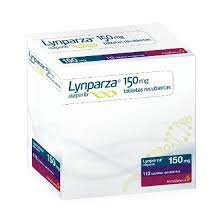
The combination of the PARP inhibitor olaparib and temozolomide did not show superiority to the investigator's choice of pazopanib or trabectedin in the treatment of patients with advanced uterine leiomyosarcoma whose disease has progressed after prior chemotherapy.
Results from the Phase 2/3 Alliance A092104 trial (NCT05432791) published in 2025 showed that olaparib/temozolomide failed to meet its primary endpoint of progression-free survival (PFS) in an unselected patient population. Median progression-free survival was 3.2 months (95% CI, 2.0-7.0) in the olaparib/temozolomide group (n = 37) compared with 5.5 months (95% CI, 2.6-10.2) in the pazopanib or trabedin group (n = 37; stratified HR, 1.16; 95% CI, 0.67-1.99; stratified P = 0.703). Additionally, the median overall survival was 19.3 months (95% CI, 15.2-not evaluable [NE]) and 12.9 months (95% CI, 10.4-NE), respectively (HR, 0.70; 95% CI, 0.33-1.47).
DiscussedThe background and design of Alliance A092104, the efficacy data of olaparib plus temozolomide, and the safety of this regimen. Uterine leiomyosarcoma is a rare cancer and the combination of olaparib and temozolomide involves extensive preclinical and preliminary clinical data. We are very hopeful about the results. There was some synergy with molecular processes in the lab, and the combination was well tolerated in both oral [treatments].
Patient has metastatic uterine leiomyosarcoma and[previously received] at least 1 systemic therapy with at least an anthracycline. They were [randomly assigned] to the researcher's choice or combination. [Specifically,] the investigators' choice was trabectedin or pazopanib, and those drugs were [administered] in labeled doses. Researchers must announce which [regimen] they will enroll patients in before [randomly assigning] them, [especially if] they do not receive the [experimental] drug.
This is a randomized trial and the purpose of the trial is to recruit in phase 2After 70 patients, early safety measures were taken. After analyzing this data, if there is a statistically significant difference in the combination, then we will open it to more patients. Unfortunately, however, [the study] did not meet its primary endpoint and the study ended after 70 patients. It's difficult because it's very promising in phase 2, [although] it's very difficult to compete against other drugs. Trabectdin may overact like pazopanib.
Now, all reasons are theoretical. Our patients' responses and outcomes in the real world may often be underestimated. Pazopanib and trabectedin have been approved for patients with multiple sarcoma subtypes [based on PFS]. Therefore, we do not have strong data on pazopanib alone in the treatment of uterine leiomyosarcoma. When we predict statistics for actual response rates and median PFS, these are predictions based on extrapolation from other studies. The same is true for trabectedin - we don't know the full median PFS in patients [with] uterine leiomyosarcoma alone. For example, doxorubicin plus trabectedin was compared with doxorubicin alone, but we did not use trabectidin alone. These predictions are also very tricky when we are trying to produce statistically significant differences. [Although] the study didn't meet its endpoint, that doesn't mean the combination isn't effective.
There were no safety surprises;[Findings] were standard. I don't think the trial ended because of safety concerns, so there were no surprises. There was some gastrointestinal toxicity, but nothing unexpected and no signal that this wasn't a good combination. We just need to figure out which patients will benefit most from this combination.
Reference materials:https://www.onclive.com/view/olaparib-temozolomide-fails-to-meet-pfs-end-point-in-previously-treated-advanced-uterine-leiomyosarcoma
[ 免责声明 ] 本页面内容来自公开渠道(如FDA官网、Drugs官网、原研药厂官网等),仅供持有医疗专业资质的人员用于医学药学研究参考,不构成任何治疗建议或药品推荐。所涉药品可能未在中国大陆获批上市,不适用于中国境内销售和使用。如需治疗,请咨询正规医疗机构。本站不提供药品销售或代购服务。


