
.jpeg)
What are the efficacy and effects of icorelatumumab?
Epcoritumab (Epcoritamab) is an innovative immunotherapy drug that has attracted much attention in recent years. It is a bispecific monoclonal antibody. Its core mechanism is to simultaneously target CD3 on T cells and CD20 antigen on B cells, thereby bridging the two cells and achieving precise recognition and immune clearance of tumor B cells. This treatment idea is called "T-cell engager" (T-cell engager), which has extremely high anti-tumor activity and shows broad prospects especially in relapsed or refractory B-cell non-Hodgkin lymphoma (B-NHL). Epcoritamab, jointly developed by Genmab and AbbVie under the trade name EPKINLY, has been approved in the United States for the treatment of diffuse large B-cell lymphoma (DLBCL) and other types.
In terms of clinical application,Epcoritamab’s indications mainly cover three types of highly malignant B-cell lymphomas. The first is diffuse large B-cell lymphoma (DLBCL), which is a rapidly progressive and heterogeneous malignant tumor. Many patients may still relapse or become drug-resistant after receiving standard immunochemotherapy (such as R-CHOP). Epcoritamab, used as a single agent or combination regimen in such patients, can effectively recruit T cells into the tumor microenvironment and trigger a cytotoxic attack to help alleviate or control the disease. Followed by high-grade B-cell lymphoma (HGBL), this type of tumor is often accompanied by gene rearrangements such as MYC, BCL2 or BCL6. It is an extremely high-risk subtype and has limited efficacy with traditional therapies. Epcoritamab shows rapid response and long remission period in such patients and is expected to become a new treatment option. The third is follicular lymphoma (FL). Although its course is relatively slow, patients who are in the advanced stage or who have failed multiple lines of treatment also face the dilemma of recurrence. Epcoritamab provides an alternative to chemotherapy, especially for patients who have received multiple treatments in the past.
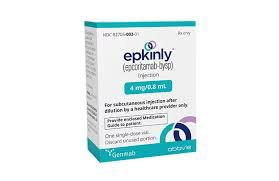
From a mechanism of action perspective,Epcoritamab binds to CD20-positive B-cell tumors through one end of its "Y" structure, and the other end activates CD3-positive T cells, allowing T cells to be accurately "guided" to the tumor site for immune attack. This method does not rely on MHC antigen presentation, breaks through the barrier for some tumor cells to escape T cell surveillance, and can stimulate a sustained response from memory T cells. Unlike traditional monoclonal antibodies or CAR-T therapy, Epcoritamab is administered by subcutaneous injection, which avoids the common systemic side effects of intravenous administration. It is well tolerated by patients and can reduce the severity of cytokine release syndrome (CRS).
Another significant advantage of Epcoritamab is that it can be used as a monotherapy or in combination with other immunochemotherapy regimens. For example, when combined with Rituximab, bendamustine, etc., it shows synergistic anti-tumor effects and is expected to optimize existing standard treatment options. At the same time, due to its lower manufacturing complexity and controllability, it also has faster accessibility and lower treatment cost than CAR-T in terms of actual clinical promotion.
AlthoughEpcoritamab has not yet been officially launched in mainland China, its clinical performance and rapid launch pace in the European and American markets indicate that it will bring profound changes to lymphoma treatment strategies globally in the future. For patients who are relapsed and refractory and have poor response to existing therapies, Epcoritamab opens up a new channel for immunotherapy, and its dual-target strategy also represents the deep integration of precision medicine and immune reprogramming.
Reference materials:https://www.drugs.com/epcoritamab.html
[ 免责声明 ] 本页面内容来自公开渠道(如FDA官网、Drugs官网、原研药厂官网等),仅供持有医疗专业资质的人员用于医学药学研究参考,不构成任何治疗建议或药品推荐。所涉药品可能未在中国大陆获批上市,不适用于中国境内销售和使用。如需治疗,请咨询正规医疗机构。本站不提供药品销售或代购服务。


