
.jpeg)
Analysis of the main efficacy and targeting mechanism of Vimseltinib
Vimseltinib (trade name: Romvimza) is a new, oral targeted therapy drug developed by the American biopharmaceutical company Deciphera Pharmaceuticals and mainly targets macrophage colony-stimulating factor 1 Receptor (CSF1R). The drug was approved by the U.S. Food and Drug Administration (FDA) in 2024 for the treatment of symptomatic tenosynovial giant cell tumor (TGCT). It is especially suitable for patients with complex location or surgery that may result in loss of function. As a kinase inhibitor targeting CSF1R, vimsetinib not only shows significant efficacy in the treatment of TGCT, but is also regarded as a major innovative breakthrough in this field because of its unique mechanism of action and good safety.
First of all, from the perspective of target mechanism, CSF1R is a tyrosine kinase receptor expressed on the surface of macrophages and dendritic cells, which regulates inflammatory responses and cell proliferation in the immune system. The occurrence of TGCT is usually related to the overexpression of CSF1 caused by chromosomal translocation, which induces the accumulation of large numbers of macrophages and the formation of tumor tissue. Vimsetinib can specifically bind and inhibit CSF1R, block its signaling pathway, inhibit the recruitment and abnormal proliferation of macrophages, thereby controlling tumor development. Compared with first-generation CSF1R inhibitors such as pexidartinib, vimsetinib has higher selectivity and lower risk of hepatotoxicity.
In terms of clinical research, the efficacy of vimsetinib has been fully verified in the MOTION III phase clinical trial. The study included a total of 123 TGCT patients who were unable to tolerate or were not suitable for surgical treatment and were randomly divided into a vimsetinib group and a placebo control group. The trial results showed that after 24 weeks of treatment, the objective response rate (ORR) of the vimsetinib group reached 40%, while that of the placebo group was 0%. The difference is highly statistically significant. At the same time, vimsetinib significantly improved the patients' pain scores, joint mobility and tumor volume scores (TVS). Among them, the response rate based on TVS is as high as 67%. What's more, the majority of responding patients had remissions that lasted longer than 6months, and in some cases even more than a year, reflecting the drug's strong disease control capabilities.
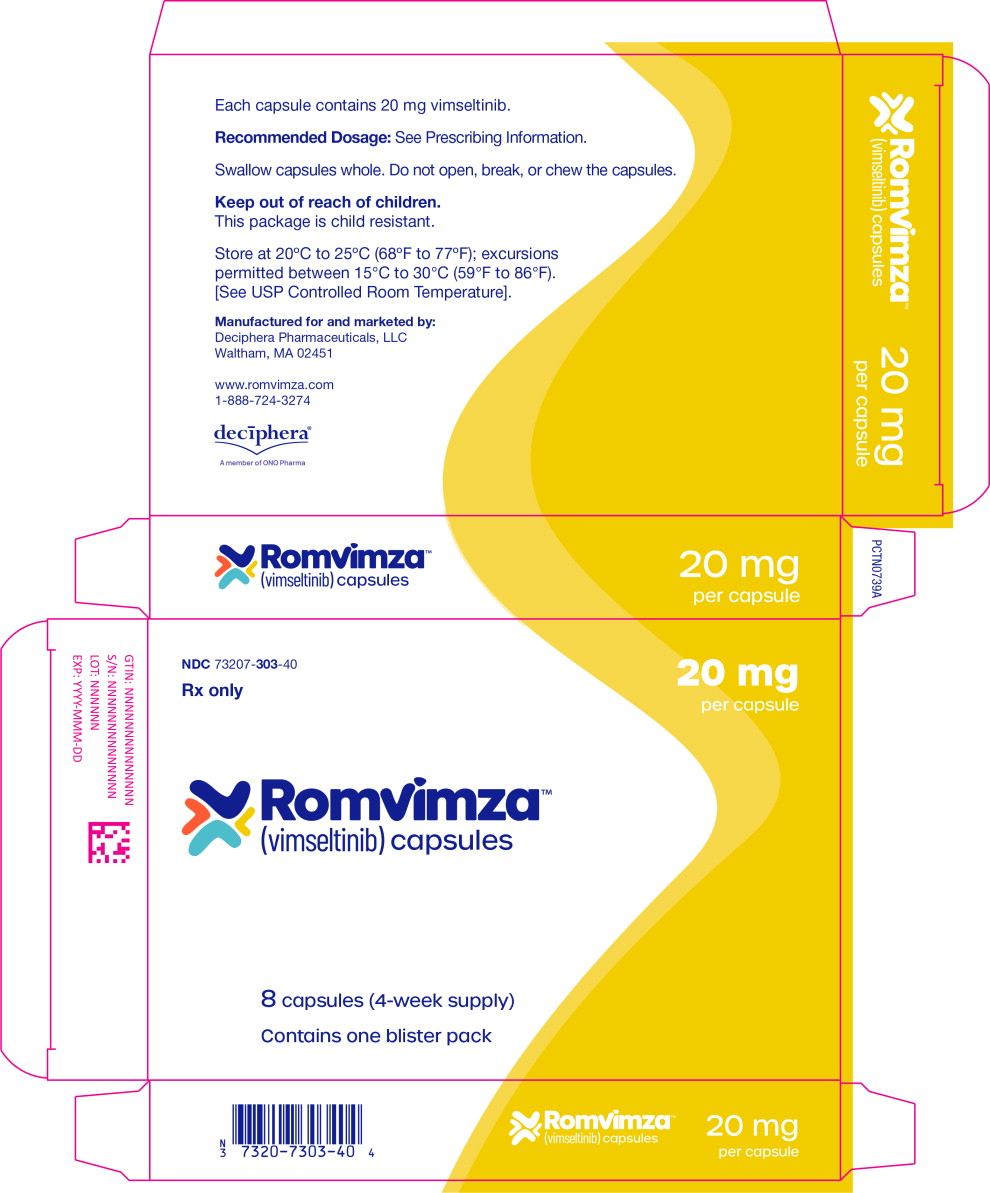
In terms of drug use, the recommended dose of vimsetinib is 30 mg twice a week each time, administered orally. Its oral form improves patient medication compliance. Pharmacokinetic data show that the half-life of vimsetinib is approximately 6 days, and the steady-state concentration can be established within a week. It has good in vivo stability and requires low dosing frequency. In addition, the adverse reactions of vimsetinib are generally mild, and most of them are grade 1-2, including eyelid edema, fatigue, rash, elevated transaminase, headache, etc., and the incidence of serious adverse reactions is low. Compared with previous CSF1R inhibitors, vimsitinib did not cause obvious cholestasis or liver function damage, indicating its obvious safety advantages.
It is worth mentioning that the “switch control” mechanism of vimsetinib is considered to be one of the core reasons for its excellent clinical performance. This mechanism inhibits its kinase activity by stabilizing the CSF1R receptor in an inactive state and avoiding the problem of transient reactivation of the kinase. This mechanism not only improves the targeting accuracy of the drug, but also reduces the inhibition of other tyrosine kinases such as KIT, FLT3, etc., reducing toxic reactions caused by "off-target effects".
In addition to treating TGCT, vimsetinib is also being explored for other CSF1R related diseases, including late stage solid tumors. TAMs (tumor-associated macrophages)-dependent immune evasion mechanism in body tumors, as well as immune diseases such as graft-versus-host disease (GVHD). In these indications, abnormal activation of macrophages also plays a key pathological role, so CSF1R inhibitors are expected to become a new immune modulation method.
In terms of regulatory policies, Vimsetinib has obtained the "Breakthrough Therapy Designation" (Breakthrough Therapy Designation) and the "Orphan Drug Qualification" from theFDA, which has accelerated its review process and will be officially approved in 2024. European Medicines Agency (EMA) has also accepted its marketing application and is expected to make a review decision in the near future. Currently, China has not yet approved the marketing of vimsetinib, but domestic research institutions have begun to pay attention to its prospects in TGCT and immuno-oncology treatment.
In summary, vimsatinib, as an innovative drug targeting CSF1R, provides a powerful alternative in the treatment of difficult-to-operate giant cell tumors of the tenosynovium. Its high efficiency, long-lasting efficacy, good tolerability, and deep regulation of the immune microenvironment make it not only of great significance in TGCT, but also shows broad application prospects in the field of tumor immunotherapy in the future. With the advancement of global clinical research and the acceleration of approval in various countries, vimsitinib is expected to be launched in more countries and bring good news to more patients.
Reference materials:https://www.drugs.com/
[ 免责声明 ] 本页面内容来自公开渠道(如FDA官网、Drugs官网、原研药厂官网等),仅供持有医疗专业资质的人员用于医学药学研究参考,不构成任何治疗建议或药品推荐。所涉药品可能未在中国大陆获批上市,不适用于中国境内销售和使用。如需治疗,请咨询正规医疗机构。本站不提供药品销售或代购服务。


