
.jpeg)
Adagarasib shows early efficacy in STK11- and KRAS G12C-mutated non-small cell lung cancer
First-line treatment with Adagrasib demonstrated clinically meaningful efficacy and a reasonable safety profile in patients with advanced non-small cell lung cancer (NSCLC) harboring KRAS G12C and STK11 mutations, according to phase 2 cohort data from the KRYSTAL-1 trial (NCT03785249). Research results published in 2025 showed that in patients with advanced KRAS G12C mutation NSCLC carrying STK11 mutations, the clinically meaningful objective response rate (ORR) was 30.3% (95%CI, 15.6%-48.7%), and the disease control rate was 66.7%. The ORR was numerically higher in patients without KEAP1 mutations (38%) compared with patients with KEAP1 mutations (24%). The median progression-free survival (PFS) was 4.8 months (95% CI, 2.6-13.9), and the median overall survival (OS) was 12.3 months (95% CI, 4.9-19.1).
Consistent with previous reports, adagrasib was well tolerated in the first-line setting. These data suggest that adagrasiib monotherapy may be a viable first-line treatment option in this specific subgroup of patients, particularly in the absence of KEAP1 combination therapy, and especially for patients who may not be ideal candidates for standard first-line treatment options.
STK11 mutations are frequently observed in KRAS-mutated NSCLC and are associated with an immunosuppressive phenotype and poor outcome with anti-PD-1/PD-L1 therapy. KEAP1 mutations often coexist with STK11 mutations, further worsening the efficacy of anti-PD-1/PD-L1 drugs, and have also been shown to reduce the efficacy of the KRAS G12C inhibitor adagrasib in the second-line setting. However, the impact of KRAS G12C/STK11 combination therapy (with or without KEAP1 alterations) on the efficacy of adagrasib as first-line therapy was previously unknown.
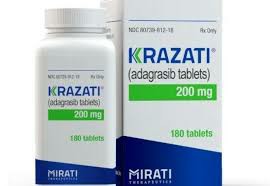
To address this issue,A phase 2 cohort (E) of the KRYSTAL-1 study evaluated first-line adagrasiib (600 mg orally twice daily) in patients with advanced KRAS G12C/STK11-mutated NSCLC. Identification of KRAS G12C and STK11 mutations using local or central sponsor-approved testing of tumor tissue or circulating tumor DNA. The U.S. Food and Drug Administration previously approved adagesibu/cetuximab (cetuximab) in June 2024 for the treatment of adult patients with KRAS G12C-mutated locally advanced or metastatic colorectal cancer (CRC) who have previously received chemotherapy with fluoropyrimidine, oxaliplatin, and irinotecan.
KRYSTAL-1 is an open-label, non-randomized, multiple expansion cohort Phase 1/2 trial evaluating the safety and efficacy of the combination of adagrasib and cetuximab in patients with advanced KRAS G12C mutant solid tumors. Patients must have been treated with fluoropyrimidine, irinotecan, oxaliplatin, and a VEGF/VEGFR inhibitor in phase 2 and were required to have an ECOG performance status of 0 or 1. For phase 2 of the study, ORR by blinded independent central review according to RECIST 1.1 criteria served as the primary endpoint. Secondary endpoints include PFS, duration of response (DOR), OS and safety.
As of the data cutoff date (April 30, 2024), a total of 35 patients with KRAS G12C and STK11 mutations have been recruited. The median age was 64 years, 66% were female, and most ECOG performance status was 0 or 1. Additional findings from the phase 2 cohort study. Among 33 evaluable patients, the ORR was 30.3% (95% CI, 15.6-48.7) and the disease control rate was 67%. The ORR values u200bu200bof the KEAP1 mutant group were higher than those of the KEAP1 wild-type group (38% and 24% respectively). The median follow-up time was 7.8 months, and the median DOR was not reached. The median follow-up period was 7.8 months, the median progression-free survival was 4.8 months (95% CI, 2.6-13.9), and the median overall survival was 12.3 months (95% CI, 4.9-19.1). Patients with concurrent KEAP1 mutations had a shorter median PFS (5.5 months) than those without mutations (8.4 months; 95% CI, 1.4-not evaluable [NE]). Among seven patients with PD-L1 expression greater than or equal to 50%, median PFS was 4.8 months (95% CI, 1.3-NE).
From a safety perspective, the safety profile of adagrasib among all 35 patients was consistent with previous studies, with treatment-related adverse events (TRAEs) leading to treatment discontinuation in 2 patients (5.7%) and dose adjustments in 18 patients (51.4%). Thirty-four patients (97%) experienced TRAEs of any grade, most commonly nausea, diarrhea, and vomiting. Twelve patients (34%) had Grade 3 TRAEs, most commonly diarrhea and fatigue. Grade 4 TRAEs occurred in 3 patients (9%), including cerebrovascular accident (n=1), renal failure (n=1"), seizures, and mental status changes (n=1"). Additionally, there are no Level 5 TRAEs.
Overall, data from this Phase 2 cohort of the KRYSTAL-1 study show that adagrasib is well tolerated and has promising efficacy when used as first-line treatment for patients with advanced non-small cell lung cancer harboring KRAS G12C and STK11 mutations. In the KRYSTAL-7 study (NCT04613596), first-line adagrasib inKRAS The role in G12C-mutated NSCLC is being further studied in combination with pembrolizumab and in combination with pembrolizumab and chemotherapy in the KRYSTA-17 study (NCT05609578).
Reference materials:https://www.onclive.com/view/adagrasib-yields-early-efficacy-in-stk11--and-kras-g12c-mutant-nsclc
[ 免责声明 ] 本页面内容来自公开渠道(如FDA官网、Drugs官网、原研药厂官网等),仅供持有医疗专业资质的人员用于医学药学研究参考,不构成任何治疗建议或药品推荐。所涉药品可能未在中国大陆获批上市,不适用于中国境内销售和使用。如需治疗,请咨询正规医疗机构。本站不提供药品销售或代购服务。


