
.jpeg)
Comparative analysis of bicizumab and ixekizumab
In recent years, with the continuous in-depth development of biological agents in the field of immune diseases, especially the increasingly precise treatment strategies for vitiligo, psoriasis, psoriatic arthritis and other diseases, drugs targeting the IL-17 pathway have gradually become the main force in the treatment of moderate to severe plaque psoriasis. Among them, Bimekizumab(Bimekizumab) and Ixekizumab (Ixekizumab) are two IL-17-targeting monoclonal antibodies that currently attract high clinical attention. Although both have similar mechanisms and both exert anti-inflammatory effects by inhibiting pro-inflammatory factors, there are differences in their specific mechanisms of action, efficacy performance, safety characteristics, and market layout, which are worthy of in-depth comparison.
Ixekizumab is one of the earlier ones on the marketIL-17A monoclonal antibody, developed by Eli Lilly, has been approved in many countries and regions for the treatment of moderate to severe plaque psoriasis, psoriatic arthritis, radiologically negative axial spondyloarthritis and other diseases. The drug reduces inflammatory signaling by selectively inhibiting IL-17A, a key pro-inflammatory factor, thereby significantly improving skin damage, joint pain and other psoriasis-related symptoms. It has been used clinically for a long time, has accumulated sufficient efficacy data, and has good accessibility and medical insurance support.
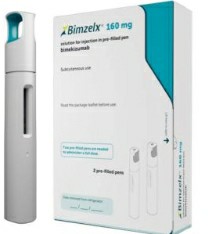
In contrast, bicizumab was developed by the Belgian companyUCB. It is a newer biological agent with a further step in mechanism design. It not only blocks IL-17A, but also simultaneously inhibits IL-17F. These two cytokines have certain overlap but are independent in regulating inflammatory responses. Although IL-17F has a slightly lower pathogenic role in inflammation than IL-17A, it plays an important role in the continued activation of chronic inflammation. Therefore, Bichizumab's "dual-target mechanism" is believed to be able to suppress the inflammatory response more comprehensively, reduce focus activity, and enable more complete recovery of skin lesions.
From the perspective of efficacy performance, the results of multiple head-to-head studies show that bichikizumab is slightly better than ixekizumab in terms of onset of action and skin lesion clearance rate. Especially on high standard evaluation indicators such asPASI90 or even PASI100, it is easier than chiclizumab to help patients achieve complete clearance. This effect makes it more attractive to patients who are pursuing a "skin-clearing" effect, especially for groups who have poor response to other single-target treatments.
In terms of safety, due to its earlier launch, ixekizumab has more mature long-term safety data and has established a relatively complete risk assessment system. The main side effects include injection site reactions, upper respiratory tract infections and candida infections, which are generally controllable. The common adverse reactions of bichizumab are also similar, especially under the dual-targeting mechanism, its impact on oral and skin mucosal flora is slightly stronger, so the incidence of candida infection may be slightly higher. However, due to its faster onset of action, longer maintenance period, and lower frequency of use than chitilizumab, some patients feel relatively less burden when receiving treatment.
From a comprehensive comparison, bichizumab represents a new generation of progress in IL-17 targeted therapy with its innovative dual-target mechanism and higher efficacy clearance rate, and is more suitable for patients who pursue high efficacy and low injection frequency; while ixekizumab still occupies a dominant position in clinical practice based on its mature clinical use history, good safety and accessibility to medical insurance.
Reference materials:https://www.drugs.com/bimekizumab.html
[ 免责声明 ] 本页面内容来自公开渠道(如FDA官网、Drugs官网、原研药厂官网等),仅供持有医疗专业资质的人员用于医学药学研究参考,不构成任何治疗建议或药品推荐。所涉药品可能未在中国大陆获批上市,不适用于中国境内销售和使用。如需治疗,请咨询正规医疗机构。本站不提供药品销售或代购服务。


