
.jpeg)
The remarkable effectiveness of LARTRUVO in the fight against cancer
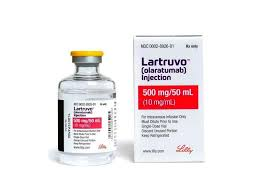
Olaratumab (Olaratumab), trade name LARTRUVO, is a humanized monoclonal antibody and a targeted therapy drug. It interferes with the growth and angiogenesis of tumor cells by inhibiting the signaling pathway of platelet-derived growth factor receptor α (PDGFR-α), thereby combating tumor growth and metastasis. LARTRUVOOriginally approved by the FDA for the treatment of advanced soft tissue sarcoma (STS), particularly in patients who have not responded to conventional treatments such as surgery, radiation or chemotherapy.
LARTRUVO blocks the signaling pathway of platelet-derived growth factor (PDGF) by binding to PDGFR-α and inhibiting the activation of its receptor. PDGF is an important factor in tumor cell growth and angiogenesis. Through this mechanism, LARTRUVO can reduce the proliferation of tumor cells, inhibit the formation of tumor blood vessels, limit the energy supply and oxygen supply for tumor growth, and achieve anti-tumor effects. In addition, LARTRUVO can also enhance the immune system’s recognition and elimination of tumors by regulating the tumor microenvironment.
LARTRUVOThe efficacy is most significant in patients with advanced soft tissue sarcoma (STS). In 2016, LARTRUVO was approved by the FDA for the treatment of patients with unresectable advanced soft tissue sarcoma, especially those who cannot tolerate or are insensitive to chemotherapy.
1. Main Trial Study (JGDG): LARTRUVO’s efficacy was verified for the first time in a randomized, controlled clinical trial. The study combined olaratumab with the chemotherapy drug docetaxel and enrolled more than 300 patients with advanced soft tissue sarcoma. The trial results showed that compared with chemotherapy alone, the median survival time of the LARTRUVO combined with chemotherapy group was significantly improved. Overall survival (OS) was 26.5 months in the LARTRUVO group, compared with 19.7 months for patients who received chemotherapy alone.
2. Response rate: Among LARTRUVO treated patients, it was clinically observed that approximately 18% of patients achieved partial response (PR), which means that the tumor volume of these patients was significantly reduced. By comparison, patients who received chemotherapy alone had a partial response rate of only about 11%.
3. Progression-free survival (PFS): LARTRUVO’s progression-free survival is also significantly better than chemotherapy monotherapy. Among patients who received the combination chemotherapy, the median progression-free survival was 6.6 months compared with 4.1 months in the chemotherapy group. This means that LARTRUVO can significantly extend the time for tumors to stop progressing and bring more quality of life to patients.
4. Management of adverse reactions: LARTRUVOAlthough it shows certain advantages in efficacy, its side effects cannot be ignored. In clinical trials, the most common side effects of patients receiving LARTRUVO treatment include fatigue, nausea, leukopenia, anemia, etc. But overall, LARTRUVO is more effective than chemotherapy alone in patients with advanced soft tissue sarcoma.
LARTRUVOAs a new type of targeted antibody drug, comparison with traditional treatments (such as docetaxel, erythropoietin, chemotherapy, etc.) can further highlight its efficacy.
1. Combined use with chemotherapy: LARTRUVOThe most common way of use is in combination with docetaxel. Docetaxel is a chemotherapy drug widely used in soft tissue sarcoma, but its effectiveness often becomes limited in advanced stages. The introduction of LARTRUVO has significantly enhanced the therapeutic effect, especially in patients with rapid tumor spread or drug resistance. According to multiple clinical studies, the efficacy of LARTRUVO combined with chemotherapy is significantly better than chemotherapy alone, and the incidence of side effects is lower.
2. Combined with immunotherapy: In recent years, immunotherapy has made breakthrough progress in the treatment of many cancers. Although LARTRUVO is not an immune checkpoint inhibitor itself, it can be used in conjunction with immunotherapy to enhance the immune system's response to tumors. For example, compare LARTRUVO withThe combined use of PD-1 inhibitors or CTLA-4 inhibitors may further improve the therapeutic effect.
3. Combined use with other targeted drugs: In addition to being used in combination with chemotherapy, LARTRUVO can also be used in combination with other targeted drugs to exert a synergistic anti-tumor effect. For example, researchers are exploring the potential of combining LARTRUVO with anti-angiogenic drugs, anti-EGFR inhibitors, etc., in order to achieve better clinical effects.
In addition to advanced soft tissue sarcoma, LARTRUVO’s efficacy has also been studied in other types of tumors, such as gastric cancer, lung cancer, ovarian cancer, etc. Studies have shown that the anti-tumor effect of LARTRUVO in these tumor types is still in the exploratory stage, and preliminary results suggest that it may also have potential in some tumor types. However, more clinical data and large-scale trials are still necessary.
LARTRUVOhas a significant improvement in patient survival, especially in patients with advanced soft tissue sarcoma. By extending progression-free survival (PFS) and overall survival (OS), LARTRUVO not only delays disease progression but also improves patients' quality of life. For those patients for whom traditional treatments are ineffective, LARTRUVO undoubtedly brings new treatment hope.
Overall, LARTRUVO has demonstrated significant efficacy in the treatment of soft tissue sarcoma, especially in patients with limited response to chemotherapy. Although its side effects cannot be ignored, under strict monitoring and management, LARTRUVO remains an important treatment option for many patients with advanced soft tissue sarcoma.
Reference materials:https://www.drugs.com/cdi/olaratumab.html
[ 免责声明 ] 本页面内容来自公开渠道(如FDA官网、Drugs官网、原研药厂官网等),仅供持有医疗专业资质的人员用于医学药学研究参考,不构成任何治疗建议或药品推荐。所涉药品可能未在中国大陆获批上市,不适用于中国境内销售和使用。如需治疗,请咨询正规医疗机构。本站不提供药品销售或代购服务。


