
.jpeg)
Basic information about macitentan
Macitentan (macitentan) is a new type of endothelin receptor antagonist, mainly used to treat pulmonary arterial hypertension (PAH, WHO group 1). As an original drug developed by Actelion Pharmaceuticals Ltd., this drug has become an important choice in the treatment of pulmonary arterial hypertension due to its unique mechanism of action and stable clinical efficacy. By specifically blocking the endothelin system, macitentan can effectively improve patients' hemodynamic indicators and delay disease progression, providing new treatment hope for patients with pulmonary hypertension.
From a mechanism of action, macitentan exerts therapeutic effects by blocking the binding of endothelin-1 (ET-1) to ETA and ETB receptors. In pathological conditions such as pulmonary hypertension, excessive activation of the endothelin system can lead to a series of adverse effects such as vasoconstriction, fibrosis, and inflammatory reactions. Macitentan has a high affinity for the ET receptor in human pulmonary artery smooth muscle cells and can persistently inhibit the effects of ET-1. It is particularly noteworthy that its metabolites also retain about 20% of their pharmacological activity, further extending the drug’s action time. Clinical studies have shown that macitentan can significantly reduce pulmonary vascular resistance, increase cardiac index, and improve patients' hemodynamic status, without significant impact on cardiac electrical activity, and has good safety.
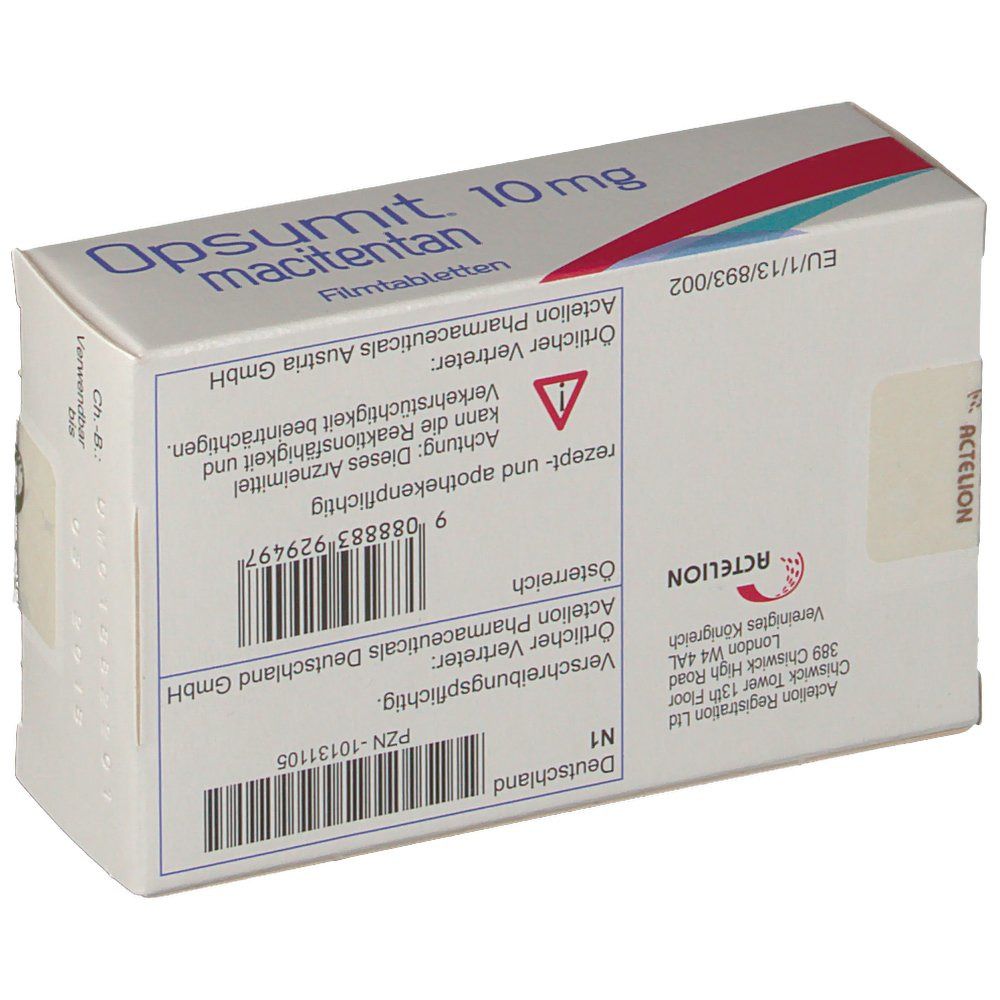
Regarding usage and dosage, the standard recommended dose of macitentan is 10 mg taken orally once daily. This dosing regimen is designed to be simple and can be taken by patients with meals or on an empty stomach, greatly improving medication compliance. It is important to emphasize that the tablets should be swallowed whole and should not be broken in half, crushed or chewed. Doses higher than 10 mg once daily have not been studied in patients with pulmonary arterial hypertension, and excessive dosages are not recommended. It is worth noting that the treatment of macitentan must be carried out under the guidance of doctors with experience in the diagnosis and treatment of pulmonary hypertension, and the treatment effect and safety need to be regularly monitored.
In terms of safety, the adverse reactions of macitentan are relatively controllable. The most common adverse reactions include anemia, nasopharyngitis, bronchitis, headache, influenza and urinary tract infection, with the incidence rate being more than 3%. Most of these adverse reactions are mild to moderate and usually do not affect continued treatment with appropriate treatment. However, due to its extensive effect on the endothelin system, liver function, hemoglobin levels and other indicators still need to be closely monitored during treatment. In particular, patients taking medication for a long time need to pay more attention to regular evaluation.
Overall, macitentan, as a new generation of endothelin receptor antagonist, shows unique advantages in the treatment of pulmonary arterial hypertension. Its innovative mechanism of action, convenient dosing regimen and precise clinical efficacy make it an important choice to improve the prognosis of patients with pulmonary hypertension. With the deepening of clinical application, macitentan is expected to bring long-term benefits to more patients with pulmonary hypertension. However, patients still need to strictly follow the doctor's instructions when using it and conduct regular follow-up evaluations to ensure the safety and effectiveness of the treatment.
Reference materials:https://www.opsumit.com/
[ 免责声明 ] 本页面内容来自公开渠道(如FDA官网、Drugs官网、原研药厂官网等),仅供持有医疗专业资质的人员用于医学药学研究参考,不构成任何治疗建议或药品推荐。所涉药品可能未在中国大陆获批上市,不适用于中国境内销售和使用。如需治疗,请咨询正规医疗机构。本站不提供药品销售或代购服务。


