
.jpeg)
Canafenib/encofenib combination limits risk of recurrence in BRAF V600+ melanoma
Preliminary phase 3 analysis data from the EORTC-2139-MG/Columbus AD trial (NCT05270044) showed that patients with high-risk stage IIB/C BRAF treated with encorafenib plus binimetinib V600 mutationsMelanoma patients may have reduced risk of recurrence. In the intention-to-treat (ITT) population (n=110), the canafenib/bimetinib group (
Regarding safety, in the safety population of the combination group,98% and 28% of patients experienced any grade and grade 3 adverse reactions (AEs); 89% and 24% of patients, respectively, experienced adverse events of these grades that were suspected to be treatment-related. Serious adverse events of any grade and grade 3 occurred in 11% and 7% of patients, respectively, and 2% of patients experienced serious adverse events of any grade that were suspected to be treatment-related. The incidence of any-grade and grade 3 treatment-emergent adverse events leading to permanent discontinuation was 33% and 11%, respectively, all of which were suspected to be drug-related.
The most common adverse events occurring in at least10% of patients in the combination group included nausea, diarrhea, vomiting, fatigue, elevated blood creatine phosphokinase levels, and abdominal pain. Adverse events that started at baseline or worsened from baseline to 30 days after the last regimen treatment were considered. Of note, only one grade 4 AE, an increase in alanine/aspartate aminotransferase levels, was reported.
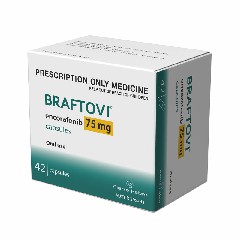
The key conclusion of the study is that Stage IIB/IIC melanoma has a high risk of recurrence. In stage IIB/IIC BRAF V600 mutant melanoma, treatment with canafenib and bimetinib is safe and feasible, and adjuvant treatment with canafenib/bimetinib can prevent cancer recurrence.
In June 2018, the U.S. Food and Drug Administration (FDA) approved canafenib in combination with bimetinib for the treatment of carriers determined by an FDAapproved testPatients with unresectable or metastatic melanoma with BRAF V600E/V600K mutations. The regulatory decision is supported by data from the COLUMBUS Phase 3 trial (NCT01909453). The EORTC-2139-MG/Columbus AD study evaluated the efficacy of canafenib plus bimetinib in patients with histologically confirmed stage IIB/IIC cutaneous melanoma who had completely resected, tumor-free margins. Patients must have sentinel node-negative disease and no microsatellite, satellite, or in-transit metastases. Patients also needed to have a centrally confirmed BRAF V600E/V600K mutation and an ECOG performance status of 0 or 1. Patients (n=815) were stratified by stage according to American Joint Committee on Cancer 8th edition (AJCC8; stage IIB vs stage IIC) and randomly assigned to receive canafenib 450 mg once daily and bimetinib 45 mg twice daily (arm A) or double-matched placebo (arm B).
In the original study design, the primary endpoint wasRFS, and secondary endpoints included distant metastasis-free survival (DMFS), overall survival (OS), quality of life (QOL), safety, and pharmacokinetics. The revised study design included safety as the primary objective in the ancofenib/bimetinib arm, as well as a descriptive efficacy analysis.
In the safety population of the experimental group (n=54), the median treatment time was 11.2 months, the mean treatment time was 7.5 months, and the treatment time for quartiles 1 to 3 was 1.6 to 11.7 months. Of note, the median relative dose intensities for canafenib and bimetinib were 98% and 96%, respectively. Reasons for discontinuation of treatment included disease recurrence (2%), adverse events that led the investigator to discontinue treatment (22%), patient refusal of adverse events (11%), and patient refusal of treatment for reasons other than adverse events (9%). Overall, 56% of patients completed their usual treatment regimen.
In theITT population, the 12-month DMFS incidence was 92% (95% CI, 77%-97%) in the combination group and 82% (95% CI, 55%-93%) in the placebo group. Quality of life was measured using the descriptive global EORTC Core Quality of Life Questionnaire. Mean global health/QOL scores trended upward in the placebo and combination groups.
EORTC-2139-MG/Columbus AD is the first and only randomized adjuvant trial of BRAF-directed therapy with canafenib and bimetinib in stage IIB/IIC BRAF V600-mutant melanoma. Canafenib/bimetinibis a generally well-tolerated combination with a manageable safety profile and highlights the potential utility of BRAF/MEK inhibitor combinations in the adjuvant setting to reduce relapse in patients with IIB/IIC-BRAF V600-mutant melanoma.
Reference materials:https://www.braftovi.com/
[ 免责声明 ] 本页面内容来自公开渠道(如FDA官网、Drugs官网、原研药厂官网等),仅供持有医疗专业资质的人员用于医学药学研究参考,不构成任何治疗建议或药品推荐。所涉药品可能未在中国大陆获批上市,不适用于中国境内销售和使用。如需治疗,请咨询正规医疗机构。本站不提供药品销售或代购服务。


