
.jpeg)
What are the differences in ingredients between generic drugs of Lazertinib and the original drugs?
Lazertinib is a third-generation EGFR tyrosine kinase inhibitor (EGFR-TKI), mainly used to treat patients with non-small cell lung cancer (NSCLC) carrying EGFR sensitive mutations. As a new type of targeted drug, lanzatinib has shown good performance in terms of efficacy and tolerability. It has been approved in South Korea and has gradually entered multiple markets in Asia, including China. As the scope of application of this drug expands, some generic versions have also begun to be launched overseas. The difference between them and the original drug has become the focus of attention of patients. The following is a comprehensive analysis of the differences and connections between lanzetinib generic drugs and the original drug from the perspectives of drug ingredients, bioequivalence, production standards and clinical applications.
1. Basic concepts of original drugs and generic drugs
Original drugs refer to drugs developed by the company that originally conducted drug discovery, clinical trials and registration applications. The original drug of lanzatinib was developed by South Korea's Daewong Pharmaceutical (Yuhan Corporation), and was jointly developed by Johnson & Johnson (Janssen) for global commercialization, with the trade name Leclaza®. The original drug has undergone complete phase I, II, and III clinical trials to verify its safety, effectiveness, dosage recommendations, etc., and can only be marketed after approval.
Generic drugs refer to drugs that are copied by other pharmaceutical companies according to the active ingredients, dosage forms, and specifications of the original drug when the patent of the original drug has expired or has not obtained patent protection in a specific country. Generic drugs do not need to undergo complete clinical trials repeatedly, but they need to pass bioequivalence (BE) tests to prove that their pharmacokinetic characteristics such as absorption and distribution in the human body are similar to those of the original drugs, thereby ensuring equivalent efficacy.
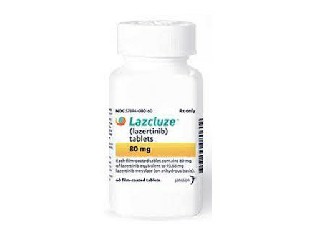
2. Is there any difference in drug ingredients?
In terms of chemical composition, generic drugs of Lanzertinib and the original drug usually use the same active pharmaceutical ingredient (API), that is, the molecular formula and structural formula of its main ingredient, Lanzertinib, are exactly the same. This is the basis and prerequisite for the approval of generic drugs.
However, there may be differences in excipients, formulation process, and ingredient purity. Original drugs usually have more mature formulation technology, which can ensure more stable drug release and better absorption in the body. Generic drugs may have slight differences in production processes, disintegration time, impurity control, drug crystal form, etc. These subtle differences do not necessarily affect the final efficacy, but in some high-demand therapeutic areas (such as targeted oncology therapy), they may have an impact on the individual patient's drug experience.
For example, some generic drugs have slight differences in dissolution and bioavailability from the original drugs, which may lead to different onset rates of drug effects or slight differences in side effects. But in general, if the rigorous BE test is passed, the impact of such differences on efficacy and safety can be considered to be within the acceptable range.
3. Comparison of bioequivalence and clinical efficacy
Generic drugs must pass theBE test before being put on the market. The core is to evaluate the **blood concentration- time curve (< span>AUC) and maximum concentration (Cmax) ** Whether the difference is within the specified range (generally 80%-125%). If the requirements are met, it can be considered that there is no significant difference in bioavailability and clinical efficacy between the two.
Although the generic versions of lanzutinib currently on the market (such as some versions produced by pharmaceutical companies in Laos or Bangladesh) have been marketed locally, they have not yet passed the approval process of the Food and Drug Administration in mainland China, and most of their BE trial data are not made public. Therefore, although these generic drugs claim to have "consistent ingredients" with the original drugs, in a strict sense they are not completely equivalent to the quality standards of generic drugs certified by NMPA, EMA or FDA.
Clinically, some patients have reported good responses after using the overseas generic version of lanzetinib, which is similar to the original drug. However, some patients have reported slight differences in side effects and onset of action. Therefore, when conditions permit, it is more prudent to give priority to original drugs or high-quality generic drugs certified by regulatory agencies.
4. Price differences and accessibility influence choice
The price of the original drug Lanzetinib is relatively high. According to market data, each box of the original drug (such as 40mg*30 tablets) can be sold for up to 2 to 3 RMB without being covered by medical insurance. The price of overseas generic versions generally ranges from 3,000 yuan to 7,000 yuan. There are even generic drugs launched by individual manufacturers that are priced lower than 2,000 yuan. The price difference is significant.
For patients with greater financial burdens, generic drugs offer greater accessibility. But at the same time, attention should also be paid to the formality of the purchasing channels, ensuring that the purchased drugs meet local quality standards and are used under the guidance of a doctor. Especially for generic drugs that have not yet been launched in China, long-term use without monitoring should be avoided.
Generic drugs of lanzetinib are the same as the original drug in terms of active ingredients, but there may be differences in excipients, technology, purity and clinical monitoring data. Generic drugs need to pass the BE test to prove their equivalence. If approved by a formal drug regulatory agency, the clinical efficacy can be considered to be close to the original drug. For patients, they should weigh their options based on their own condition, financial situation and drug sources, and use them under the guidance of a professional doctor to ensure the effectiveness and safety of the treatment. In the future, as more generic drugs are formally approved, the accessibility and price of lanzitinib are expected to further improve.
Reference materials:https://www.drugs.com/
[ 免责声明 ] 本页面内容来自公开渠道(如FDA官网、Drugs官网、原研药厂官网等),仅供持有医疗专业资质的人员用于医学药学研究参考,不构成任何治疗建议或药品推荐。所涉药品可能未在中国大陆获批上市,不适用于中国境内销售和使用。如需治疗,请咨询正规医疗机构。本站不提供药品销售或代购服务。


