
.jpeg)
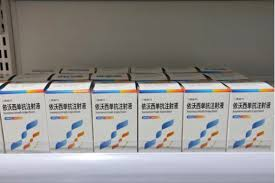
Instructions for use and marketing status of Ivonescimab injection (Ivonescimab)
1. Name: Ivocilimab injection, Ivonescimab
2. Indications:
Ivonescimab injection (Ivonescimab) is approved for use with pemetrexed (pemetrexed) and carboplatin (carb oplatin) for the treatment of patients with epidermal growth factor receptor (EGFR)-mutated locally advanced or metastatic non-squamous non-small cell lung cancer (NSCLC) who have progressed after treatment with a tyrosine kinase inhibitor (TKI).
3. Usage and dosage:
1. Recommended dose: In approved settings, the recommended dose of ivocilimab injection is 20 mg/kg, intravenously administered once every three weeks, 60 minutes each time, until disease progression or unacceptable toxicity occurs. Medication should be given first, followed by chemotherapy, with at least 30 minutes between treatments.
2. Usage: When this product is administered in combination with chemotherapy drugs, this product should be administered first, with an interval of at least 30 minutes, and then the chemotherapy drugs should be administered. Please also refer to the prescription information of chemotherapy drugs.
3. Medication adjustment: Atypical efficacy reactions may occur (such as temporary tumor enlargement or new lesions appearing in the first few months of treatment, followed by tumor shrinkage). If the patient's clinical symptoms are stable or continuously reduced, even if there is preliminary evidence of disease progression on imaging, based on the overall clinical benefit judgment, continued treatment with this product may be considered until disease progression is confirmed.
4. Adverse reactions:
In clinical studies of ivocilimab, adverse reactions specifically include rash, loss of appetite, epistaxis, fatigue, infusion-related reactions, constipation, anemia, cardiac arrhythmia, increased blood pressure, hypothyroidism, fever, thyroid dysfunction Hyperactivity, weight loss, urinary tract infection, pruritus, oral ulcers, interstitial lung disease, gum bleeding, hemoptysis, upper respiratory tract infection, mucosal inflammation, blood in urine, cough, supraventricular arrhythmia, etc. Common laboratory abnormalities Common symptoms may include decreased leukocytes, decreased neutrophils, increased aspartate aminotransferase, decreased platelets, proteinuria, increased amylase, increased γ-glutamyl transferase, hypercholesterolemia, hypertriglyceridemia, hypoalbuminemia, increased blood uric acid, decreased lymphocytes, elevated blood glucose, hyperlipidemia, increased myocardial necrosis markers, elevated lipoproteins, etc.
5. Supply and storage:
The supply specification is 100 mg/10 ml , stored and transported in shading at 2-8℃.
6. Taboo:
It is prohibited for those allergic to active ingredients or excipients.
7. Mechanism of action:
Evocilimab is a humanized bispecific antibody of the lgG1 subtype that targets PD-1 and VEGF-A. Evocilimab can bind to PD-1 and VEGF-A at the same time. Evocilimab can competitively block the interaction between PD-1 and its ligand PD-L1 and relieve PD-1/PD-L1-mediated immune suppression. In in vitro efficacy tests, evocilimab can promote the secretion of IL-2 and IFN-y by PBMC. Evocilimab competitively blocks the binding of VEGF-A to its receptor VEGFR2, inhibiting the activation of downstream signals. In in vitro efficacy tests, evocilimab can inhibit VEGF-A-induced human umbilical vein endothelial cell (HUVEC) cell proliferation.
8. Listing situation:
Evocilimab was approved by the State Food and Drug Administration in May 2024 and will be launched in China under the trade name Edafang.
Reference materials:https://www.akesobio.com/en/media/akeso-news/240908/
[ 免责声明 ] 本页面内容来自公开渠道(如FDA官网、Drugs官网、原研药厂官网等),仅供持有医疗专业资质的人员用于医学药学研究参考,不构成任何治疗建议或药品推荐。所涉药品可能未在中国大陆获批上市,不适用于中国境内销售和使用。如需治疗,请咨询正规医疗机构。本站不提供药品销售或代购服务。


