
.jpeg)
Which anti-cancer drug classification does Thiotepa belong to and analysis of its advantages
In the field of tumor treatment, chemotherapy drugs are still one of the basic treatments for many malignant tumors. With the continuous development of anti-cancer drug classification and mechanisms, more and more old drugs have been revitalized and used in a wider range of clinical treatments. Thiotepa (Thiotepa) is one of the representative classic anti-tumor drugs. This article will provide an in-depth analysis of the question "Which type of anti-cancer drug does thiotepa belong to?" and introduce its pharmacological classification, mechanism of action, scope of indications and advantages of use, etc., to help patients and their families better understand this treatment option.
1. Which type of anti-cancer drug does thiotepa belong to?
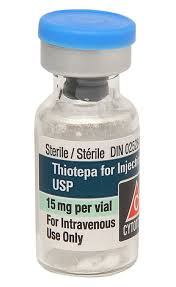
Thiotepa (Thiotepa) is a classic alkylating agent anti-cancer drug, specifically an "ethyleneimine-based alkylating agent" (Aziridine-based alkylating agent). It has a trifunctional structure that can form covalent bonds with the bases in DNA molecules, blocking DNA replication and RNA synthesis, causing tumor cells to be unable to divide and grow normally, thereby inducing their death.
As a kind of alkylating agent, thiotepa, like cyclophosphamide and nitrogen mustard drugs, is one of the earliest drug categories used in cancer treatment. Its main feature is that it has a wide range of effects, does not depend on the cycle status of tumor cells, and exhibits good cytotoxic activity in a variety of malignant tumors.
2. Detailed explanation of the mechanism of action
The main mechanism of thiotepa is to form cross-links betweenDNA strands through its active metabolite. This cross-linking effect interrupts the stability of the DNA double strands, thereby inhibiting the DNA replication and transcription functions, causing the cell cycle to stall at the G2/M stage, and ultimately inducing tumor cell apoptosis.
Because its molecular structure contains an electrophilic imine ring, thiotepa can quickly alkylate with guanine and adenine in DNAin cells. Compared with traditional nitrogen mustard drugs, thiotepa has better lipid solubility and can better penetrate the blood-brain barrier, so it has special clinical value in the treatment of central nervous system tumors or brain metastases.
3. Scope of clinical indications
Currently, thiotepa is mainly used to treat the following types of malignant tumors:
1.Treatment of solid tumors: including breast cancer, ovarian cancer, bladder cancer, brain tumors, etc. Among them, thiotepa is often used in combination with other drugs in the treatment of recurrence/metastasis of ovarian cancer and breast cancer.
2.Hematological malignancies: especially used as a pretreatment program before hematopoietic stem cell transplantation (ie, pretreatment chemotherapy), such as myeloma, acute leukemia, lymphoma, etc. In high-dose chemotherapy regimens, thiotepa can enhance the bone marrow clearance effect and improve the success rate of transplantation.
3. Central nervous system tumors: Due to its strong ability to penetrate the blood-brain barrier, thiotepa is used to treat brain gliomas, meningiomas, and brain metastases, especially for scenarios that require intramedullary chemotherapy.
4.As an auxiliary drug in combination chemotherapy regimens: In some chemotherapy regimens, such as when used in combination with cyclophosphamide, doxorubicin, cisplatin, etc., thiotepa can play a synergistic role in killing tumor cells.
4. Analysis of the therapeutic advantages of thiotepa
1.Broad spectrum anti-tumor activity
The mechanism of action of thiotepa does not depend on the growth cycle status of tumor cells, so it has the ability to kill both actively proliferating and slower-growing tumor cells. It has a wide range of treatments, covering a variety of solid tumors and hematological tumors.
2. Strong blood-brain barrier penetration ability
This property is a major advantage of thiotepa over other alkylating agents, giving it a place in the treatment of central nervous system tumors. For some brain lesions that are difficult to reach with conventional chemotherapy drugs, thiotepa can significantly improve the effectiveness of treatment.
3. Suitable for pre-treatment of hematopoietic stem cell transplantation
High-dose thiotepa has been widely used in the "myeloablative" stage before stem cell transplantation. It can effectively eliminate residual tumor cells and improve the success rate of transplantation and the patient's disease-free survival time.
4.Toxic and side effects are relatively controllable
Although thiotepa, as a cytotoxic drug, also has common adverse reactions (such as bone marrow suppression, nausea, vomiting, etc.), its overall toxicity is controllable, and most adverse reactions are dose-dependent. Through individualized administration and supportive treatment, risks can be minimized without affecting efficacy.
In general, Thiotepa (Thiotepa), as a traditional but still widely used alkylating agent anti-cancer drug, plays an irreplaceable role in solid tumors, blood tumors, central nervous system tumors and hematopoietic stem cell transplantation. It has unique advantages in the treatment of refractory brain tumors and pretreatment before stem cell transplantation. With the continuous deepening of personalized treatment concepts and the continuous optimization of combination regimens, the clinical application prospects of thiotepa are still worth looking forward to. For patients, rational use of thiotepa under the guidance of professional doctors can not only achieve better curative effects, but also help improve quality of life and survival rate.
Reference materials:https://www.drugs.com/
[ 免责声明 ] 本页面内容来自公开渠道(如FDA官网、Drugs官网、原研药厂官网等),仅供持有医疗专业资质的人员用于医学药学研究参考,不构成任何治疗建议或药品推荐。所涉药品可能未在中国大陆获批上市,不适用于中国境内销售和使用。如需治疗,请咨询正规医疗机构。本站不提供药品销售或代购服务。


