
.jpeg)
Treatment regimen and effect analysis of amivantamab combined with lazetinib
The combination treatment of Amivantamab and Lazertinib is an important research progress in the field of non-small cell lung cancer (NSCLC) in recent years, especially forLazertinib span>EGFR mutation-positive, especially T790M negative and osimertinib (Osimertinib)-resistant patient population provides a new treatment option. This combination strategy reflects the trend of targeted therapy evolving from a single target to a complex mechanism. Its therapeutic effect, safety, and future indication expansion have all attracted clinical attention.
1. Introduction to evantumumab and lazertinib
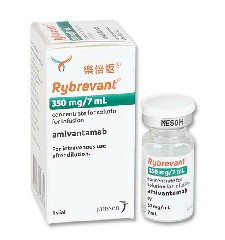
Amivantamab (Amivantamab) is a bispecific antibody drug that can target both the EGFR and MET signaling pathways. Its mechanism of action includes blocking ligand binding of EGFR and MET, promoting internalization and degradation of the receptor, and triggering antibody-dependent cell-mediated cytotoxicity (ADCC). These effects can simultaneously inhibit primary mutation pathways and resistance mechanisms, such as EGFR amplification or MET amplification.
Lazertinib (Lazertinib) is a third-generation EGFR tyrosine kinase inhibitor (TKI), which has a similar mechanism of action to osimertinib, but has differences in pharmacokinetics, brain metastasis penetration, and affinity for certain EGFR mutation sites. It has mutations that inhibit EGFR activity (such as L858R, exon 19deletion) and T790M mutation, and has less inhibitory effect on wild-type EGFR and has relatively mild side effects.
2. Clinical background and indications of combination therapy
In EGFR mutation-positive non-small cell lung cancer, although the first and third generation EGFR-TKI have achieved significant efficacy, most patients will develop resistance after receiving osimertinib treatment for a period of time. Common mechanisms include MET amplification,EGFR C797SMutation, transdifferentiation, etc. Faced with these non-T790M resistance mechanisms, it is difficult to maintain the efficacy of a single EGFR-TKI treatment.
The combination of evantumumab and lazertinib aims to dually inhibit EGFR and its resistance-related pathways (such as MET), thereby more effectively delaying tumor progression. Especially in patients without T790M mutations after resistance to osimertinib, this combination provides an alternative treatment option and broadens the subsequent path for EGFR targeted therapy.
3. Clinical research data and efficacy performance
The main research basis of this joint program comes from theCHRYSALIS research project. In this clinical trial, researchers evaluated the efficacy and safety of evantumumab + lazertinib in patients with EGFR-mutated, osimertinib-resistant NSCLC. The trial results show that the combined use of these two drugs after osimertinib treatment failure can achieve a higher objective response rate (ORR) and a better progression-free survival (
It is worth noting that in patients with MET amplification, the effect of combination therapy is particularly significant, ORR exceeds 40%, and the lesions shrink significantly, and some patients can achieve clinical complete remission. This suggests that combined targeting of the EGFR and MET pathways can overcome certain types of resistance mechanisms.
In addition, the combined regimen also has potential effects on brain metastases. Lazertinib has better penetration into the central nervous system, and although evantumumab is a macromolecular antibody, it may also delay the progression of brain metastases indirectly by improving the control of the source tumor of brain metastases. However, further clinical data verification is still needed in this regard.
4. Safety and adverse reactions
Although combined therapy has outstanding efficacy, it also brings certain toxic and side effects, which requires attention. According to available clinical data, the most common adverse events include rash, paronychia, diarrhea, and infusion-related reactions. Since evantumumab itself is an antibody drug, allergic reactions may occur during the first dose of infusion, and pretreatment needs to be done in advance. The adverse reactions of lazertinib are similar to other EGFR-TKIs, with skin and gastrointestinal reactions being the main ones, which can usually be controlled through dose adjustment and supportive treatment.
During combined medication, a small number of patients may experience more serious adverse reactions, such as pneumonia, abnormal liver function, etc., and lung imaging, liver enzymes and hematological indicators need to be checked regularly. Clinically, it is usually recommended to start with a low dose, gradually observe tolerance, and then adjust the treatment intensity according to the patient's response.
5. Medication Suggestions and Future Outlook
Currently, evantuzumab combined with lazertinib has not yet been officially approved for combined indications in China, but the regimen has entered clinical practice or is under application in many countries. For patients who have received osimertinib treatment but have developed resistance and have EGFR mutations or MET abnormalities, you can consider trying this combination treatment through clinical trials or overseas drug channels.
With the release of more phase III clinical study results such asCHRYSALIS-2 in the future, this combination regimen is expected to be included in broader lung cancer treatment guidelines, especially playing a key role in the treatment window after osimertinib resistance. At the same time, researchers are also exploring whether to move this combination forward to first-line treatment, thereby improving disease control rates at an early stage.
The treatment strategy of evantumumab combined with lazertinib provides an innovative targeted combination regimen for patients with EGFR mutated non-small cell lung cancer, especially after osimertinib resistance, showing unique advantages. By targeting the EGFR and MET pathways, this combination not only enhances the therapeutic effect, but also brings new hope to more patients with drug resistance problems. With more research and regulatory approval progress, this solution is expected to become a new direction for precision treatment of lung cancer.
Reference materials:https://www.drugs.com
[ 免责声明 ] 本页面内容来自公开渠道(如FDA官网、Drugs官网、原研药厂官网等),仅供持有医疗专业资质的人员用于医学药学研究参考,不构成任何治疗建议或药品推荐。所涉药品可能未在中国大陆获批上市,不适用于中国境内销售和使用。如需治疗,请咨询正规医疗机构。本站不提供药品销售或代购服务。


