
.jpeg)
Clinical data of Seladelpar in the treatment of primary biliary cholangitis
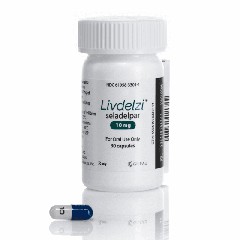
Primary biliary cholangitis (PBC) is a chronic, autoimmune-mediated liver disease that mainly damages small intrahepatic bile ducts, leading to cholestasis, which may eventually develop into liver fibrosis or even cirrhosis. Although ursodeoxycholic acid (UDCA) is the current first-line treatment, about 40% of patients do not respond well to it or are intolerant to it. Therefore, finding more effective new treatments has become a clinical need. Seladelpar (Seladelpar) is a peroxisome proliferator-activated receptor δ (PPARδ) agonist, which has shown good promise in the treatment of PBC in recent years. The following will comprehensively analyze its efficacy and safety from multiple clinical research data levels.
1. RESPONSE IIIPhase 1 pivotal clinical trial
The RESPONSE study is currently the most representative III double-blind, placebo-controlled clinical trial, specifically designed to evaluate the efficacy and safety of Seladelpar in the treatment of PBC. The study included 193 adults with PBC whose treatment was inadequate or intolerant to UDCA and were randomly assigned to receive 10 mg daily. Seladelparor placebo, the treatment period is 12 months. The primary endpoint is to achieve the composite biochemical reaction standard: that is, the level of alkaline phosphatase (ALP) is lower than the upper limit of normal 1.67 times, and decreases by at least 15% from baseline, and total bilirubin is within the normal range.
Results of the study showed that 61.7% of the patients in the Seladelpar group (79/128) achieved primary To achieve the endpoint, the placebo group was only 20.0% (13/65), which was highly statistically significant (P<0.0001). In addition, 25% of Seladelpar patients completely normalized their ALP levels after 12 months of treatment, while none in the placebo group reached the target. This shows thatSeladelparIt has obvious advantages in controlling cholestasis.
2. Improvement of itching symptoms and improvement of quality of life
Itching is one of the most common symptoms of PBC patients and affects their quality of life. The RESPONSE study also evaluated Seladelpar’s effect on itch symptoms. Among patients with moderate to severe pruritus at baseline (PruritusNRS score ≥4), the mean pruritus score decreased in the Seladelpar group3.2 points, while the placebo group only dropped 1.7 points, indicating that Seladelpar significantly alleviated the bothersome symptoms, thereby improving the patient's life experience.
3. Long-term safety study:ASSUREStudy
In order to evaluate the long-term efficacy and tolerability of Seladelpar, the research team conducted the open-label continuation trial "ASSURE". The study included patients who had previously participated in clinical trials of Seladelpar and continued to receive 10 mg of Seladelpar daily without control. As of the interim analysis, after 12 months of continuous treatment, 70% of patients still maintained biochemical composite responses, including 37% of patients span>ALP levels returned to normal, and liver function indicators such as GGT, ALT, TB were also significantly improved.
During 24 months of follow-up, the stable efficacy was still maintained, and no new serious adverse reactions were seen. During the entire observation period, Seladelpar’s safety performance was excellent. Only a very small number of patients (<5%) discontinued treatment due to mild to moderate side effects (such as gastric discomfort or elevated transaminases), and no discontinuation occurred due to worsening pruritus or elevated bilirubin.
IV.IIPhase clinical study review and dose selection
EarlyPhase II studies laid the foundation for determining the optimal therapeutic dose of Seladelpar. In a dose-finding study, PBCpatients were randomly assigned to receive 2mg, 5mg or 10mg Seladelpar, after 8 weeks of treatment, the average decrease in ALP in the three groups of patients was < /span>26%, 33%, 41%, showing a dose-dependent response. After further follow-up for 12 months, the composite response rate of the 10 mg group reached 67%, and the ALP normalization rate reached 33%. This study confirmed that 10mg is the optimal dose with significant efficacy and no serious safety events.
However, in an early high-dose exploratory study, Seladelparreversible ALT elevations were observed in some patients, leading to early termination of the trial. This prompted subsequent studies to select doses more carefully and exclude patients with severe underlying liver disease, optimize patient screening criteria, and ensure the safety and rigor of phase III studies.
5. International ratification progress and future prospects
Based on data from the Phase III study, the U.S.FDA announced in20248< Seladelpar was approved in March for the treatment of adult patients with PBC, becoming another important treatment option after OCA. Following this, the European Union EMA also granted conditional marketing authorization in February 2025, and the British Food and Drug Administration (MHRA) also approved the drug in the same year.
From an efficacy perspective, compared to currently used OCA, Seladelpar is more effective in controlling
In general, Seladelpar (Seladelpar) has shown excellent efficacy and good tolerability in the treatment of PBC, especially in improving biochemical indicators, alleviating itching symptoms and long-term treatment. It met the primary endpoint in the RESPONSE III phase study, and the ASSURE study supports that its efficacy is sustainable and its safety is better than some existing treatments. As it is successively approved for marketing in many places around the world, Seladelpar is expected to bring new treatment hope and improvement in the quality of life to the majority of PBC patients.
Reference materials:https://www.drugs.com/donanemab.html
[ 免责声明 ] 本页面内容来自公开渠道(如FDA官网、Drugs官网、原研药厂官网等),仅供持有医疗专业资质的人员用于医学药学研究参考,不构成任何治疗建议或药品推荐。所涉药品可能未在中国大陆获批上市,不适用于中国境内销售和使用。如需治疗,请咨询正规医疗机构。本站不提供药品销售或代购服务。


