
.jpeg)
Platinib vs. serpatinib in 2025: a new pattern of RET fusion precision treatment of lung cancer
In the field of precision medicine, RET fusion has been widely verified as an important driver of non-small cell lung cancer (NSCLC) and thyroid tumors. The first batch of RET inhibitors platinib and seputinib were successively approved in 2020, marking a new era in the treatment of RET-positive tumors. In 2025, the difference in efficacy and toxicity between the two will be quantified for the first time through matching-adjusted indirect comparison (MAIC), and the latest final results of the ARROW trial will be announced.
This article combines the latest data of MAIC and ARROW to deeply explore the innovative value of Pralsetinib (Pralsetinib; trade nameGavreto) in RET fusion NSCLC and thyroid cancer from the perspectives of indications, pharmacological mechanism, usage and dosage, efficacy comparison, safety analysis and clinical dosing strategy, to guide clinical practice.
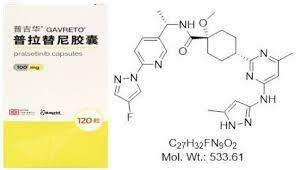
1. RET integration indications and medical background
Pralsetinib (Pralsetinib) was jointly developed by Blueprint Medicines and Genentech. It was approved by the U.S. Food and Drug Administration (FDS) for accelerated approval in 2020. It was approved in Europe in 2021. Its main indications include:
1.1Ret fusion-positive non-small cell lung cancer (NSCLC) in adults andchildren aged ≥12 years old
1.2Adults andRadioiodine-resistant RET fusion thyroid cancer (including MTC/DTC) in children aged ≥12 years
RET fusion occurs in 1–2% of NSCLC patients and is a driver mutation. Platinibhighly selectively inhibitsRET tyrosine kinase, effectively blocking the downstream signaling pathways and having cross-tissue spectrum activity.
2. Pharmacological mechanism and clinical pharmacokinetics (PK/PD)
2.1Pharmacological effects: Orally administered small moleculeRET inhibitor, covering RET V804/M918 and other mutations; strongly inhibits RET autophosphorylation.
2.2Pharmacokinetics: At standard dosage,Cmax is about 2830ng/mL, t½≈22h, and the steady state reaches day 3-5; absorption is more stable in the fasting state.
3. Usage, Dosage and Administration Guide
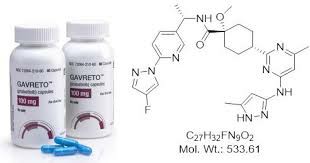
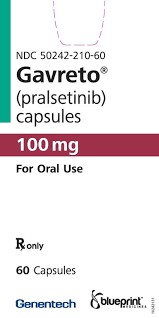
3.1 Standard dose: Recommended dose 400mg QD (once a day), take on an empty stomach (no food 2 hours before and 1 hour after taking the drug), continue until disease progression or intolerability. The dosage form is100mg capsules, take 4 capsules daily.
3.2 Treatment of forgetfulness & vomiting: If you forget to take the medicine on the day of taking it, you can take it again on the same day and resume your routine the next day; if you vomit after taking the medicine, you can continue taking it the next day without taking it.
3.3 Dosage adjustment recommendations
1) For grade ≥ 3 adverse reactions, the following dosage adjustment process must be followed:
2) Treatment is suspended until toxicity≤Grade 2;
3) Reduce dosage to 300mg QD when restarting;
4) If toxicity occurs again, reduce the dosage to 200mg or 100mg;
5) Those who still cannot tolerate 100mg should stop taking the drug.
Liver enzymes, blood pressure and pulmonary reactions (ILD/pneumonia) need to be monitored at the same time. Those who are combined with strong CYP3A inhibitors/inducers should adjust the dose accordingly
4. Comparison of ARROW’s blockbuster data and MAIC in 2025
4.1 ARROW Phase I/II final efficacy
ARROW is a multi-center open-label trial covering patients with previous platinum-based treatment and treatment-naïve RET fusion NSCLC:
Platinum-based treatment group (n≈87): ORR57%, DoR 80% in June;
Unsystematic treatment group (n≈27): ORR 70%, DoR 58% in 6 months.
The stable efficacy covers a variety ofRET fusion types, which is of great clinical significance.
4.2 MAIC: Gavreto vs. Retevmo
The latest MAIC analysis in 2025 is based on real-world and experimental data, showing significant differences in the following aspects:
ComparisonPFS:SepretinibmedianPFS was 22.1 months, platinib was13.3 months (HR0.67; 95%CI 0.53-0.85);
ORR: roughly equivalent (65.8% vs 64.5%); disease control rate (DCR) is also similar (92.1% vs 90.4%);
OS: PlatinibmedianOS is 43.9 months, Seputinib has not yet reached;
Grade ≥3 treatment-related adverse events: Platinib 62.6%, Sepretinib 39.3%; treatment discontinuation rate 10% vs 3.6%.
The conclusion points out that: the efficacy of the two is similar, but seputinib is superior in terms of PFS and tolerability.
5. Comparative analysis of safety and toxicity
5.1 Myelosuppression vs QT prolongation
Platinibcauses significant bone marrow suppression: anemia, neutrophils and thrombocytopenia are more severePROR4.67 (p<0.001);
Seputinib has a higher risk of QT prolongation but relatively mild myelosuppression
5.2 Liver, kidney and lung toxicity
Hepatic enzyme abnormalities were more frequent with seputinib and the risk of pneumonia was higher with platinib (ROR 5.9, p=0.01).
5.3 High-Grade Side Effects and Treatment Discontinuation
Platinib Grade ≥3 AEs are numerous and serious, and the discontinuation rate increases. It is necessary to evaluate the patient's tolerance in advance, strictly control the blood count, and have a preventive adjustment plan.
5.4 Management optimization strategy
Monitoring of blood, liver, kidney and lungs: every 2 weeks in the first monthand then every month;
People with myelosuppression can use growth factor support;
High blood pressure, constipation, etc. should be dealt with through daily life/drug combined intervention;
Pneumonia events should be preceded by imaging investigation and anti-infective treatment, and medication should be discontinued if necessary.
6. Recommended clinical medication strategies
6.1 Basis for individual selection
Cardiovascular/QT risk patients: Platinib is preferred because QT symptoms are mild;
People with fragile blood systems: prefer seputinib, which has milder toxicity;
Inter-regional differences: Platinib has better PFS performance in the US population; it should be used with caution in other regions;
Previous history of pneumonia: Use platinib with caution due to high risk of associated pulmonary toxicity.
6.2 Treatment vs initial treatment decision
Both drugs are approved for first-time treatmentNSCLC, but MAIC shows that first-time treatmentseputinib has better PFS; platinibcan be used for treatment-experienced/drug-resistant patients, and there are successful re-challenge cases in ARROW, which can be used as an alternative treatment mechanism.
6.3 Long-term compliance and economic value
Platinib is administered once a day to improve compliance;
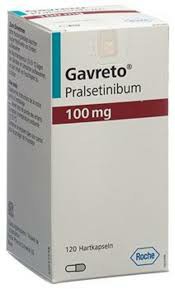
The original drug with a specification of 100mg*120 pills costs about RMB60000/month, which needs to be combined with medical insurance and the patient's financial situation; the cost of a generic drug with a specification of 100mg*120 pills is about RMB3000/month.
Patient support programs such asRIGEL ONECARE can ease the burden.
6.4 Multidisciplinary collaboration model
It is recommended that a team of lung cancer, blood, infection, and endocrinology experts collaborate to participate;
Develop personalized monitoring plans,
Ensure medication safety and maximize efficacy.
7. Future Prospects and Research Paths
Head-to-headPhase III trial: If AcceleRET vs LIBRETTO is still progressing, it is expected to provide direct comparison data;
Second generationDevelopment of RET inhibitors: Ovatus inhibits refractory RET mutations, which may be more breakthrough;
Combination therapy exploration: Preliminary trials are underway with immunotherapy (such asPD-1) and CDK4/6 inhibitors;
Real-world data accumulation: analysis of regional differences and long-term resistance mechanisms will provide clinical reference.
8. Summary
In 2025, quantitative comparison based on MAIC analysis revealed for the first time the differences between platinib and seputinib in PFS, toxicity domains and patient stratification. Although the ORR and DCR of the two drugs are similar, seputinib has more advantages in terms of PFS and tolerability. Platinibstill has clinical competitive value due to its convenience and specific patient groups (such as QT risk patients). At the same time, their individualized application strategies emphasize the importance of multidisciplinary collaboration and toxicity management. In the future, with the disclosure of direct comparison trial results and second-generation RET inhibitor data, the RET fusion treatment landscape will gradually become more refined and will also bring better treatment options to patients.
xa0
References:
1. Matching-adjusted indirect comparison of Selpercatinib vs Pralsetinib in RET‑fusion NSCLC (MAIC, PFS 22.1 vs 13.3)
2. FDA label & EMA PI: Gavreto dosing, empty stomach, dose modifications (400mg QD)
3. ARC drug info & Medscape: monitoring & pharmacokinetics guide
4. OncLive & targetedonc: toxicity differences (QT interval & bone marrow)
5. NCBI PMC & FLASCO: ARROW trial final data & safety management
xa0
xa0
xa0
xa0
xa0
[ 免责声明 ] 本页面内容来自公开渠道(如FDA官网、Drugs官网、原研药厂官网等),仅供持有医疗专业资质的人员用于医学药学研究参考,不构成任何治疗建议或药品推荐。所涉药品可能未在中国大陆获批上市,不适用于中国境内销售和使用。如需治疗,请咨询正规医疗机构。本站不提供药品销售或代购服务。


