
.jpeg)
What indications and diseases can be reimbursed by Thiotepa medical insurance?
Thiotepa (Thiotepa) is a multifunctional alkylating agent anti-tumor drug that is widely used in the treatment of various malignant tumors. In my country, with the continuous optimization of the national medical insurance catalog, thiotepa has been included in the scope of medical insurance, and some indications can be reimbursed by medical insurance to reduce the financial burden of patients. Currently, thiotepa is mainly used for pretreatment before hematopoietic stem cell transplantation, as well as for the treatment of certain solid tumors such as breast cancer, ovarian cancer, bladder cancer and meningeal metastasis. Some of these diseases are already eligible for medical insurance reimbursement.
The application of thiotepa in the pretreatment of hematopoietic stem cell transplantation (HSCT) is currently a key area of medical insurance support. Especially in children and adults with hematological malignancies such as acute leukemia and lymphoma, thiotepa combined with other drugs (such as fludarabine, buxostatin) constitutes a pretreatment program to remove residual leukemia cells and create a good environment for transplantation. According to the latest version of the medical insurance catalog, in the transplant treatment carried out by the hospital according to the national clinical path, this drug combination can be included in the scope of medical insurance settlement, and the patient's out-of-pocket portion is relatively small.
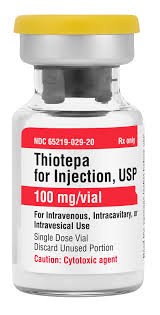
Some patients with relapsed or refractory ovarian cancer who fail first- or second-line chemotherapy can also enjoy medical insurance reimbursement support if they are treated with thiotepa in compliance with clinical diagnosis and treatment standards. Especially after multidisciplinary evaluation, patients who are included in the standardized treatment path can be partially reimbursed for the cost of the thiotepa drug when they receive treatment at designated medical institutions. In addition, in the treatment of breast cancer, especially meningeal metastasis, because thiotepa can penetrate the blood-brain barrier, it is recommended by some tertiary hospitals for personalized treatment, and can also apply for medical insurance reimbursement.
The intravesical infusion treatment of thiotepa for bladder cancer is also included in the scope of local medical insurance support in some areas. Especially in the postoperative infusion stage of superficial bladder cancer, thiotepa has been recognized for clinical application as a low-cost solution with controllable side effects. Although not all indications have been included in the national medical insurance, as its role in more solid tumors is gradually clarified, medical insurance coverage may be further expanded in the future. It is recommended that patients consult the hospital pharmacist or medical insurance office to obtain the most accurate reimbursement information according to local medical insurance policies.
Reference materials:https://www.drugs.com/donanemab.html
[ 免责声明 ] 本页面内容来自公开渠道(如FDA官网、Drugs官网、原研药厂官网等),仅供持有医疗专业资质的人员用于医学药学研究参考,不构成任何治疗建议或药品推荐。所涉药品可能未在中国大陆获批上市,不适用于中国境内销售和使用。如需治疗,请咨询正规医疗机构。本站不提供药品销售或代购服务。


