
.jpeg)
What are the specific functions of greffitomab?
Glofitumab (Glofitamab) is a newly approved bispecific T cell engaging antibody in recent years, specifically used to treat relapsed or refractory large B-cell lymphoma (DLBCL; non-Hodgkin lymphoma ) and related subtypes. Its core pharmacological mechanism is to simultaneously combine CD3 (surface of T cells) and CD20 (surface of B cells), allowing T lymphocytes to be accurately activated and direct their cytotoxic effects to malignant B cells expressing CD20, thereby achieving efficient anti-tumor killing effects. This bridging mechanism allows gaffetuzumab to bypass the antibody-dependent cytotoxicity (ADCC) and complement-dependent cytotoxicity (CDC) pathways that traditional antibody treatments rely on, and directly guide T cells to kill malignant tumors.
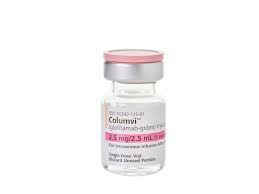
In clinical studies, gaffetuzumab has shown interesting efficacy, especially in patients who have failed multiple lines of treatment, includingCAR-T therapy. It can also induce partial or complete remission. Multiple clinical data show that its objective response rate (ORR) exceeds 50%, and in some studies, the complete response rate (CR) is close to 35%. This significant therapeutic effect is particularly important for patients for whom traditional treatments are difficult to respond. As a non-chemotherapy option, the use of gaffetuzumab also provides a safer treatment path for patients who are elderly or have comorbidities. Because its mechanism is different from cytotoxic drugs, the side effect profile is also easier to manage.
Another significant advantage of gaffetuzumab is that its flexible dosing cycle and ascending dose regimen reduce the occurrence of severe immune reactions. Its standard dosing regimen starts from cycle 1 with increasing doses of 2.5 mg and 10 mg, and is fixed at 30 mg/time after cycle 2, with dosing every 3 weeks. This approach helps patients gradually adapt to treatment and reduces the incidence of acute immune reactions. Pretreatment strategies before the start of treatment (such as the use of otuzumab) can also help reduce the number of B cells, thereby further controlling the risk of adverse reactions.
Reference materials:https://www.drugs.com/glofitamab.html
[ 免责声明 ] 本页面内容来自公开渠道(如FDA官网、Drugs官网、原研药厂官网等),仅供持有医疗专业资质的人员用于医学药学研究参考,不构成任何治疗建议或药品推荐。所涉药品可能未在中国大陆获批上市,不适用于中国境内销售和使用。如需治疗,请咨询正规医疗机构。本站不提供药品销售或代购服务。


