
.jpeg)
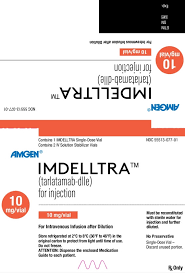
Detailed instructions and usage instructions for Tarlatamab
Generic name of the drug: Tarlatamab (Tarlatamab)
Drug category: BispecificTCell-engaging antibody (BiTE)
Target:DLL3 (Delta-like ligand 3) and CD3
Development company: Amgen (Amgen)
Indications: Patients with recurrent small cell lung cancer (SCLC), especially advanced or metastatic cases after failure of standard treatments.
1. Mechanism of action
Talatumumab is a novel bispecific T cell-engaging antibody (BiTE) that can simultaneously bind to DLL3 on the surface of tumor cells (overexpressed almost exclusively in small cell lung cancer) and TCD3 on the surface of T cells, thereby guiding T cells in the patient's body to the vicinity of cancer cells, activating T cells and inducing apoptosis of cancer cells. Compared with traditional immune checkpoint inhibitors, talatumumab has a more direct and rapid effect, and the immune effect depends on the expression of DLL3 target.
2. Indications and users
Talatumumab is mainly used to treat adult patients with small cell lung cancer (SCLC) who are resistant to or relapsed with at least one platinum-containing chemotherapy regimen, especially those advanced patients who can no longer tolerate or have no other standard treatment options.
In relevant clinical trials (such as the DeLLphi-301 study), the drug has shown good objective response rates and disease control rates, and some patients can achieve longer progression-free survival (PFS) and overall survival (OS).
3. Recommended usage and dosage
Mode of administration: intravenous infusion
Dosage regimen (based on clinical trial data, specific dosage needs to be evaluated by a doctor):
The starting dose is 0.003 mg, then gradually increases to 0.3mg, 1mg, 3mg, and then transitions to the maintenance dose 10mg
The maintenance phase is usually once every two weeks (Q2W), and each infusion takes about 30-60 minutes
It is recommended that infusion be performed in a specialized oncology unit or facility with emergency equipment to address potential immune-related adverse reactions.
4. Adverse reactions and treatment suggestions
Common adverse reactions of talatumumab include but are not limited to:
Cytokine release syndrome (CRS): About 40-50% patients develop mild CRS, manifesting as fever, fatigue, and hypotension, which can be life-threatening in rare cases. Symptomatic management with tocilizumab or glucocorticoids is recommended.
Nervous system toxicity (ICANS): Some patients may experience headache, confusion, or transient cognitive impairment and should be closely monitored for neurological signs.
Abnormal liver function: ALT and AST elevations are common and generally reversible.
Gastrointestinal reactions: such as nausea, loss of appetite, etc., most of which are mild to moderate.
Therefore, patients should be observed for at least 24 hours after the first dose. Subsequent doses will be determined by the doctor as to whether hospitalization is required.
5. Taboos and people who should use it with caution
Taboo:
Contraindicated in those allergic to talatumumab or any of its components
Patients with active infections, such as uncontrolled tuberculosis, sepsis, etc., should postpone treatment
Use with caution:
Patients with central nervous system metastasis may have aggravated neurological adverse reactions
Patients with significant abnormalities in liver and kidney function need to adjust dosage carefully
There are no safety data available in pregnant or lactating women and it is recommended to avoid use
6. Drug interactions and combination therapy
There are currently insufficient data to demonstrate a clear interaction between talatumumab and other drugs. However, considering its immune activation mechanism, it is not recommended to be used simultaneously with other immune stimulating drugs to avoid increasing the risk of CRS or immunotoxicity. If combination treatment options (such as with PD-L1 inhibitors) are considered, they need to be carried out within the framework of clinical studies.
7. Efficacy evaluation and discontinuation conditions
Effectiveness evaluation usually recommends imaging examinations (CT/MRI) every 8 weeks to determine changes in lesions according to RECIST v1.1 standards. If two consecutive examinations show tumor progression, or the patient experiences severe intolerable toxicity, discontinuation of the drug or replacement of the regimen should be considered.
In addition, for patients who have achieved complete remission and maintained it for a long time, whether to continue taking medication must be determined by the doctor based on a comprehensive assessment of risks/benefit.
8. Drug storage and acquisition channels
Talatumumab has not yet been launched in mainland China. It has obtained fast track designation from the FDA in the United States. It is expected to gradually enter other markets after being officially approved in Europe and the United States in the future. If patients need to use it, they can obtain it through overseas pharmacies or apply for use from a doctor, and must use it under the supervision of a professional medical institution. Medicines need to be transported in the cold chain, and the storage temperature is 2°C~8°C, avoiding freezing and direct sunlight.
Talatumumab represents a new direction in DLL3 targeted immunotherapy, especially providing new hope for patients with advanced small cell lung cancer. Although it is still in the early stages of clinical trials or approval, its efficacy and safety have been verified in stages. In the future, with the advancement of listing and medical insurance policies, accessibility may be gradually expanded. Patients should comprehensively evaluate the risks and benefits under the guidance of professional oncologists, and use this drug scientifically and standardizedly.
Reference materials:https://www.drugs.com/donanemab.html
[ 免责声明 ] 本页面内容来自公开渠道(如FDA官网、Drugs官网、原研药厂官网等),仅供持有医疗专业资质的人员用于医学药学研究参考,不构成任何治疗建议或药品推荐。所涉药品可能未在中国大陆获批上市,不适用于中国境内销售和使用。如需治疗,请咨询正规医疗机构。本站不提供药品销售或代购服务。


