
.jpeg)
Comparison of icaretuzumab and gaffetuzumab, which one is more effective?
Epcoritumab (Epcoritamab) and Glofitamab are both immunotherapy drugs that have attracted much attention in recent years. They are both bispecific T cells targeting CD20 and CD3. Linked antibodies (BiTE) are used to treat relapsed or refractory B-cell non-Hodgkin lymphoma, especially in large B-cell lymphoma (DLBCL) and other types, showing strong anti-tumor activity. Although the two have common features in target setting and pharmacological mechanisms, there are some key differences in structural design, administration methods, safety management, efficacy maintenance and clinical application strategies. These differences jointly affect their clinical use experience and efficacy evaluation.
First of all, from a structural analysis, icorelatumumab is based on theDuoBody platform. It is a bispecific antibody in the form of an IgG1 full-length antibody. It has strong stability and a long half-life. It can achieve slow release and sustained activation of T-cell immune effects through subcutaneous injection, reducing the risk of cytokine release syndrome (CRS). Gefituzumab is based on the "2:1" structure of the Fab fragment and has two CD20 binding sites and one CD3 binding site, which enhances the affinity and selectivity for tumor cells. Since gaffetuzumab has a stronger CD20 polymerization ability, it may have a faster initial anti-tumor activity, but the corresponding immune response will be more severe, which also means a higher probability of CRS.
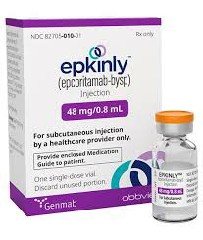
Secondly, in terms of dosing schedule and treatment process, icorelatumumab is injected subcutaneously, starting once a week and gradually transitioning to every two weeks and then monthly maintenance. Patient compliance is higher and hospitalization time is shortened. Grafituzumab requires intravenous infusion and pre-administration desensitization treatment, such as pre-administration of obinutuzumab to reduce the incidence of CRS. This makes the use process of grefituzumab more complicated and treatment management difficult. However, in patients with highly active disease or large tumor burden, the faster onset of action may bring the advantage of early remission.
In terms of efficacy, although both have demonstrated good objective response rates (ORR) and complete response rates (CR) in phase III clinical trials, there is still a lack of head-to-head comparative studies. Public data show that icorelatumumab exhibits an ORR of approximately 60% and a complete response rate of over 35% in relapsed DLBCL, and most responses last for more than 9 months, with excellent maintenance effects. For similar indications, gaffetumumab has an ORR of over 50% and a complete response rate of approximately 30% to 40%. However, its duration of response is slightly shorter, and some patients experience early relapse of the disease. It should be noted that gaffetuzumab is considered more suitable for patients with large tumor burden, while icareltuzumab is more suitable for mid- to long-term management and consolidation treatment due to its superior safety profile.
In terms of adverse reactions, the main side effects of icorituzumab includeCRS, rash, fatigue and abnormal blood count, but most of them are grade 1-2, and severe CRS is relatively rare; while the incidence of CRS with gaffetuzumab is relatively higher, and some patients even require hospitalization for monitoring. Therefore, in terms of patient safety management, icrelatumumab is easier to control immune-related toxicity in actual use due to its sustained-release administration method and structural optimization advantages, and is especially suitable for elderly patients or groups with many comorbidities.
Reference materials:https://www.drugs.com/epcoritamab.html
[ 免责声明 ] 本页面内容来自公开渠道(如FDA官网、Drugs官网、原研药厂官网等),仅供持有医疗专业资质的人员用于医学药学研究参考,不构成任何治疗建议或药品推荐。所涉药品可能未在中国大陆获批上市,不适用于中国境内销售和使用。如需治疗,请咨询正规医疗机构。本站不提供药品销售或代购服务。


