
.jpeg)
Maintenance of selinesol prolongs PFS in TP53 wild-type endometrial cancer
Data fromthe phase 3 SIENDO trial (NCT03555422) showed that selinexor as maintenance therapy produced a progression-free survival (PFS) benefit in patients with TP53 wild-type advanced or recurrent endometrial cancer. The findings were presented at the 2025 Society of Gynecological Oncology Annual Women's Cancer Meeting (SGO).
At the data cutoff date of April 1, 2024, with a median follow-up of 36.8 months, the median PFS with selinesol in the TP53 wild-type subgroup was 28.4 months (95% CI, 13.1-not reached [NR]), compared with 5.2 months (95% CI, 2.0-13.1) with placebo (HR, 0.44; 95% CI, 0.27-0.73; P=0.0005).
In addition, in theTP53 wild-type subgroup, median PFS was 39.5 months (95% CI, 19.3-NR) in patients with proficient mismatch repair (pMMR) compared with 4.9 months (95% CI, 2.0-NR) in the placebo group (HR, 0.36; 95% CI, 0.19-0.71; P=0.0011). For patients with TP53 wild-type-deficient MMR (dMMR) disease in the TP53 wild-type subgroup, median PFS was 13.1 months (95% CI, 3.6 to NR) with selinesol versus 3.7 months (95% CI, 1.9 to NR) with placebo (HR, 0.49; 95% CI, 0.18 to 1.34; P=0.0825).
At 33.1 months of follow-up, the median time to second disease progression (PFS2) in the entire TP53 wild-type subgroup was NR in the selinexole group (95% CI, 41.1-NR) compared with 35.2 months (95% CI, 17.3-NR) in the placebo group (HR, 0.62; 95% CI, 0.33-1.36; P=0.0581).
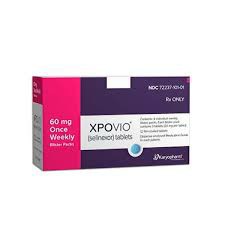
Among all patients with TP53 wild-type disease, the median time to first subsequent treatment (TFST) was 31.7 months (95% CI, 18.7-NR) compared with 10.6 months in the placebo group ( 95% CI, 4.8-15.1) (HR, 0.41; 95% CI, 0.25-0.68; P=0.0002); 50% of patients in the selinesol group and 83% of patients in the placebo group discontinued study treatment and started a new treatment.
With follow-up of 35.8 months, the median time to second follow-up treatment (TSST) was NR (95% CI, 43.9-NR) and selinexol compared with 22.1 months (95% CI, 13.1-NR) for placebo (HR, 0.47; 95% CI, 0.26-0.83; P=0.0041).
Although there are multiple mechanisms by which selinexole induces cancer cell death, in[endometrial cancer] the primary mechanism is thought to be through nuclear retention and reactivation of [tumor suppressor proteins], such as wild-type p53. Sustained improvements in PFS2, TFST and TSST provide supporting evidence for a substantial signal of selinesol improving PFS in [TP53 wild type]. ”
Randomized, double-blindThe ENGOT-EN5/GOG-3055/SIENDO trial evaluated the efficacy and safety of selinexol maintenance compared with placebo maintenance after combination chemotherapy in patients with endometrial cancer. A total of 263 patients were randomly assigned in a 2:1 ratio to receive 80 mg of oral selinxole or placebo once daily. If patients weigh less than 20 kg/m2, they will receive 60 mg of selinxol.
Eligible patients were female adults with stage IV or first recurrence of endometrial cancer who received taxane/carboplatin chemotherapy for 12 weeks or more. Prior surgery, radiation therapy, and hormonal therapy were allowed, and patients were required to have a partial response (PR) or complete response after prior chemotherapy.
In theTP53 wild-type subgroup, 77 patients received selinesol and 36 patients received placebo. The median age of patients was 64.0 years (range 40-81) and 61.5 years (range 33-74); 55.8% and 61.1% had an ECOG performance status of 0; 84.4% and 80.6 % had endometrioid histology; 53.2% and 50.0% had recurrent disease on chemotherapy; 59.7% and 52.8% achieved PR due to chemotherapy; 61.0% and 63.9% had pMMR disease.
The primary endpoint of the trial is PFS according toRECIST 1.1 criteria. Key secondary endpoints include overall survival (OS), TFST, PFS2 and TSST. Histological subtypes and molecular subclassifications (eg, TP53 mutation status and MMR status) were exploratory endpoints.
At data cutoff,OS data maturity was 29.2%; 24.7% of patients treated with selinesol experienced an OS event and 38.9% of patients treated with placebo experienced an OS event. Median OS was NR (95% CI, 45.4-NR) versus NR (95% CI, 35.2-NR) for placebo (HR, 0.65; 95% CI, 0.32-1.29).
Treatment emergent adverse reactions (TEAEs) were mostly mild and manageable; the most common TEAEs with selinxole and placebo were nausea (90% and 40%, respectively), vomiting (60% and 14%), diarrhea (45% and 37%), and constipation (33% and 40%). Among grade 3 or higher, the most common TEAEs were neutropenia (20% vs. 0%), nausea (13% vs. 0%), thrombocytopenia (10% vs. 0%), vomiting (3% vs. 3%), constipation (0% vs. 6%), and abdominal pain (0% vs. 6%).
The study authors emphasize that the randomized phase 3 ENGOT-EN20/GOG-3083/XPORT-EC-042 trial (NCT05611931) is currently recruiting patients to evaluate selinexol maintenance therapy after systemic therapy in patients with advanced or recurrent P53 wild-type endometrial cancer as an important next step.
Reference materials:https://www.onclive.com/view/maintenance-selinexor-extends-pfs-in-tp53-wild-type-endometrial-cancer
[ 免责声明 ] 本页面内容来自公开渠道(如FDA官网、Drugs官网、原研药厂官网等),仅供持有医疗专业资质的人员用于医学药学研究参考,不构成任何治疗建议或药品推荐。所涉药品可能未在中国大陆获批上市,不适用于中国境内销售和使用。如需治疗,请咨询正规医疗机构。本站不提供药品销售或代购服务。


