
.jpeg)
Larotinib/Larotinib treatment effect and real patient feedback
Larotrectinib is a highly selective TRK tyrosine kinase inhibitor jointly developed by Loxo Oncology and Bayer. It is mainly used to treat patients with solid tumors carrying NTRK gene fusion mutations. It is one of the world's first approved tissue-agnostic targeted drugs. That is to say, regardless of the location of the tumor, as long as there is an NTRK fusion mutation, it is theoretically possible to benefit from larotrectinib. Its clinical application marks a major shift in cancer treatment from "organ classification" to "gene mutation treatment".
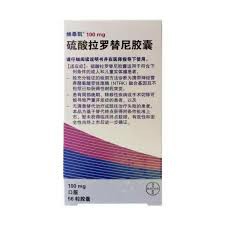
NTRK fusion is a driver mutation that may occur in both adult and pediatric tumors. Although the overall incidence is low, the positive rate is extremely high in some rare tumors such as salivary gland secretory carcinoma, infantile fibrosarcoma, and congenital central nervous system tumors. Larotrectinib effectively blocks the activation of TRK A/B/C, thereby inhibiting the conduction of downstream signaling pathways, thereby preventing the growth and spread of tumor cells. According to the summary results of multiple clinical trials, larotrectinib has demonstrated significant objective response rates (ORR) in various tumor types, including lung cancer, colorectal cancer, thyroid cancer, breast cancer, etc., and some patients even experienced complete response (CR) or long-term progression-free survival (PFS).
Larotinib is administered orally, twice daily. It is easy to use and suitable for adult and pediatric patients. In terms of safety, the drug is well tolerated. Common side effects include fatigue, nausea, dizziness, elevated ALT, etc. Most of them are mild to moderate and can be alleviated through dose adjustment. Rare but concerning adverse reactions include neurological symptoms and liver function abnormalities.
In practical applications, larotrectinib has been included in clinical treatment guidelines in many countries and regions and is used as the standard treatment for NTRK fusion-positive advanced or metastatic solid tumors In addition, patients need to confirm whether they carry NTRK fusion mutations through RNA or DNA sequencing before use. The prerequisite for accurate treatment is accurate diagnosis.
Reference materials:https://www.vitrakvi.com/
[ 免责声明 ] 本页面内容来自公开渠道(如FDA官网、Drugs官网、原研药厂官网等),仅供持有医疗专业资质的人员用于医学药学研究参考,不构成任何治疗建议或药品推荐。所涉药品可能未在中国大陆获批上市,不适用于中国境内销售和使用。如需治疗,请咨询正规医疗机构。本站不提供药品销售或代购服务。


