
.jpeg)
Data show positive for concomitant treatment with fenelidone and SGLT-2 inhibitors in patients with chronic kidney disease associated with type 2 diabetes
Results from the phase II CONFIDENCE study demonstrate that concurrent initiation of finerenone and the SGLT-2 inhibitor (SGLT-2i) empagliflozin results in a significant reduction in the urinary albumin-to-creatinine ratio (UACR) in adults with chronic kidney disease (CKD) associated with type 2 diabetes (T2D).
The CONFIDENCE study demonstrated that concurrent use of fenelidone and empagliflozin in patients with T2D-related CKD resulted in an early and additive reduction in UACR from baseline of 52% at day 180. The relative reductions in UACR from baseline to day 180 were 29% and 32% compared with fenelidone alone and empagliflozin alone. Notably, within 14 days of starting both treatments simultaneously, a reduction of more than 30% in UACR was observed, with almost three-quarters of patients reaching the threshold of a 30% reduction in UACR from baseline, 20% more than with either treatment alone. The safety profile of concurrent initiation of fenelidone and SGLT-2i was consistent with the safety profile of either agent alone, and treatment benefit was observed in a broad population of patients with high comorbidity burden in all prespecified subgroups enrolled in the study.
The CONFIDENCE study provides clinical evidence that concurrent initiation of fenelidone and empagliflozin results in an early and additive 52% reduction in UACR in patients with chronic kidney disease and type 2 diabetes, which is significantly greater than either treatment alone. Given that UACR is an important mediator of renal and cardiovascular outcomes, these findings provide important insights for clinicians when considering how to optimize disease management, supporting the positive impact of early combined use of fenelidone and SGLT-2 inhibitors on patient outcomes.
Finelidone, a nonsteroidal selective mineralocorticoid receptor (MR) antagonist, has been studied in a broad population of patients with CKD (stages 1-4) in two completed and published Phase III studies (FIDELIO-DKD and FIGARO-DKD), evaluating the effects of fenelidone versus placebo on renal and cardiovascular outcomes. Patients on background therapy with SGLT2 inhibitors were allowed in these studies. Data from FIDELITY, a prespecified pooled analysis of these Phase III studies, confirm that early albuminuria (UACR) reduction in patients with T2D-related CKD mediates the majority of the therapeutic effect of fenelidone in slowing CKD progression.
The CONFIDENCE study data mark an important milestone in the mission to improve care for patients with chronic kidney disease associated with type 2 diabetes. Findings indicate that aggressive concurrent priming can provide substantial early and additive UACR reduction, which is associated with renal and cardiovascular protection. Because they demonstrate that early combined use of fenelidone and an SGLT2 inhibitor has the potential to improve long-term outcomes for millions of patients worldwide.
Diabetes remains a significant public health problem, with an estimated 462 million people globally affected by T2D alone. Approximately 40% of T2D patients go on to develop CKD, highlighting the unmet medical need for therapies that can better preserve kidney function and slow disease progression.
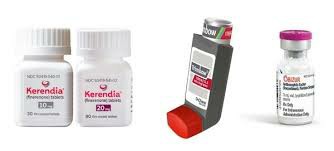
Finelidone is marketed as Kerendia or Firialta in some countries and is approved in more than 90 countries around the world, including China, Europe, Japan and the United States, for the treatment of adult patients with CKD associated with type 2 diabetes (T2D).
References:https://medicaldialogues.in/news/industry/pharma/simultaneous-treatment-start-with-finerenone-and-sglt-2-inhibitor-demonstrated-positive-data-in-patients-with-ckd-associated-with-type-2-diabetes-bayer-149735
[ 免责声明 ] 本页面内容来自公开渠道(如FDA官网、Drugs官网、原研药厂官网等),仅供持有医疗专业资质的人员用于医学药学研究参考,不构成任何治疗建议或药品推荐。所涉药品可能未在中国大陆获批上市,不适用于中国境内销售和使用。如需治疗,请咨询正规医疗机构。本站不提供药品销售或代购服务。


